


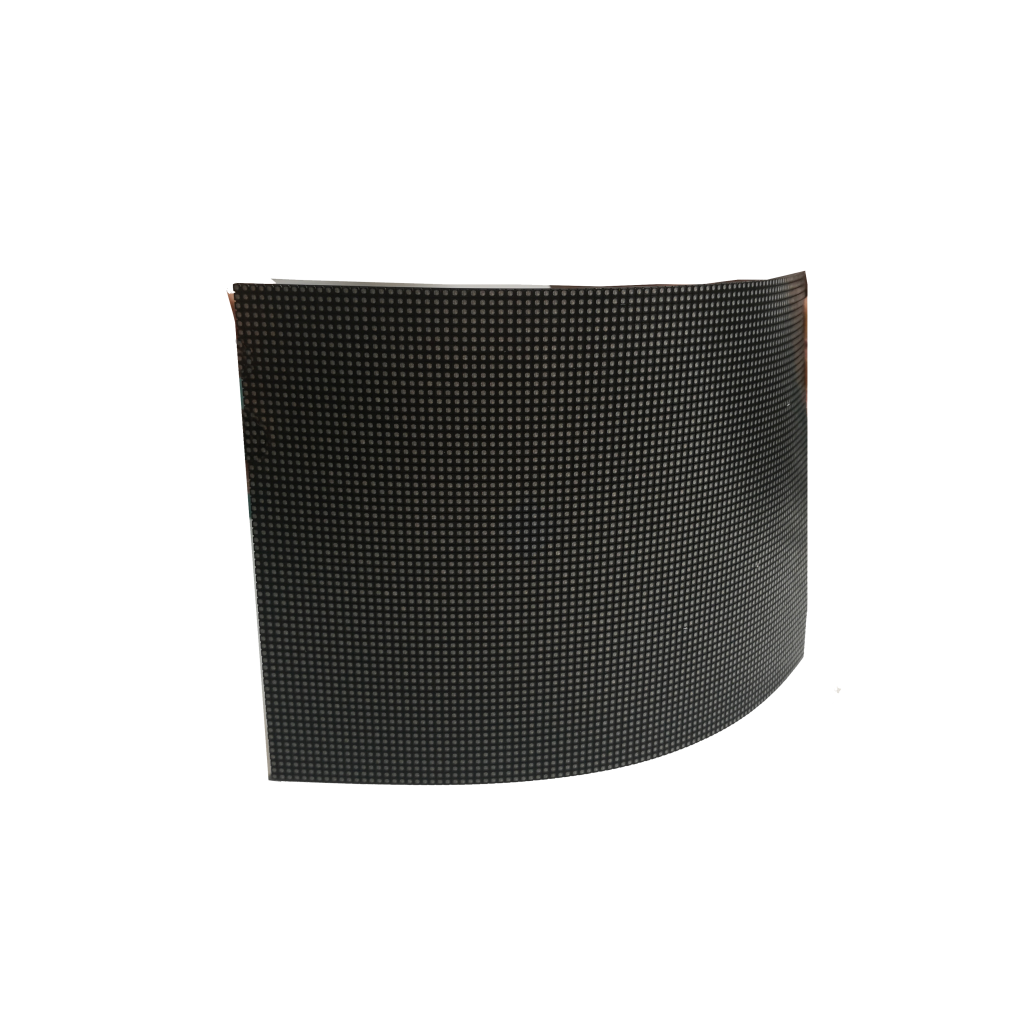


When selecting an indoor LED display, prioritize pixel pitch (1.5-3mm for close viewing) to ensure clarity, opt for high brightness (800-1,500 nits) for vibrant visuals, choose a refresh rate above 1,920Hz to reduce flicker, ensure wide viewing angles (140°+) for audience flexibility, and pick durable panels with 50,000+ hour lifespan for long-term use. Balance cost with features like HDR and seamless calibration.
Pick the Right Pixel Pitch
Pixel pitch—the distance (in millimeters) between the centers of two adjacent LEDs—directly affects viewing distance and image clarity. A smaller pitch (1.2mm–2.5mm) is ideal for close-up viewing (under 3 meters), while a larger pitch (2.5mm–4mm) works for spaces where viewers are farther away (5+ meters). For example, a P2.5 display (2.5mm pitch) is common in corporate lobbies, while a P1.8 is better for retail stores where customers stand closer.
Displays with tight pixel pitches (below 1.5mm) offer ultra-high resolution but cost 30–50% more than standard models. If your budget is tight, a P2–P3 range balances cost and quality for most indoor applications. A 10 sq.m P1.9 display may cost around 8,000–$9,000. However, going too cheap with a P4 or higher in a small room will make text and images look pixelated.
Refresh rate (≥1920Hz) and grayscale (16-bit or higher) also impact smoothness and color depth, but pixel pitch remains the most critical factor. For boardrooms, control rooms, or high-end retail, a P1.2–P1.8 ensures crisp details. In larger venues (conference halls, museums), a P2–P3 is sufficient. Always match the pitch to average viewing distance—if most viewers are 3–6 meters away, a P2.5 is optimal.
Here’s a quick reference for common indoor LED display scenarios:
| Application | Recommended Pixel Pitch | Viewing Distance | Cost per sq.m (USD) |
|---|---|---|---|
| Retail stores, kiosks | P1.2–P1.8 | 1–3 meters | 1,800 |
| Corporate lobbies | P1.8–P2.5 | 3–6 meters | 1,200 |
| Conference halls | P2.5–P3 | 5–10 meters | 900 |
| Museums, exhibitions | P2–P3 | 4–8 meters | 1,100 |
A 10% reduction in pixel pitch can improve perceived resolution by 15–20%, but only if the viewing distance justifies it.
A P1.2 display has 694,444 LEDs per sq.m, while a P2.5 has just 160,000. More LEDs = higher chance of dead pixels over time. If long-term reliability is key, a slightly larger pitch with good warranty coverage (3+ years) may be smarter than chasing the highest resolution.
Check Brightness Levels
Measured in nits (cd/m²), brightness determines whether your content stays visible under office lights (300-500 lux), retail spotlights (800-1,000 lux), or direct sunlight (10,000+ lux). For most indoor environments, 800-1,500 nits is the sweet spot. Go below 600 nits, and the screen may look washed out under bright lights. Go above 2,000 nits, and you’re wasting energy (and money) on unnecessary brightness that strains viewers’ eyes.
A 1,200-nit display consumes about 20% more power than an 800-nit one, adding roughly $50-100 per year in electricity for a 5 sq.m screen. But in a sunlit atrium or storefront, that extra brightness pays off—content remains visible even with 1,500+ lux ambient light. For dimly lit boardrooms or theaters, 500-800 nits is enough, saving energy and reducing glare. Some displays offer auto-brightness adjustment (50-100% range), cutting power use by 15-30% when full brightness isn’t needed.
High-end displays (1,500-2,500 nits) are common in luxury retail, airports, and trade shows, where visibility is critical. But they cost 25-40% more than standard models and require active cooling (fans or heat sinks), which adds noise and maintenance. A 5 sq.m 1,800-nit display might cost 8,000.
Here’s how brightness needs break down by environment:
- Corporate offices / meeting rooms (300-500 lux): 500-800 nits
- Retail stores / lobbies (800-1,200 lux): 1,000-1,500 nits
- Shopping malls / airports (1,500+ lux): 1,500-2,500 nits
- Theaters / dim environments (under 200 lux): 300-600 nits
At 1,500+ nits, some displays lose 10-15% color gamut coverage unless they use high-end LEDs (like Nichia or Osram). Cheaper panels may show visible color shift (ΔE >5) at peak brightness, making reds look orange or blues appear purple. If color fidelity matters (e.g., fashion retail, art galleries), test the display at 100% brightness before buying.
A 2,000-nit display generates 30-50% more heat than an 800-nit one, requiring additional cooling systems ($$) and potentially shortening LED lifespan from 100,000 hours to 70,000. If your screen runs 12+ hours daily, lower brightness (with good ambient light control) can extend its life by 2-3 years.
Some cities limit maximum brightness (e.g., 1,500 nits at night) to reduce light pollution. A display that’s too bright might require dimming controls (+1,000) to comply.

Avoid Flicker with Refresh Rate
For indoor LED screens, 1,920Hz is the minimum to avoid visible flicker under most lighting. Go below 960Hz, and you’ll notice flicker in 60Hz-lit environments (common in offices and retail), especially when recording the screen with a smartphone. High-end displays now offer 3,840Hz or higher, eliminating flicker completely, but at a 20-30% price premium.
A 1,920Hz refresh rate ensures smooth motion for video content (24-60fps) and prevents strobing effects under fluorescent or LED lighting. If your display shows fast-moving graphics (sports, gaming, or financial tickers), a 3,840Hz refresh rate reduces motion blur by 40-50% compared to standard 1,920Hz panels. However, the real-world difference diminishes beyond 3,840Hz—human eyes can’t perceive improvements above that point, making ultra-high refresh rates (like 7,680Hz) an unnecessary expense for most applications.
Low refresh rates (<960Hz) also cause color breakup—where red, green, and blue LEDs don’t align perfectly during motion, creating rainbow-like artifacts. This is especially noticeable in scrolling text or panning shots. A 1,920Hz display reduces this effect by 70-80% compared to a 960Hz one. For broadcast studios or live event venues, where cameras capture the screen directly, 3,840Hz or higher is mandatory to avoid flicker in recordings.
Here’s how refresh rate requirements vary by use case:
- Digital signage / basic video playback: 1,920Hz (good for most indoor uses)
- Retail ads / interactive kiosks: 2,400Hz (better for close-up viewing)
- Sports bars / gaming displays: 3,840Hz (eliminates motion blur)
- Broadcast / live production: 3,840Hz+ (camera-safe, no flicker in recordings)
A 3,840Hz display draws 15-25% more power than a 1,920Hz one, adding $100-200/year in electricity for a 5 sq.m screen. If your content is mostly static (e.g., menu boards or corporate messaging).
If your videos are 30fps or 60fps, a 1,920Hz refresh rate is sufficient. But for high-frame-rate content (120fps or 240fps), like gaming or slow-motion playback, 3,840Hz ensures smoother transitions.
Finally, check the driver IC quality—cheap displays may claim ”high refresh rates” but use poor signal processing, causing input lag (20-50ms delay). For interactive applications (touchscreens, gaming), look for <10ms response time to avoid noticeable lag.
Wide Viewing Angles Matter
Standard panels offer 140-160° viewing angles, but premium models reach 170° or more, ensuring consistent image quality for viewers standing anywhere in the room. For every 10° increase in viewing angle, about 5-8% more of your audience gets a proper view, making it a key factor for retail stores, museums, and conference rooms.
Cheaper displays often use lower-grade LEDs that suffer from color shift (ΔE >5) at just 30° off-center, making reds appear pink or blues turn teal. In a 10m-wide lobby, this means 40% of viewers see distorted colors if the display has 140° angles. High-end panels with 170°+ viewing angles maintain ΔE <3 even at extreme angles, which matters for brand-accurate colors in retail or art displays. The price difference between a 140° and 170° display is typically 15-25%.
A 160° display might show 30-40% brightness loss at the edges, while a 170°+ panel keeps it under 20%. For a 5×5 video wall, upgrading from 140° to 170° can reduce brightness variance from 25% to 12%, making the entire wall look like one seamless screen.
Viewing angle vs. audience coverage in a rectangular room (10m x 6m):
- 140° display: Clear view for ~65% of seats
- 160° display: Clear view for ~80% of seats
- 170°+ display: Clear view for ~90% of seats
A display mounted 3m high needs wider angles (160°+) to serve viewers directly below, while eye-level screens (1.5m) can get by with 140-150°. In interactive kiosks or trade show booths, where viewers approach from all sides, 170°+ is mandatory—otherwise, content becomes unreadable for users standing just 1m to the side.
Anti-glare treatments can help but add 10-15% to the cost. Matte coatings reduce reflections by 50-70%, but they also cut peak brightness by 10-20%. For sunlit atriums or brightly lit stores, this trade-off may be worth it. Always test the display in your actual lighting conditions—what works in a showroom might fail under your 3000K vs. 5000K ambient lights.
If your content moves or changes frequently, 160°+ is the safe minimum. For premium installations where every viewer’s experience matters, 170°+ panels (though 20-30% pricier) prevent disappointed customers and wasted ad spend.
Choose Long-Lasting Panels
Most indoor LED panels are rated for 50,000 to 100,000 hours of use—but real-world longevity depends on heat management, brightness levels, and component quality. A 100,000-hour display running 12 hours daily lasts 22+ years, while a 50,000-hour panel under the same conditions fails in 11 years. Many budget displays claim ”100,000 hours” but use cheap LEDs that degrade 30-40% faster due to poor thermal design.
High-quality LEDs maintain ≥70% brightness at 100,000 hours, while low-tier models drop to 50% or lower by 60,000 hours. For a 5 sq.m display, this means spending 2,000 extra upfront for premium panels avoids 10,000 in replacements over a decade. Look for LM-80 test reports—reputable manufacturers publish actual LED lifespan data under controlled 85°C/85% humidity conditions.
Heat is the 1 killer of LED longevity. Every 10°C increase in operating temperature reduces lifespan by 15-20%. Displays running at max brightness (1,500+ nits) in poorly ventilated spaces may see 50,000-hour LEDs fail in just 30,000 hours. Active cooling (fans or heat sinks) helps but adds 5-10% to power costs. Passive cooling designs with aluminum substrates and thermal pads are more reliable long-term, especially in 24/7 operation environments like control rooms or airports.
Top-tier suppliers (Nichia, Cree, Osram) have <0.1% annual failure rates, while generic LEDs fail at 0.5-1% per year. For a 10 sq.m P2.5 display with 640,000 LEDs, that’s 640 dead pixels/year with cheap LEDs vs. 64 with premium ones. Some manufacturers offer modular panels where individual LEDs can be replaced for 20 per module, while others require full panel swaps at 500 each.
Warranty terms reveal real lifespan expectations:
- 1-2 years: Budget displays (likely 50,000-hour LEDs)
- 3-5 years: Mid-range (70,000-80,000 hours)
- 5+ years: Professional-grade (100,000+ hours)
Reducing brightness from 100% to 70% can add 20,000+ hours to LED life. Scheduling 8-hour daily off periods (vs. 24/7 operation) cuts annual usage by 66%. For content with static logos or tickers, pixel shifting features prevent burn-in, which can permanently damage LEDs in as little as 6 months of unchanged imagery.
Cost-per-hour analysis shows why longevity matters:
- 0.20/hour
- 0.15/hour
- 0.17/hour
Always verify MTBF (Mean Time Between Failures) for critical components like power supplies (good units last 80,000-100,000 hours). The cheapest display often becomes the most expensive over 5+ years—calculate total costs before buying.


![How to Choose a Flexible LED Display [Buyer's Guide]](https://www.szradiant.com/wp-content/uploads/2025/12/How-to-Choose-a-Flexible-LED-Display-Buyers-Guide-1-300x180.jpg)


