


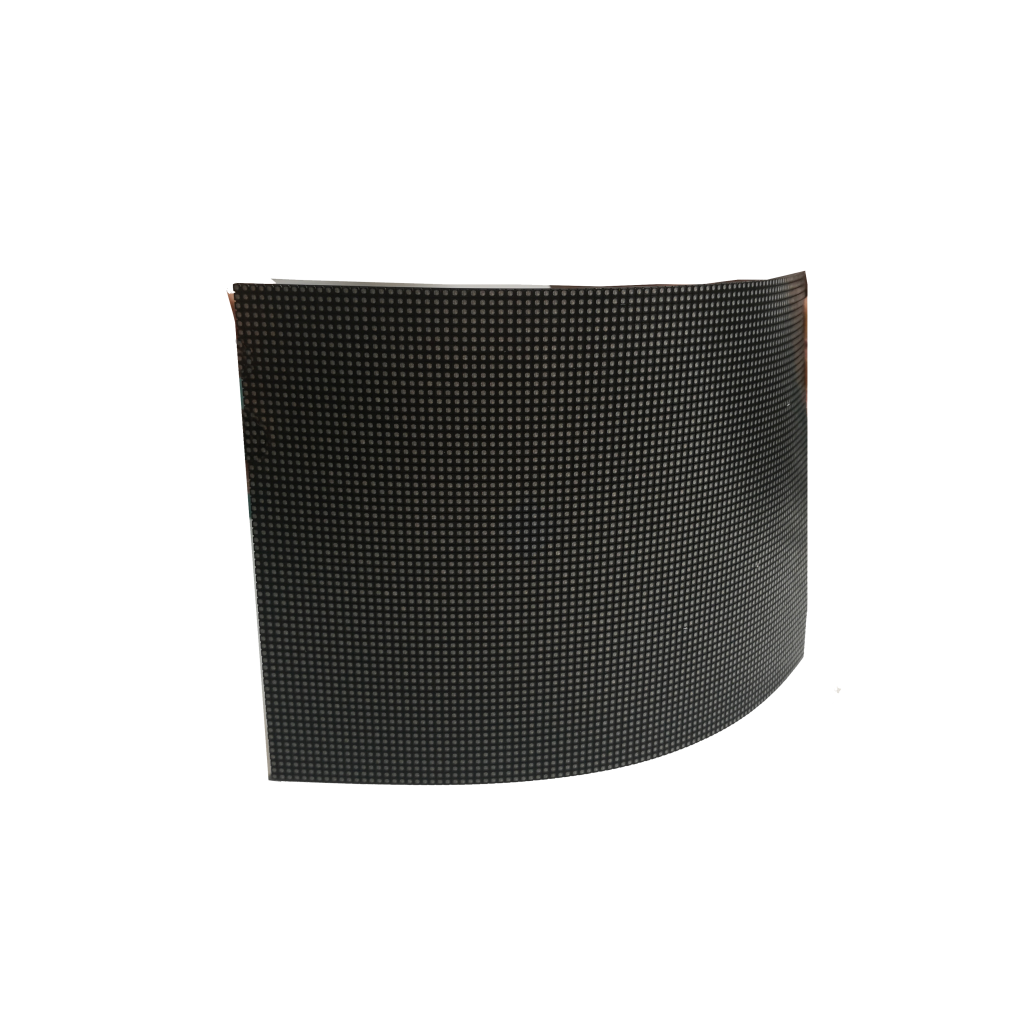


To choose a custom LED display, start by defining its use: outdoor screens need ≥5000 nits brightness and IP65 protection against sun and rain, while indoor close-viewing scenarios require P1.2-P2.5 pixel pitch for clear image quality.
Sports venues demand a refresh rate of ≥3840Hz to prevent motion blur, and retail stores prefer thin curved designs with a thickness of ≤20mm. Match the resolution to the viewing distance (e.g., P4-P6 pitch is suitable for a 10m viewing distance).
Verify the supplier’s case studies (e.g., stadium or retail installation projects) and check specifications such as a 10,000-hour lamp life. Quantify your requirements—avoid 70% of errors caused by vague demands—to obtain a fit-for-purpose display.
Requirements
Outdoor screens require ≥5000 nits brightness and IP65 protection rating, while indoor close-viewing screens should adopt P1.2-P2.5 pixel pitch; sports venues need a refresh rate of ≥3840Hz to prevent motion blur, and retail shop windows tend to use special-shaped designs with a thickness of ≤20mm.
Application Scenarios
Outdoor Screens
Billboards on Miami Beach, Florida, USA, are exposed to direct sunlight all year round (with illuminance exceeding 100,000 lux), so the brightness must be set to 6000-7000 nits; otherwise, the images will be barely visible at noon.
The protection rating must reach IP66—it can withstand direct heavy rain (100mm rainfall per hour) and sandstorms (particles with a diameter of ≤2mm). For example, screens used in the deserts of Saudi Arabia also need to be coated with anti-UV layers to prevent the plastic mask from aging and yellowing within 5 years.
P4-P10 pixel pitch is recommended because the viewing distance is mostly over 30 meters; a smaller pixel pitch would be a waste of resources.
For instance, the giant screens in Times Square, New York, adopt P6 pixel pitch, with approximately 27,000 lamp beads per square meter, and the power consumption is controlled within 550W (EU ERP Class A+).
Indoor Screens
Conference room screens, such as those in the boardrooms of the London Financial City, where participants sit 3 meters away, must use P1.5-P2.5 pixel pitch (160,000-400,000 lamp beads per square meter), with a brightness of 800-1200 nits (not too bright to cause glare) and 14-bit grayscale (no color banding in gradient charts).
Retail stores, like the window screens of Galeries Lafayette in Paris, require thin screens (≤18mm thick) with curved shapes (arc radius of 1.5 meters), adopting P2-P3 pixel pitch and a brightness of 1500 nits (no reflection during the daytime), and also supporting special-shaped cutting—such as being made into the shape of a brand logo.
Fixed Screens
Flight information screens at Munich Airport, Germany, operate 24 hours a day, so their MTBF (Mean Time Between Failures) must be ≥100,000 hours (operating 20 hours a day, they can be used for 13 years).
The structure adopts hot-dip galvanized steel (corrosion resistance grade C5-M, which can withstand coastal environments), and a 30cm heat dissipation gap is reserved behind the screen (to ensure the internal temperature does not exceed 45℃ in summer).
For example, the passenger guidance screens at Chicago Union Station have not had their modules replaced in 8 years, thanks to the modular design—each module is 500×500mm, and faulty modules can be replaced individually without dismantling the entire wall.
Rental Screens
The stage background screens at the Coachella Music Festival in the USA weigh 22kg per square meter (30% lighter than fixed screens), and one person can install 1 square meter within 15 minutes. The modules adopt magnetic design, and faulty modules can be directly pulled out from the front for replacement without climbing scaffolding.
The transportation packaging must be able to withstand a 1.5-meter drop (inevitable bumps in exhibition trucks). For example, the screens used at the concert at Wembley Stadium in the UK were shipped by sea to the USA, then disassembled and reassembled, with a 99% intact rate.
P3-P6 pixel pitch is adopted to balance clarity and brightness (3000 nits), ensuring clear visibility during outdoor rehearsals in the daytime.
Special Scenarios
- Sports Venues: The scoreboards in NBA arenas must have a wide viewing angle (horizontal/vertical ≥170°), so that even spectators sitting in the corner can clearly see the players’ jersey numbers. The refresh rate is ≥3840Hz, ensuring no motion blur when the game is filmed by cameras—for example, the home court screen of the Los Angeles Lakers uses the Novastar control system with a synchronization error of <1 microsecond.
- Transportation Hubs: The flight information screens at Haneda Airport in Tokyo have a character height of 100mm (readable from 20 meters away), support scrolling display in 10 languages, and can update 500 pieces of information every day without lag.
- Churches/Theaters: The choir background screen at Canterbury Cathedral in the UK has a brightness of 2000 nits but reduced blue light (color temperature of 4000K) to not disturb the ritual atmosphere, and a contrast ratio of 5000:1 to make the lyrics clear and legible.
- Art Installations: The interactive installation at the Museum of Modern Art in New York uses transparent screens (65% light transmittance), allowing the exhibits behind to be visible, with a touch response delay of <40ms, so that tourists can trigger animations when touching the screen.

Performance Requirements
Size and Resolution
At a shopping mall in Austin, Texas, USA, customers stand an average of 5 meters away from the screen, so P1.8 pitch (1.8mm) must be used—the 5-meter viewing distance is just right for a blur-free image. If the viewing distance is 10 meters, P3.1 pitch (3.1mm) is sufficient; a smaller pitch would be a waste of money.
The resolution must be adequate. For a 4K screen (3840×2160 pixels) with P2 pitch, the maximum size is approximately 7.7 meters wide; beyond this size, an 8K screen (7680×4320 pixels) is required.
A 30cm heat dissipation gap should be reserved behind the screen (for example, in Vancouver, Canada, where the temperature drops to -10℃ in winter, poor heat dissipation can cause the power supply to freeze). For special-shaped screens such as curved screens, flexible modules are required if the radius is less than 2 meters (like the cylindrical screen at an art exhibition in Oslo, Norway, with a radius of 1.8 meters, which uses flexible PCB boards).
The splicing gap must not exceed 0.5mm—for the lobby screen of a hotel in New York, USA, the gap between two modules is 0.3mm, which is almost invisible to the naked eye.
|
Viewing Distance (m)
|
Recommended Pixel Pitch
|
Corresponding Resolution (for 10m wide screen)
|
Applicable Scenarios
|
Overseas Cases
|
|---|---|---|---|---|
|
1-3
|
P1.2-P1.8
|
8333×4688 (8K)
|
Indoor Close-Viewing
|
Apple Store, Berlin, Germany
|
|
3-6
|
P2-P3
|
5000×2813 (5K)
|
Conference Rooms, Retail Shop Windows
|
Printemps, Paris, France
|
|
6-15
|
P4-P6
|
2500×1406 (2.5K)
|
Shopping Mall Atriums, Small Outdoor Screens
|
Millennium Park, Chicago, USA
|
|
15+
|
P8-P10
|
1250×703 (1K)
|
Large Outdoor Billboards, Sports Stadiums
|
Piccadilly Circus, London, UK
|
Brightness
Insufficient brightness makes the screen look foggy during the daytime. Under strong outdoor light (such as in Phoenix, Arizona, USA, with an illuminance of 120,000 lux), the brightness must be 6000-7000 nits—a casino exterior wall screen in the area uses 6500 nits, and the images remain clear at 12 noon.
For indoor scenarios, it varies: 1200 nits for bright offices (500 lux illuminance) and 800 nits for dark conference rooms (100 lux illuminance). Excessively high brightness causes glare and increases power consumption (EU ERP standard: for every 100 nits increase in brightness, power consumption rises by approximately 5%).
A sufficiently high contrast ratio is essential for clear image layering. When measuring black field brightness in a dark room (illuminance <10 lux), a high-quality screen has a black field brightness of <0.05 nits, resulting in a contrast ratio of over 6000:1.
For example, the indoor screen at the Sydney Opera House in Australia has a contrast ratio of 6500:1, and the details of the black sea water are clearly visible when playing deep-sea documentaries. Low contrast ratio screens (<3000:1) cause the sky and buildings to blend together when displaying night scenes.
Color
Color accuracy is determined by three metrics: color gamut, color accuracy, and grayscale. Advertising screens use the sRGB color gamut with a coverage rate of ≥110% (exceeding is acceptable). For example, the global store screens of Coca-Cola in the USA have an sRGB coverage of 115%, making the red color more vivid.
Film and television production uses the DCI-P3 color gamut with a coverage rate of ≥95%—a review screen at a Hollywood post-production company has a DCI-P3 coverage of 98%, ensuring accurate restoration of the original film colors.
Color accuracy is measured by the ΔE value; professional screens have a ΔE <2 (almost indistinguishable to the human eye). Measured with the X-Rite i1Pro 2 spectrophotometer, for example, the studio screen of the BBC in the UK has a red ΔE=1.2 and a green ΔE=0.8.
14-bit grayscale (16384 levels) is superior to 12-bit grayscale (4096 levels). When displaying a sunrise gradient, a 14-bit screen shows 256 layers of transition from black to orange, while a 12-bit screen only shows 64 layers, with visible color banding.
Refresh Rate and Grayscale
If the refresh rate is lower than 1920Hz, moiré patterns will appear when the screen is photographed with a mobile phone. Sports events must use a refresh rate of ≥3840Hz—the stadium screen at the NFL Super Bowl in the USA has a refresh rate of 7680Hz, ensuring no motion blur when filming running players.
Stage performances require a refresh rate of ≥5760Hz. For example, the stage screen at a show venue in Las Vegas ensures no blurring at the edges when actors wave colorful ribbons.
Grayscale processing must be matched with the refresh rate. A combination of 14-bit grayscale and 3840Hz refresh rate provides 4 times more dynamic image layering than 12-bit grayscale and 1920Hz refresh rate.
For example, the stage screen at the Oktoberfest in Munich, Germany, uses 16-bit grayscale and 7680Hz refresh rate, making the flame textures clear during fire-breathing special effects.
Viewing Angle
A narrow viewing angle results in washed-out images for spectators sitting in the corner. A horizontal/vertical viewing angle of ≥160° is acceptable, and high-quality screens can reach 175°.
For example, the parade route screens at Disneyland in the USA have a viewing angle of 170°, allowing tourists on both sides to clearly see the expressions of cartoon characters.
Test method: The colors appear normal when standing directly in front of the screen; when moving to a 45° angle (half the screen’s diagonal), the brightness attenuation should not exceed 20%—the screens used at Tokyo Disneyland in Japan retain 82% of their brightness at a 45° angle, meeting the requirements.
Installation and Maintenance
Installation Locations
- Wall Mount Installation
Wall-mounted screens are the most common. For example, a 2m×3m window screen (weighing 180kg) at a shopping mall in Chicago, USA, uses hot-dip galvanized steel brackets (5mm thick, corrosion resistance grade C5-M) with a load capacity of at least 360kg (twice the screen weight). Embedded steel plates (10mm thick) must be pre-installed on the mounting surface (solid wall or concrete column), and M12 expansion bolts (tensile strength ≥12kN) are used. A 30cm heat dissipation gap is reserved behind the screen—in Vancouver, Canada, where the temperature drops to -10℃ in winter, poor heat dissipation can trigger the power supply’s low-temperature protection and shut down the screen.
- Ceiling Mount Installation
Ceiling mounting is commonly used in gymnasiums and concerts. For example, a 4m×6m stage screen (weighing 480kg) at the O2 Arena in London, UK, uses aviation aluminum hangers (3mm thick, density 2.7g/cm³) that can withstand level 12 wind loads (wind speed 36.9m/s). The spacing between hanging points is ≤1.5m, and each hanging point has a load capacity of ≥200kg (connected with M16 shackles). The bottom of the screen must be at least 2.5m above the ground to avoid hitting spectators’ heads.
- Freestanding Installation
Freestanding screens are used in retail stores and exhibition halls. For example, a 1.5m×2.5m screen (weighing 120kg) at a luxury store in Paris, France, uses square steel tube bases (80×80mm cross-section, 4mm wall thickness) filled with concrete counterweight (total weight ≥240kg). If equipped with wheels, the wheel diameter must be ≥100mm, and the braking force must be ≥50kgf (to keep the screen stable and non-slip).
- Recessed Installation
Recessed installation is used in high-end venues. For example, a lobby screen at a hotel in Munich, Germany (recessed into the wall, protruding ≤5mm from the wall surface), requires the wall slot to be 10mm larger than the screen (to leave an expansion gap). Four Φ10cm circular heat dissipation holes (or equivalent area slotted holes) are drilled per square meter, installed on both sides of the screen (to prevent dust from entering). A 50cm maintenance channel is reserved behind the screen (for placing control equipment).
|
Installation Method
|
Load Capacity Requirement (Multiple of Screen Weight)
|
Space Reservation (Behind/Side of Screen)
|
Material Specifications
|
Applicable Scenarios
|
Overseas Cases
|
|---|---|---|---|---|---|
|
Wall Mount
|
≥2 times
|
30cm behind, 10cm on sides
|
Hot-dip Galvanized Steel (5mm thick)
|
Shopping Mall Windows, Conference Rooms
|
Chicago Shopping Mall, USA
|
|
Ceiling Mount
|
≥200kg per hanging point
|
≥2.5m from screen bottom to ground
|
Aviation Aluminum (3mm thick)
|
Gymnasiums, Concert Stages
|
O2 Arena, London, UK
|
|
Freestanding
|
Base counterweight ≥2 times screen weight
|
50cm channel reserved around the screen
|
Square Steel Tube (80×80×4mm)
|
Exhibition Halls, Temporary Events
|
Luxury Store, Paris, France
|
|
Recessed
|
Wall load capacity ≥1.5 times screen weight
|
50cm maintenance channel behind the screen
|
Aluminum Alloy Frame (3mm thick)
|
Hotel Lobbies, High-end Exhibition Halls
|
Hotel, Munich, Germany
|
Maintenance Methods
- Front Maintenance
Front maintenance screens are used in shopping mall windows and narrow corridors. For example, a 1m×1.5m screen at a jewelry store in New York, USA, uses 500×500mm modules. Faulty modules can be directly removed from the front with a suction cup (suction force ≥50N) and replaced with new ones (completed by one person within 10 minutes). No structural disassembly is required, making it suitable for venues that cannot shut down the screen during daily business hours.
- Rear Maintenance
Rear maintenance screens are used for large screens in airports and gymnasiums. For example, a 10m×3m screen at Amsterdam Airport in the Netherlands has a 600mm rear channel, allowing technicians to stand inside to clean the lamp beads and replace the power supply (power supply size: 200×100×50mm, weight: 1.2kg). A full inspection is conducted twice a year: an infrared thermometer is used to measure the lamp bead temperature (normal temperature ≤60℃; replace lamp beads if exceeding 70℃), and a megohmmeter is used to measure the insulation resistance (≥2MΩ).
- Spare Parts
The screen adopts a modular design (500×500mm modules), which reduces replacement costs by 70% compared to full-screen replacement. Spare parts list: lamp beads ($0.1 each, 576 beads per module), power supplies ($50 each, 200W), and receiving cards ($30 each, supporting 650,000 pixels). At least 5% of the total module quantity should be kept in stock (e.g., 5㎡ of modules for a 100㎡ screen) to avoid 3-week delays due to stock shortages.
Daily Maintenance
For cleaning, use a soft nylon brush (hardness ≤80 Shore A) to remove loose dust, then wipe with non-woven fabric dipped in anhydrous ethanol (purity ≥99%) with a pressure of ≤5N/cm².
Clean once a month; do not use a high-pressure water gun (even IP65 screens cannot withstand water pressure >0.3MPa).
In northern winters (e.g., Montreal, Canada, with temperatures of -20℃), do not scrape the frost on the screen surface hard; use a heater (30℃ outlet air) to defrost for 10 minutes.
In coastal areas (e.g., Miami, USA), rinse the frame with fresh water monthly (to prevent salt spray corrosion) and apply anti-rust oil (ISO VG32) to the screws.
Cost
Improper selection of custom LED displays can lead to a 30% cost overrun per square meter at best, and project operation and maintenance collapse at worst.
Data shows that 60% of purchasers waste their budget by ignoring the golden ratio between pixel pitch and viewing distance (e.g., the pixel particles of a P2.5 screen are <0.1mm at a 3m viewing distance).
In outdoor scenarios, screens with brightness below 6000nits experience a 70% drop in visibility under 80000lux sunlight. More seriously, indoor screens with a protection rating below IP54 used in dusty workshops have a 5-fold increase in failure rate.
Explicit Costs
Screen Itself
The screen accounts for 60%-80% of the total cost.
-
A doubling of the model can lead to a several-fold increase in price. For example, the commonly used SMD package screens in the US market: a 10㎡ P3 pitch (3mm pixel pitch) screen costs approximately $10,000; replacing it with a small-pitch P1.5 screen (Absen’s Acclaim series) of the same size costs $20,000 because the pixel density and lamp bead usage are doubled. If upgrading to Mini LED (such as Samsung The Wall IWA) with COB package, a 10㎡ screen costs as much as $30,000, 3 times more expensive than P3, but the dead lamp rate is reduced from 0.0005% (P3) to 0.0001% (Samsung 2022 Technical White Paper).
-
Cost increases with size and resolution. Upgrading a 10㎡ screen from 1080P to 4K requires 30% more lamp beads, with a price increase of $3,000 (based on a lamp bead cost of $100/㎡). Outdoor screens have an additional anti-glare coating, adding $50-$100 per square meter.
-
Premium brands justify their higher prices. First-tier brands such as NEC MultiSync and Barco XT series are 25% more expensive than second-tier Unilumin’s Upad series, but UL certification data shows that the 5-year failure rate of the former two is 12%, while that of the latter is 22%. For example, a New York advertising company used an NEC screen and only replaced 2 lamp beads in 3 years; using a Unilumin screen of the same specification, 15 lamp beads were replaced during the same period.
Control System and Accessories
This part accounts for 15%-20% of the total cost.
-
Video processors are divided into high-end and low-end models. NovaStar’s VX1000 entry-level model supports 4K input, with one unit costing $800 for a 10㎡ screen; upgrading to the VX6000 high-end model, which can process 8K signals and provide image quality enhancement, costs $1,200 (50% more expensive). For sports venue use, a motion compensation function must be added, with an additional cost of $300.
-
Transmitter and receiver cards are priced by pixel count. A 10㎡ P3 screen has approximately 100,000 pixels, requiring one NovaStar MCTRL600 transmitter card ($500) + 10 receiver cards ($80 each), totaling $1,300; for a P1.5 screen with double the pixel count, 20 receiver cards are needed, increasing the accessory cost to $2,100.
-
Structural frames vary in cost by shape. Aluminum alloy frames are used for flat wall installation, costing $50/㎡; custom molds are required for curved screens (e.g., cylindrical screens in shopping malls), with a design fee of $2,000 and frame material cost of $120/㎡, resulting in an additional cost of $1,700 for a 10㎡ screen.
Installation and Transportation Costs
This part accounts for 5%-10% of the total cost but can double in special scenarios.
-
Simple indoor installation is priced per square meter. Installing a 10㎡ screen on an office wall in the USA costs $800 for labor and $500 for brackets, totaling $1,300 ($130/㎡).
-
Outdoor high-altitude installation costs increase significantly. Installing a circular screen at a Premier League stadium, 20 meters above the ground, requires a crane and safety ropes, with labor costs of $5,000 per day and a 3-day installation costing $15,000 ($1,500/㎡ for a 10㎡ screen).
-
Additional transportation fees apply to remote areas. Shipping screens to northern Canada incurs a 25% surcharge from logistics companies, increasing the shipping cost of a 10㎡ screen from $1,000 to $1,250; for mountainous European countries (e.g., Switzerland), an additional $500 is charged for truck transportation into mountainous areas.

Implicit Costs
Energy Consumption
For every 1000nits increase in brightness, power consumption rises by 20%. A 10㎡ P3 screen with 5000nits brightness (commonly used outdoors) consumes 1.2kWh per hour. With US electricity prices at $0.12/kWh and 12 hours of daily operation, the annual electricity cost is $1,051;
at 8000nits (used under strong light), the power consumption is 1.5kWh per hour, with an annual electricity cost of $1,314.
Energy-efficient screens cost more initially but save on electricity bills long-term. Screens using common cathode technology (e.g., Leyard CarbonLight) reduce energy consumption by 30%. A 10㎡ energy-efficient screen costs $1,500 more initially (15% increase) but saves $315 on electricity bills annually, with a payback period of 5 years.
Maintenance and Repair
The warranty period is generally 2-3 years, after which repair costs are borne by the purchaser.
Lamp beads are replaced individually. P3 screen lamp beads cost $0.5 each (wholesale price). A 10㎡ screen has approximately 20,000 lamp beads, with 10% spares (2000 beads) costing $1,000;
if 5 beads fail monthly (60 beads annually), the annual replacement cost is $30.
Driver chips and system boards are expensive. One driver board controls thousands of pixels, with replacement costs ranging from $500-$1,500 (e.g., Barco boards);
repairing a faulty video processor costs $800, and replacing it costs $1,200.
Professional inspection also incurs costs. Annual inspections of outdoor screens for waterproofing and heat dissipation cost $5,000 per inspection in the USA and $6,000 in Europe;
for large screens (over 50㎡), an additional $2,000 is charged.
Service Life Cycle
High-quality screens can be used for 10 years, while low-quality ones may be scrapped in 3 years.
Laboratory data: Leyard tests show that indoor P3 screens retain 80% of their brightness after 10 years in an environment of 25℃ and 50% humidity;
outdoor P6 screens retain 70% of their brightness after 5 years under cyclic temperatures from -20℃ to 50℃.
Actual cases: Samsung outdoor screens at Las Vegas casinos have not been fully replaced in 8 years, with only a few lamp bead replacements;
off-brand screens at a gas station in Texas lost half their brightness in 3 years, with screen replacement costing $8,000 (compared to the original purchase price of $6,000).
Influencing Factors
Scenario Usage
- Outdoor billboards (e.g., Times Square, New York): Must withstand sun exposure and rain, with a brightness of at least 6000nits (ordinary indoor screens only have 3000nits) and IP65 protection rating (dust and water resistance). Such screens are 40% more expensive than indoor screens of the same size due to high-brightness LED lamp beads ($80 more per square meter) and sealed structures ($50 more per square meter for frames).
- Sports venues (e.g., Premier League stadiums): Spectators need to view high-speed moving images without motion blur, requiring a refresh rate of ≥3840Hz (ordinary screens have 1920Hz). High-end NovaStar controllers (e.g., H series) are used, which are 20% more expensive than entry-level models, plus a motion compensation module ($1,500 per set).
- Retail shop windows (Macy’s, USA): Require high transparency to not affect natural lighting, using transparent screens (e.g., LG Transparent LED), which are 30% more expensive than conventional screens but allow visibility of exhibits behind.
- Corporate conference rooms (Silicon Valley tech companies): Close-up viewing of text requires no blurring, so small-pitch P1.2 screens (e.g., Barco NTX 1.2) are selected. A 10㎡ P1.2 screen is twice as expensive as a P3 screen due to higher pixel density (40,000 more lamp beads per square meter).
Technology Usage
- Mini/Micro LED is 50% more expensive than traditional screens. Samsung The Wall using Micro LED (COB package) costs $30,000 for 10㎡; a conventional SMD package P3 screen of the same size only costs $10,000. However, Micro LED has a lower dead lamp rate (0.0001% vs. 0.0005% for SMD) and a 3-year longer service life (Samsung 2023 Test Data).
- Older technologies incur high later upgrade costs. Driver chips produced before 2018 (e.g., some old domestic models) do not support 8K input. Upgrading to new equipment now requires replacing the entire control system, costing $5,000-$8,000 (quoted by US integrators).
- New technologies have high initial investment but are eligible for subsidies. The EU provides a 10% subsidy for energy-efficient screens (common cathode technology). For example, the Leyard CarbonLight screen costs $16,500, reduced to $14,850 after subsidy, offsetting part of the premium price.
Component Quantity
Lamp beads account for 40%-50% of the LED screen cost, and lamp beads depend on chips and raw materials.
- Chip factory capacity: Cree and Osram account for 60% of the global LED chip market. In 2021, factory fires and pandemic-related shutdowns caused chip prices to rise by 30% (Grand View Research data), directly leading to a 25% increase in screen prices. For example, Unilumin’s P3 screen cost $9,000 for 10㎡ in 2020 and rose to $11,250 in 2021.
- Raw material costs: LED lamp beads use gold wire (for conduction) and epoxy resin (for packaging). In 2022, gold prices rose by 20% and resin prices by 15%, increasing the cost of each lamp bead by $0.02, resulting in an additional cost of $400 for a 10㎡ screen (20,000 lamp beads).
- Logistics costs: Shipping from China to the USA has increased from 30 days to 60 days, with shipping companies charging a 25% peak season surcharge, raising the shipping cost of a 10㎡ screen from $1,000 to $1,250 (Flexport 2023 Quote).
Environmental Impact
- Temperature and humidity: Leyard laboratory tests show that indoor screens retain 80% of their brightness after 10 years at 25℃ and 50% humidity; in high-temperature and high-humidity warehouses (35℃ and 80% humidity), only 60% of brightness remains after 5 years.
- Outdoor environment: Samsung outdoor screens at Las Vegas casinos have only had 3 lamp bead replacements in 8 years ($500 each time); off-brand screens at a Texas gas station required driver board replacement due to rain infiltration after 3 years ($1,200 per replacement, with two replacements costing $2,400 in 5 years).
- Dust: Screens used in desert areas of the Middle East require quarterly high-pressure cleaning (to prevent sand from blocking heat dissipation holes), costing $800 per cleaning and $3,200 annually; screens in suburban USA are cleaned semi-annually, costing $1,600 annually.
Regulations
- EU ERP Energy Efficiency Directive: Screen power consumption must be below 0.5W/㎡ (ordinary screens are 0.8W/㎡). Compliant screens are 10% more expensive (e.g., Planar’s energy-efficient model costs $11,000 vs. $10,000 for the ordinary model) but save 30% on long-term electricity bills.
- US UL Certification: Outdoor screens must pass lightning protection (10kV) and fire resistance (V-0 grade plastic) tests, with certification fees ranging from $5,000-$10,000. Specified materials must be used (e.g., UL-certified aluminum frames, $20 more per square meter).
- California Title 24 Energy Conservation Act: Commercial screens must automatically dim at night, requiring the installation of light sensors ($300 each), with 2 sensors installed for a 10㎡ screen costing $600.


![How to Choose a Flexible LED Display [Buyer's Guide]](https://www.szradiant.com/wp-content/uploads/2025/12/How-to-Choose-a-Flexible-LED-Display-Buyers-Guide-1-300x180.jpg)


