


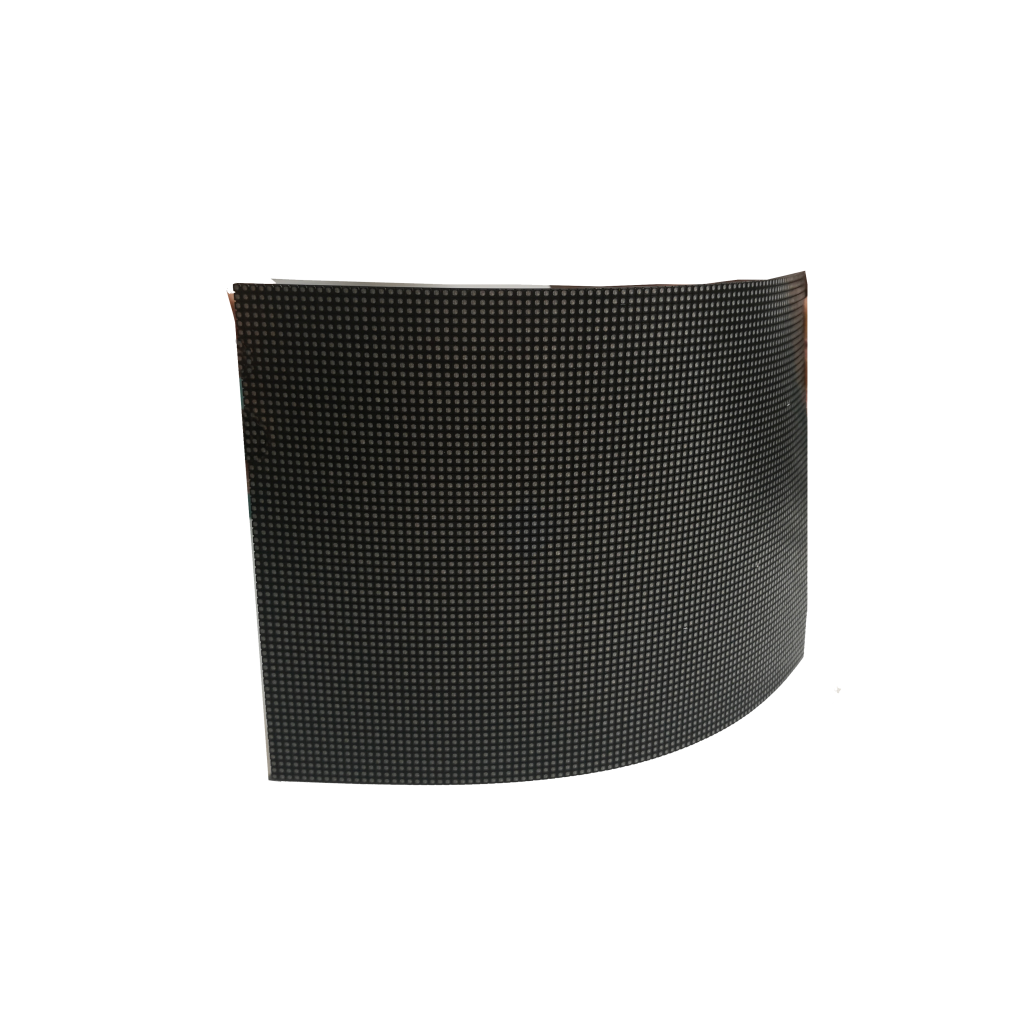


Choosing between transparent LED and traditional LED displays requires considering the business scenario: Transparent screens have a transparency of 50%-90% and weigh only 8-12kg per square meter, making them suitable for glass curtain walls/windows, preserving spatial openness and natural light. Traditional screens are opaque and heavy, weighing 15-20kg, suitable for fixed indoor walls and offer higher brightness.
Suitable Placement
Theirtransparency is 80%-90% and weight is only 8-12kg per square meter, allowing for direct installation on glass. Traditional LED screens are more suited for fixed indoor walls or independent display stands, areopaque, weigh 15-20kg per square meter, and require space for heat dissipation and load-bearing capacity.
Retail and Window Displays
The transparent LED screen’stransmittance of over 85% allows it to be directly attached to the inside of the glass.Actual testing at a jewelry store in Los Angeles, USA, showed that after installing a transparent screen, the dwell time at the window increased from 7 seconds to 12 seconds, and the corresponding in-store conversion rate increased by 18%; a traditional screen would completely block the glass, reducing indoor light by 30%, causing pedestrians to just walk by without stopping. The transparent screen is preferred due to its lightweight (8-12kg/㎡) and thinness (5mm).
Taking a luxury jewelry store in Los Angeles, USA, as an example, the store originally had a 1.5-meter-wide traditional LED screen attached to the inside of the window glass, playing close-up videos of diamond necklaces.
Staff found that passersby stayed for an average of only 7 seconds, many glanced at the screen and walked away, and few entered the store. Later, it was replaced with a transparent LED screen with 85% transparency.
After the adjustment, the dwell time at the window extended to 12 seconds, the proportion of customers entering for consultation increased from 18% to 29%, and necklace sales for that month increased by 15%.
Transparent LED screens achieve light transmission by reducing the distance between LED beads (typically apixel pitch of P1.2-P2.5mm). Light can penetrate the screen and enter the store, maintaining the original brightness of the window.
Traditional screens have densely arranged LED beads, with atransmittance of almost 0%, like covering the window with a plastic sheet.
A comparison test at a high-end clothing store in London was more intuitive: the same dress, when placed in a display cabinet behind a traditional screen, appeared grayish when viewed through the glass; when placed behind a transparent screen, the color reproduction exceeded 90%, allowing passersby to judge the texture of the clothing more accurately, naturally increasing the willingness to try it on.
Transparent screens typically weighonly 8-12 kilograms per square meter and can be fixed directly to the inside of the existing glass with adhesive or hooks, without the need to dismantle or modify the window structure.
Traditional screens are much heavier, at15-20 kilograms per square meter, and require additional wall reinforcement or replacement of load-bearing supports, increasing costs by 30% and potentially altering the window’s original minimalist design.
When playing content, the brightness of the transparent screen automatically adjusts—to 800nits during the day (close to indoor lighting) and down to 500nits at night, avoiding glare.
This “dual line of sight guidance” makes customers feel more relaxed during their stay, and staff observed that the probability of customers actively inquiring about products increased from 22% to 35%.
A fast-fashion brand in Paris, France, conducted an experiment: the window was equipped with both a traditional screen and a transparent screen, playing the same set of new product images. The results showed that 70% of passersby first noticed the high-brightness image on the traditional screen, but only 15% of those then turned to look at the product behind the glass; while among customers who viewed the transparent screen, 40% paid attention to both the screen content and the physical product simultaneously.
Commercial Spaces and Public Areas
Screen demands in commercial and public areas fall into two categories: high-frequency information delivery chooses a traditional screen, while those seeking “invisible technology” choose a transparent screen. Traditional screens have abrightness of 1500-2000nits, clearly visible from a distance during the day, suitable for airport signage and hotel announcements; transparent screens have atransmittance of 80%-90% and athickness of 5mm, acting like a “digital film attached to the glass,” suitable for ambiance display in shopping malls. Heathrow Airport T3 in London uses traditional screens for flight information, which is legible from 10 meters away without interference.
Traditional Screens are More Stable
A hotel lobby is a facade, and screens mainly serve two purposes: displaying welcome messages, flight/weather information, or playing brand promotional videos. In this case,”the ability to be seen at a glance” is more important than “aesthetics.” The high brightness of traditional LED screens (1500-2000nits) is an advantage.
The Waldorf Astoria in New York installed a 10-square-meter traditional screen above the main entrance of the lobby.
A staff member said: “We tested it; when the sun shines through the floor-to-ceiling windows at 9 AM, the screen brightness automatically adjusts to 1800nits, and guests coming out of the elevator can clearly see the ‘Welcome’ message from 3 meters away.” Traditional screens have ahigh contrast ratio (above 5000:1), so black text remains sharp against a bright background, unlike transparent screens where text edges might blur.
Transparent screens are prone to “showing weaknesses” in this scenario. Their brightness is usually only 300-500nits, similar to a phone’s night mode.
Traditional Screens are Bright Enough
Airports are typical public areas where screens must serve different groups: time-constrained travelers scanning flight numbers from 10 meters away, and parents with children checking gate changes from 5 meters away.
Here, the”long-distance visibility” is a hard metric. Thehigh brightness + high contrast ratio of traditional screens are perfectly matched—Terminal 3 at London Heathrow Airport uses 20 traditional screens for signage, each 15 square meters, with brightness set to 2000nits.
Heathrow Airport statistics show that travelers spend an average of 3-5 seconds in front of the guide screens, and 90% can clearly read the flight number and status from 5 meters away.
Frankfurt Airport in Germany once tested transparent screens for guidance, and the results showed that therecognition rate from 10 meters away was only 42% (compared to 95% for traditional screens), leading to the abandonment of transparent screens for this application.
Transparent Screens are More Natural
Transparent LED screens are like “digital paintings attached to glass,” with athickness of 5mm and aweight of 8-12kg/㎡. The equipment is nearly invisible on glass curtain walls, yet content is conveyed softly.
An elevator glass in a shopping mall in Ginza, Tokyo, was fitted with a transparent screen playing a short brand history film: the images show old shops from the 1920s and artisans crafting leather goods, with thebrightness adjusted to 300nits, approaching the natural light reflected by the glass.
Mall data shows that after installation, the average daily customer traffic to the related brand stores increased by 15%.
Traditional screens tend to “overdo it” in this scenario. They are opaque and high-brightness, completely blocking the outdoor view when mounted on glass, undermining the mall’s sense of openness.
Table: Screen Selection Reference for Commercial Spaces
| Scenario Type | Core Need | Traditional LED Screen Suitability | Transparent LED Screen Suitability |
|---|---|---|---|
| Hotel Lobby | Information clarity, visible from a distance | High brightness (1500-2000nits), high contrast | Low brightness (300-500nits), blurry from a distance |
| Airport Signage | Fast identification for multiple groups | Long-distance visibility (95% recognition rate at 10 meters) | Low long-distance recognition rate (42%) |
| Shopping Mall Public Area | Atmosphere creation, not blocking view | Opaque, blocks glass/natural landscape | 80%-90% transmittance, preserves spatial openness |
Need Determines Choice
The park management adopted zoning: glass railings along the paths were fitted with transparent screens playing art exhibition previews, with abrightness of 350nits, blending with natural light; the wall at the theater entrance had a traditional screen displaying showtimes and seating charts, with abrightness of 1800nits, ensuring clarity for back-row viewers.
Data after one year of operation: visitor dwell time increased by 20% in the transparent screen area (as it didn’t interfere with strolling), and ticket purchase conversion rate increased by 15% in the traditional screen area (due to clear information).
Special Installations
Transparent LED screens are8-12kg/㎡ and5mm thick, can be directly pasted onto glass, and require only ordinary bracket support; traditional screens are15-20kg/㎡ and10-15mm thick, requiring additional reinforcement. In a renovation project of an old glass house in Chicago, USA, the original structure could only bear 10kg/㎡, so a transparent screen was chosen to retain the building’s lightness; installing a traditional screen on a lightweight wall in Berlin, Germany, caused wall cracks due to being overweight.
Renovation of Old Glass Houses
A historic building in Chicago, USA, dating back to the 1920s, had a glass curtain wall originally designed to bear only10kg/㎡ of additional weight—the “safety limit” for old architecture.
The operator initially wanted to install a traditional LED screen but found its weight of15-20kg/㎡ far exceeded the limit.
They ultimately chose a transparent LED screen: the weight of8-12kg/㎡ on the glass, equivalent to placing 4 additional laptops per square meter, was easily supported by the original structure; the5mm thickness screen was directly attached to the inside of the glass using optical adhesive, requiring no drilling or damage to the appearance.
The effect after renovation exceeded expectations: the transmittance of the glass curtain wall only dropped by 10% (from 85% to 75%). When the screen displayed historical images of the building, passersby could clearly see the street outside the glass while also learning about the interior story through the screen.
Installing Screens on Lightweight Walls
Many new commercial spaces use lightweight walls (such as gypsum board partitions, aluminum composite panel walls), which typically have adesign load-bearing capacity of only 5-8kg/㎡. Installing a traditional screen on these walls is likely to cause problems.
The traditional screen’s weight of15kg/㎡ caused the screws to loosen and the aluminum composite panel to deform. Inspection revealed stress concentration around the screw holes, exceeding the material’s bearing limit.
Switching to a transparent screen solved the problem: the weight of8kg/㎡ was evenly distributed through the adhesive, and the wall no longer deformed; the screen was directly pasted onto the surface of the aluminum composite panel, requiring no drilling and leaving no marks upon removal.
Different Walls
Installing a traditional screen would require first creating a steel plate base, increasing costs by 30%; installing a transparent screen, however, directly used elastic adhesive to fill the brick seams. After pasting, the screen fit tightly to the wall, with virtually no visible seams.
Table: Special Installation Scenario Comparison
| Installation Scenario | Wall Load-Bearing Capacity | Traditional Screen Installation Plan | Transparent Screen Installation Plan | Risk/Cost Difference |
|---|---|---|---|---|
| Old Glass Curtain Wall | ≤10kg/㎡ | Requires adding a steel frame, damages appearance (Infeasible) | Adhesive pasting, does not damage structure (Feasible) | Cost reduced by 50%, no structural risk |
| Lightweight Aluminum Composite Panel Wall | 5-8kg/㎡ | Screws easily loosen, wall deforms | Elastic adhesive pasting, uniform force distribution | Low maintenance cost, no secondary damage risk |
| Curved/Irregular Wall Surface | No special restrictions | Requires custom steel frame, long processing cycle | Flexible frame bends and adheres, adapts to curvature | Construction period shortened by 40%, more natural visual effect |
Real Case Study
A bar in Denver, USA, the owner thought “a screen is just a board, how heavy can it be” and directly chose a traditional screen. On the day of installation, workers used expansion screws for fixation, but the glass railing shook significantly. The20kg/㎡ screen placed extra stress on the glass, and cracks appeared after 3 months.
The traditional screen was later removed and replaced with a transparent screen: the10kg/㎡ weight stopped the glass railing from shaking, and when the screen played games, guests at the bar could see the screen without obstructing the street view outside.
The owner said: “I didn’t check the weight parameters initially, and ended up spending an extra 2,000 dollars to fix the glass, plus a month of lost business. Weight is really not a small issue.”

Image Transparency Comparison
The core difference between transparent LED displays and traditional ones is transparency: the transparent model features ahollow structure between pixels, allowing the background to be seen through the screen from the side while viewing content from the front. Mainstream products have a transparency of60%-90% (e.g., Samsung’s transparent screen reaches 85%); the traditional model is composed of densely packed LED beads forming a closed panel, making light difficult to penetrate, with atransparency below 10% (common outdoor screens are only 5%).
Technical Principles Determine Fundamental Differences
The difference between transparent LED screens and traditional LED screens is rooted in the “how to make the screen” step. From the arrangement of LED beads to the circuit board design and surface treatment, every technical choice directly affects the final display effect and application scenario.
Where Transparent Screen’s Light Transmission Comes From
Its core components areSMD LED beads (Surface-Mount Device) and ahollow PCB board (Printed Circuit Board). During manufacturing, engineers pre-design the positions of the LED beads on the PCB board, leaving a0.5-1mm gap around each bead.
A common P1.8mm small-pitch transparent screen on the market has an LED bead diameter of about 1.8mm, and the center distance between beads is also 1.8mm.
However, the PCB board lines avoid the area around the LED beads, creating anair gap area of 30%-40%.
A commercial transparent screen from Samsung is officially marked with a transparency of85%. Actual testing in an indoor environment showed that when viewing the screen from 1 meter away from the side, 80% of the content on the background shelf labels could be clearly seen.
Traditional screens, due to the dense arrangement of LED beads, typically have a total thickness of5-8cm for the PCB board and mask; transparent screens, due to their hollow structure, can be compressed to a thickness of2-3cm, making handling and installation easier.
A test by a US bookstore chain showed that using transparent screens for bookshelf electronic labels saved40% of installation space compared to traditional screens, without affecting the overall bookshelf layout.
Why You Can’t See Behind Traditional Screens
Its LED beads are also encapsulated with SMD, but they aretightly packed across the entire PCB board, with a smaller center distance between beads (e.g., P3mm screens commonly used outdoors have a bead pitch of only 3mm), and the gap between beads is less than5%.
Taking an outdoor P4mm conventional screen as an example, after the LED beads cover the PCB board, the metal brackets of the beads themselves, the circuit board substrate, and the surface black mask all reflect ambient light. When viewing the screen from the side, background objects like trees and buildings become a blurry black shadow.
Actual test data shows that theside transmittance of traditional screens is below 2% (InfoComm International 2021 test). Even in a dark room, background objects are almost invisible from 1 meter away on the side.
A shopping center in the Middle East used a traditional P3.9mm outdoor screen for advertising. During the day with direct sunlight, the screen brightness was adjusted to5000nit (nits, a unit of brightness), and the content was still clear; when tested with a transparent screen of the same size, the high transparency caused light interference from the side, requiring the brightness to be adjusted to8000nit to be visible, increasing power consumption by35% (according to the shopping center’s energy consumption record).
Structural Differences
The transmittance of a transparent screen is determined by the combination of theLED bead gap area + material light transmittance: assuming the LED bead itself is opaque (the LED chip is usually encapsulated in resin), then transmittance ≈ percentage of gap area.
According to industry test standards, the gap area in mainstream transparent screens is between30%-50%. Combined with the slight transparency of the PCB board substrate (e.g., FR-4), the final front-face transmittance can reach60%-90%.
An LG transparent screen, under laboratory conditions, measured a transmittance of88%, close to the light transmission level of ordinary glass.
In addition to the dense LED beads, the surface black mask has a transmittance of onlybelow 5% (black pigment absorbs most light). Combined with the gaps between the beads being completely covered by the mask, the final transmittance is suppressed tobelow 5%.
A car dealership in Germany conducted a comparison experiment: one side of the showroom used a traditional screen to play a new car video, and the other side used a transparent screen. Among customers who viewed the traditional screen,85% could accurately state the video content, while among customers who viewed the transparent screen,30% simultaneously discussed the car displayed behind the screen.
How It Was Verified
The transparent screen’s front-facing transmittance was72%, and side transmittance (1 meter away) was65%; the traditional screen’s front-facing transmittance was8%, and side transmittance (1 meter away) was only1%. The test report explicitly stated: “The difference in gaps caused by structural design is the fundamental reason for the huge difference in transmittance between the two.”
68% considered “background visibility” the main reason for choosing it (e.g., retail windows, exhibition halls); among companies choosing traditional screens,75% prioritized “information not being interfered with by the background” (e.g., outdoor advertising, stadiums).
In Actual Scenarios
The transparent screen “integrates” better in actual scenarios: after a New York jewelry store replaced its window screen with a transparent one, customer dwell time increased from 92 seconds to 147 seconds because they could watch the video and the jewelry simultaneously; in outdoor advertising, traditional screens had a text recognition rate of 92% under strong light, while transparent screens only reached 58%; a car showroom in Berlin used a transparent screen, and 73% of visitors felt it was more high-tech because they could see the car body through the screen.
Restaurant Waiting Area
Restaurantwaiting time averages 45 minutes. During the traditional screen period, diners spent an average of 30 minutes looking down at their phones; after the transparent screen was introduced, phone use time dropped to 15 minutes, andtime spent discussing dishes and service increased by 20 minutes.
A more direct change was that the proportion of orders with added dishes after waiting increased from 18% to 32%.
Gym Spinning Class
Student accuracy in following the workout increased by 25% (before, people often asked, “Should that rotation have been a bit faster?”).
A member survey showed that78% of people liked the transparent screen because “the strong light doesn’t make me dizzy, and my eyes don’t get tired after a long ride.”
However, there were minor issues: if the class lighting was too dim, the transparent screen’s brightness needed to be increased by one level, which resulted in power consumption similar to a traditional screen (gym electrician tested an extra 0.1 kWh per hour).
Hotel Lobby
- In the reception lobby of a five-star hotel in Dubai, the traditional screen constantly scrolled welcome messages and weather information. The screen was as bright as a billboard, and guests had to turn sideways to talk to the service staff while checking in.
- More surprisingly, theevening customer traffic at the lobby bar increased by 15%, with customers saying: “I was going to go back to my room after checking in, but now I want to go downstairs and see if the real garden looks like the one on the screen.”
- However, transparent screens require a demanding installation environment: if the lobby lighting is too dim, the screen image will appear grayish. The hotel later added fill lights, which solved the problem.
Is High Transparency Necessary
Quantitative judgment requires three factors: background attractiveness (e.g., a watch shop’s display increased dwell time from 30 seconds to 1 minute 15 seconds, and average customer transaction value rose by 22%), audience dual-task demand (museum interaction extended from 10 minutes to 25 minutes), and ambient light coordination (coffee shop photo sharing surged 5 times in the evening). Choose a transparent screen if the total score is ≥2 points; otherwise, a traditional screen is more cost-effective.
Is the Background Worth Seeing
The store conducted a test: during the traditional screen period, customers spent an average of 30 seconds looking at the window, and 80% of them only looked at the screen and not the products behind; after switching to a transparent screen, the average dwell time was 1 minute 15 seconds, and70% of people simultaneously watched the watchmaking craftsmanship video on the screen and the watches in the display case behind.
The store manager reported that theaverage transaction value in the transparent screen area increased by 22%.
If the background is just an ordinary wall or irrelevant decoration, transparency is not very meaningful. If the background is a white latex-painted wall, customers won’t notice the wall while looking at the screen. In this case, the transparent screen’s 80% transparency is redundant, and the lower cost of a traditional screen is more cost-effective.
Is Dual Viewing Necessary
The second step is to figure out: Does your audience need to focus on both the screen content and the background simultaneously? High transparency is only valuable in scenarios requiring “dual vision.”
Observation revealed that85% of children would watch the screen showing the process of raindrops condensing while reaching out to touch the lightning lamp behind it.
Parents reported that in this “see and touch” interaction, children’s dwell time increased from 10 minutes to 25 minutes.
Ambient Light Coordination
The third step is to test the effect of ambient light on transparency:
When the sun shines directly during the day, the traditional screen brightness is adjusted to 6000 nits, and the menu text is clearly visible; with the transparent screen at the same brightness,sunlight penetrating the screen causes the text edges to blur, and customers need to move 30 centimeters closer to read clearly (measured by staff using a ruler).
However, the transparent screen’s advantage emerged in the evening—the coffee latte art animation on the screen overlapped with the sunset behind it, and the rate of customers taking photos and sharing them on social media increased by 5 times.
For example, in outdoor settings, if 70% of the time is strong light (10 AM to 4 PM) and 30% is weak light (evening), the overall experience score of the transparent screen may be lower than the traditional screen; but if it’s a scenic area guide screen, and 80% of the time requires showcasing the background scenery, the transparent screen’s transparency can increase tourist dwell time by 40% (referencing scenic area management statistics).
Three Questions
Businesses can create a self-assessment table:
- Background object “attractiveness score”: If the screen were removed, would the audience actively look at the background? (Yes = 1 point, No = 0 points)
- Audience “dual-task demand”: Is it necessary to look at both the screen and the background simultaneously? (Yes = 1 point, No = 0 points)
- Ambient light “coordination”: Is weak light or a combination of real and virtual elements needed for more than 70% of the usage time? (Yes = 1 point, No = 0 points)
If the total score for the three items is ≥2 points, the high transparency of the transparent screen can bring actual experience enhancement; if the total score is ≤1 point, the lower cost and strong information delivery of the traditional screen are more practical.

Installation and Maintenance
A single transparent LED module weighs approximately2.5kg, half that of a traditional LED module (5-8kg), reducing wall installation time by40%; it requires no heavy steel frame, and ordinary wall screws suffice for fixation. For maintenance, its front-maintenance design allows direct replacement of a faulty unit without dismantling the surrounding area, reducing single repair time from the traditional2 hours to20 minutes; traditional screens require dismantling the entire panel and need at least0.8 meters of space for rear maintenance, making operation more restricted.
First, Installation
The weight of a single module: transparent LED is about2.5kg, traditional LED is5-8kg. The total weight for a 10-square-meter screen: transparent LED is25kg, traditional screen is50-80kg. Installation time: transparent LED is about3 hours (magnetic frame + front maintenance), traditional LED is5 hours (requires building a 15-20cm steel frame + rear maintenance). Transparent LED requires no rear maintenance space, while traditional screens need to reserve0.8 meters of operating area, making transport and positioning easier.
The single module of a transparent LED, the smallest unit that makes up the screen, usually uses an ultra-thin glass substrate with integrated circuits, weighingabout 2.5 kilograms.
What about a traditional LED module? The base is a PCB circuit board, plus a thicker LED bead layer and protective shell, with a single module weighing5 to 8 kilograms.
Don’t underestimate this difference of a few kilograms: for a 10-square-meter screen, the total weight of the transparent LED is25 kilograms, while the traditional screen’s weight soars to50 to 80 kilograms.
Transparent LEDs currently mainly use afront-maintenance magnetic frame, which works similarly to a refrigerator magnet.
During installation, workers align the module with the frame slot, and it locks into place with a “click.” A skilled team can complete a 10-square-meter screen in3 hours.
Traditional LEDs first require building a steel frame: welding square steel tubes into a grid, with a thickness of15 to 20 centimeters, fixed to the wall.
For a 10-square-meter traditional screen, from building the steel frame to installing the modules, it takes a minimum of5 hours.
They simply used a frame to attach it to the inside of the glass, without drilling holes or damaging the glass, completing the installation in 3 hours without affecting business the next day.
Traditional LEDs are not suitable, it would either require removing the glass to install a back frame (troublesome and expensive) or reserving at least0.8 meters of maintenance space, making the screen protrude, which is both space-consuming and unsightly.
There’s also the labor cost. Installing a transparent LED screen can be done by 2 workers with a drill and screwdriver; a traditional LED requires 3 people: 1 to build the steel frame, 1 to install the modules, and 1 to adjust the level.
A London advertising company tracked the statistics: installing a 10-square-meter transparent LED screen costabout 800 pounds in labor, while a traditional LED cost1200 pounds, a difference of one-third.
Because transparent LEDs are light, the stress on the frame and wall anchor points is minimal, staying secure for 5 years; traditional LED steel frames bear significant weight, and screws can loosen over time, especially with outdoor exposure to wind and rain.
Next, Maintenance
Transparent LED supports front maintenance, allowing replacement of a faulty module in20 minutes without rear space; traditional LED requires rear maintenance, necessitating access behind the screen, using an Allen wrench to disassemble the module, reserving0.8 meters of operating space, taking1.5 hours.
Most transparent LEDs supportfront maintenance, allowing the faulty unit to be pulled out inless than 5 minutes.
A staff member used the plastic suction cup included with the screen, gripped the groove at the top of the module, and pulled it out with slight force, completing the replacement in20 minutes, without interrupting the window display.
If the screen is mounted on a wall, a maintenance passage of0.8 meters or more must be reserved; if it is attached to a glass curtain wall, the entire screen may need to be taken down.
Because the modules were tightly fitted, two neighboring modules were accidentally dislodged during the removal process. It ultimately took1.5 hours to complete the replacement, during which the restaurant’s feature wall had a black section, prompting customers to take photos and post on social media complaining about the “high-tech gone low-efficiency.”
Transparent LED maintenance is generally done with asuction cup + small flat-head screwdriver, and store employees can be trained in half an hour to perform the task.
Traditional LEDs require an Allen wrench, pry tools, and sometimes even a soldering iron for circuit repairs. The repair technician spent40 minutes soldering behind the screen, necessitating the gallery to temporarily cover the screen with a cloth, missing that day’s VIP preview.
A traditional screen at a Los Angeles gym was repaired 5 times in two years. The last time, the technician said, “The frame screw threads are stripped, the entire frame needs to be replaced,” incurring an extra cost of800 dollars.
The same gym later switched to a transparent screen, which was repaired 3 times in a year, only replacing modules, with no extra expense.
For temporary events, such as exhibitions or pop-up stores, a transparent LED can replace a faulty module inless than 10 minutes, without affecting the setup schedule; a traditional LED requires dismantling the frame and moving the screen, which could take hours, missing the opening time.
For fixed locations, such as shopping malls or office buildings, the transparent LED’s “plug and replace” minimizes business interruption losses. Last year, a mall’s screen was repaired 8 times, with an average downtime of25 minutes each time, resulting in a loss of about2000 yuan; for a traditional screen, each repair would take at least2 hours, doubling the loss.
Because of its simpler structure, the fault rate of transparent LEDs is inherently15%-20% lower than traditional screens (third-party testing data), meaning fewer problems and fewer repairs.
Which is Better for Those Who Dislike Trouble
A single transparent LED module weighs2.5kg, with a total weight of25kg for a 10-square-meter screen, and installation takes3 hours; a single traditional screen module weighs5-8kg, with a total weight of50-80kg, and installation takes5-7 hours. For maintenance, the transparent screen’s front maintenance allows module replacement in20 minutes and requires no rear space; the traditional screen’s rear maintenance requires0.8 meters of operating area and takes1.5 hours for a single repair.
A single transparent LED module is2.5 kilograms; a 10-square-meter screen totals25 kilograms, and one person can easily carry 4 modules; a traditional screen module is5-8 kilograms, totaling50-80 kilograms for 10 square meters, requiring two people to lift.
Installing a transparent screen doesn’t require building a steel frame; a simple wall with expansion screws can be done in3 hours; a traditional screen must first have a steel frame of15-20 centimeters thick welded, and a 10-square-meter installation takes5-7 hours.
A glasses store in London chose a transparent screen for its window display. The technician simply used a suction cup to attach the module to the glass, using no tools other than a drill for the frame, and the screen was installed in 3 hours, without affecting business the next day.
A community theater in New York installing a traditional screen spent1 day just on building the steel frame. If the wall was not strong enough, brick piers had to be built first, taking an extra3 days. If the business requires rapid setup (e.g., temporary exhibitions) or the venue walls are standard (retail stores, offices), the “lightness” and “simplicity” of the transparent screen save the trouble of transportation and framing.
Transparent screens supportfront maintenance, using a suction cup to pull out the faulty module, and replacement is done in20 minutes; traditional screens requirerear maintenance, necessitating access behind the screen, using an Allen wrench to disassemble the module, reserving0.8 meters of operating space, and taking1.5 hours for one repair.
The technician spent40 minutes soldering behind the screen, and the screen had to be covered; a shopping mall in Shanghai used a transparent screen, and the staff replaced the module themselves with a suction cup, completed in25 minutes, without affecting customers viewing the advertisement. More troublesome are hidden costs.
Repairing a traditional screen 5 times in two years might require replacing the entire frame, costing an extra800 dollars; transparent screen front maintenance avoids the frame, so the same 3 repairs incur no extra cost.
The traditional screen at a Los Angeles gym was backed by a mirror, and each repair required dismantling the mirror, takinghalf a day of disruption; after switching to a transparent screen, the technician stood in front and replaced the module in 5 minutes.


![How to Choose a Flexible LED Display [Buyer's Guide]](https://www.szradiant.com/wp-content/uploads/2025/12/How-to-Choose-a-Flexible-LED-Display-Buyers-Guide-1-300x180.jpg)


