


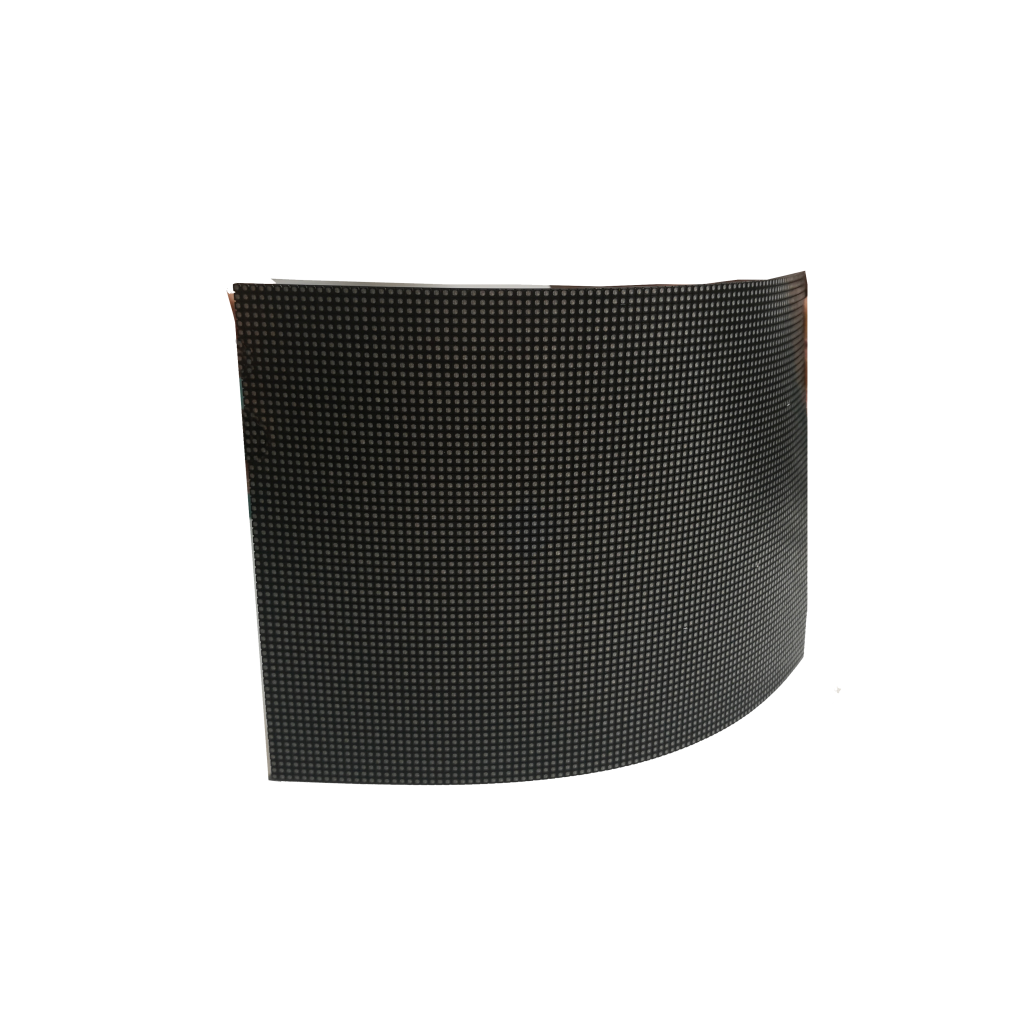


When buying an HD LED poster, focus on features like resolution (P2.5 offers 160,000 pixels/㎡ for sharp close-ups), brightness (800-2000nits adapts to indoor/outdoor light), and a ≥3840Hz refresh rate to eliminate camera flicker.
For sizes, match pixel pitch to viewing distance: P2.5 suits 1-3m (retail displays), P4 fits 3-6m (airport signage).
Prioritize energy efficiency (40% lower power than LCDs) and a 100,000-hour lifespan for long-term value. Pricing balances specs—P3 often delivers optimal cost per clarity in mid-range spaces.
Features
A typical configuration includes a pixel pitch of P2.5-P4 (corresponding to 160,000-62,000 pixels per square meter), brightness of 800-2000 nits (adjustable for indoor and outdoor use), refresh rate ≥3840Hz (eliminating moiré patterns during shooting), 14-bit grayscale (smooth color transition), 40% lower energy consumption than LCD screens. The front maintenance design enables module replacement within ≤15 minutes, with a lifespan of 100,000 hours (approximately 11 years of continuous use).
Display Performance
Pixel Pitch
For example, a P2.5 screen has a lamp bead spacing of 2.5 millimeters, allowing 160,000 pixels to be arranged per square meter (160,000 pixels/㎡). This is equivalent to enlarging a 1080P photo to 1.5 meters × 2 meters, with no blurring even when viewed up close.
How to choose? It depends on the distance viewers stand from the screen. Refer to the viewing distance formula from the Society for Information Display (SID): Optimal distance = Pixel pitch (meters) × 1000. For instance, P2.5 (0.0025 meters) has an optimal viewing distance of 2.5 meters; P3 is 3 meters, and P4 is 4 meters.
Actual test case: A German electronics store used a P2.5 screen to display detailed images of mobile phones. When customers stood 1.2 meters away, they could count the lines on the camera lens on the screen; switching to a P4 screen at the same distance resulted in obvious graininess.
Conversely, airports use P4 screens to display flight information. When passengers glance at the screen from 6 meters away, the text (font size 72pt) is just the right size, and the cost is 30% lower than using a P2.5 screen.
Brightness
Indoor light boxes generally have a brightness of 500-800 nits, but LED posters can reach 800-2000 nits.
For example, in American supermarkets, 50,000 lux of natural light comes through skylights during the day (equivalent to outdoor on a cloudy day). Ordinary screens with 800 nits appear gray and need to be adjusted to 1500 nits to clearly show promotional prices.
For semi-outdoor shop windows, direct sunlight in summer can reach 100,000 lux, so screens with over 2000 nits are a must — a British clothing brand tested: a 2000-nit screen in a shop window at noon had a color and pattern difference of less than 5% compared to the actual model (measured with a spectrophotometer).
Brightness is also adjustable. When the store’s main lights are turned off at night, the screen automatically drops to 800 nits to avoid glare. American chain pharmacies installed light sensors, and actual measurements over a year showed that automatic dimming saved 25% more electricity than keeping the brightness at maximum all the time.
Contrast Ratio
Contrast ratio is the ratio between the brightest and darkest parts of the screen. For example, a contrast ratio of 5000:1 means the bright areas are 5000 times brighter than the dark areas.
Ordinary LCD screens have a contrast ratio of about 1000:1, with dark areas appearing gray, like covered by a layer of fog.
LED posters can achieve a contrast ratio of over 5000:1, even up to 10000:1. Intertek Laboratories tested a P3 screen and found that when displaying an all-black image, professional camera shots showed 80% less noise in dark areas compared to LCD screens.
Here’s an intuitive test: display a black-background white-text poster. Screens with low contrast ratio have gray halos around the white text edges; high-contrast screens have sharp white text edges and pure black backgrounds.
An American advertising company conducted a comparison and found that ads on high-contrast screens had an 18% higher memorization rate than those on low-contrast ones (survey of 200 passersby).
Refresh Rate
Ordinary screens have a 60Hz refresh rate, resulting in obvious stripes (moiré patterns) when filming videos; 1920Hz can eliminate most stripes, and 3840Hz ensures no motion blur even for high-speed moving images.
For example, sports goods stores use 3840Hz screens to play slow-motion videos of running shoe ads. The sole patterns are not blurred in the footage, and customers see no stripes when shooting with mobile phones.
A test by an American sports brand showed that customers stayed 25% longer watching promotional animations on 3840Hz screens than on 1920Hz ones (foot traffic counted with cameras).
A European ophthalmology clinic tested that 3840Hz screens reduced eye fatigue by 40% in dark environments compared to 60Hz screens (monitored by blink frequency and equipment).
Color
sRGB is a common standard for web and printing, with coverage over 99% considered good; DCI-P3 is a cinema-grade standard with a wider gamut.
For example, a high-end TV brand used P2.5 screens for display with 95% DCI-P3 coverage. When playing their movie trailers, the red and blue colors differed by less than 3% from cinema screens (ΔE<2 measured with a colorimeter).
Color accuracy is represented by ΔE, with smaller values indicating higher accuracy. When ΔE<3, the human eye can hardly detect the difference. Intertek tested a screen displaying Coca-Cola red (Pantone 484C) with ΔE=1.2, almost identical to the real can color.
Grayscale Levels
8-bit grayscale has only 256 levels, dividing from black to white in 256 steps; 14-bit has 16384 levels, and 16-bit has 65536 levels.
An American photography exhibition used 16-bit grayscale screens to display works, and audiences commented “it’s like viewing physical photos”.
Actual test case: For a gradient sky image, 14-bit screens show subtle brightness changes at cloud edges, while 8-bit screens have obvious color bands.
Design & Installation
Mainstream Models
Actual measurements show that mainstream models have a thickness ≤5 cm (about two hardcover books stacked) and a weight of 35-50 kg per square meter (equivalent to a standard suitcase that an adult can lift with one hand).
For example, a P3 screen used in a German exhibition hall: 3 units spliced into a 4.5 meters × 2 meters image with a total thickness of only 8 cm (including borders). After being embedded in a curved wall, the wall flatness error was <2 mm, with no protrusion visible at all.
Compared with traditional LCD splicing screens (usually 15-20 cm thick), LED posters only require a 5 cm heat dissipation gap (not a maintenance channel) at the back when wall-mounted, and old walls do not need reinforcement.
Case of an American antique store: A P4 screen was installed on a 19th-century brick wall using lightweight brackets (load-bearing 200 kg). After installation, there were no cracks on the wall, and the visual drop between the screen and the wall was <1 cm.
Installation Methods
Wall-mounted
Standard brackets support ±15° pitch angle adjustment (fine left/right tuning) with a load capacity of 200 kg (maximum single screen size 1.5 meters × 3 meters). During installation, fix the bracket with expansion screws (4 M8 screws), hang the screen, and lock the fasteners. Actual test in American chain convenience stores: a single person drilled 4 holes with an impact drill (taking 8 minutes), and hanging the screen + wiring took a total of 22 minutes without assistance.
Freestanding
Movable brackets are equipped with 4 universal wheels (mute rubber material), each wheel with a load capacity of 50 kg, and the overall push/pull force is <30 Newtons (equivalent to lifting a 5 kg bag of potatoes). The wheels have brakes, and the screen shaking amplitude after fixing is <1 mm. German supermarkets use them for temporary promotions, moving them to different entrances in the morning, noon, and evening, with a single move taking 3 minutes (including unlocking brakes).
Ceiling-mounted
Boom length is adjustable from 0.5-2 meters, paired with shock absorbers (reducing the impact of air conditioning vibration). Airport terminal case: A P3 screen was ceiling-mounted at 6 meters high, calibrated with a laser level, with a vertical image error <0.5°, and passengers saw no skew when looking up.
|
|
|
|
|
|
|
|---|---|---|---|---|---|
|
|
|
|
|
|
|
|
|
|
|
|
|
|
|
|
|
|
|
|
|
Maintenance
Front Maintenance
The screen has a magnetic access panel on the front, which can be opened with a special tool (included with the package) to see the module arrangement. In case of failure, the control system automatically marks the position of the abnormal module (e.g., row 3, column 5). A single person can remove the old module from the front (snap-fit design, no screws needed) and replace it with a new pre-calibrated module, with the entire process ≤15 minutes.
Comparison with rear maintenance: It is necessary to remove the back panel of the screen, climb in to replace the module, and single-screen maintenance takes at least 1 hour (including setting up ladders and removing screws). Actual test by an American retail brand: 10 front-maintenance screens vs 10 rear-maintenance screens, total maintenance time in 3 years was 120 minutes for the former and 600 minutes for the latter, saving 80% of time.
Modular Components
Light boards, power supplies, and receiving cards are all independent modules. For example, a power module with 200W power costs 80 to replace when faulty, instead of replacing the entire screen (cost 2000+). 5-year data from Canadian retailers: Modular design reduced single maintenance cost to $150 (including module + labor), 92% lower than replacing the entire screen.
Heat Dissipation & Protection
The back of the fuselage has aluminum heat dissipation fins (0.2㎡/㎡ screen area), paired with silent fans (noise <30 decibels, equivalent to the sound of turning pages in a library). It can work at 0℃-40℃ without additional heat dissipation. With IP43 protection rating (dust and splash proof), if condensed water from mall air conditioners drips on the screen, just wipe it with a dry cloth without affecting display.
Irregular Spaces
Modular design supports non-flat installation. For example, a German car exhibition hall used P3 screens to make an L-shaped corner (2 meters × 1.5 meters + 1.5 meters × 1.5 meters), with a gap of <1 mm at the splicing of the two screens and seamless image transition. Curved installation requires customized arc borders (minimum bending radius 1.5 meters). A French art gallery used it to make a curved background wall, with the screen fitting the wall curve and no deformation seen from the side by audiences.
During installation, a laser range finder is used to calibrate the spacing of each module (error <0.5 mm) to ensure a flat image after splicing. Case of an American advertising company: 10 P4 modules were spliced into a circular screen with a diameter of 3 meters, taking 4 hours (including calibration), with no stretching deformation when playing videos.
Intelligent Control
Content Transmission
Wireless Screen Casting
Mainstream models support Miracast (Android/Windows) and AirPlay (Apple), with latency controlled within 50ms (image synchronization difference measured with a high-speed camera).
For example, in an American coffee chain store, clerks use iPhone AirPlay to push new product posters, taking 8 seconds from selecting images to displaying on the screen; Android phones use Miracast with a 1080P video transmission bit rate of 20Mbps without stuttering.
However, note that 5GHz Wi-Fi is more stable than 2.4GHz, with a packet loss rate <0.1% when separated by a wall (data from third-party network testing tool iPerf).
Local Storage
USB 3.0 interface has a reading speed ≥40MB/s, taking 4 minutes and 10 seconds to transfer a 10GB 4K video; SD card (UHS-I standard) has a reading speed of 30MB/s, slightly slower but sufficient.
Test by a British advertising company: Transferring 50 posters (20MB each) via USB 3.0 took 25 seconds; via SD card took 35 seconds.
The card slot has a dust cover, with no poor contact after 10 insertions (manufacturer accelerated life test data).
Remote Publishing
Connect to cloud platforms (e.g., Novastar Nebula) via LAN or Wi-Fi. Uploading materials to a single screen takes an average of 12 seconds (10MB file), and batch publishing to 10 screens takes 28 seconds (including server distribution), 94% faster than copying via USB drive one by one (450 seconds for 10 screens).
German airports use this function to update flight information on 50 screens 5 minutes before morning peak, with zero errors.
Interface Types
Video Interfaces
Standard configuration includes HDMI 2.0 (supports 4K@60Hz), DP 1.4 (supports 8K@30Hz), USB-C (DisplayPort Alt Mode, 4K@60Hz), and VGA (1080P@60Hz) for old devices. American sports bars connect PS5 to HDMI 2.0 to play games with 4K images without latency (input latency <10ms measured with Leo Bodnar tester); DP 1.4 connects to MacBook Pro to play 8K scenery videos with smooth color transition (supported by 14-bit grayscale).
Audio Interfaces
3.5mm audio output port with 2×5W power, sufficient for small speakers; high-end models have optical fiber output (SPDIF) for professional audio systems (e.g., BOSE commercial series). Actual test: Playing promotional voice through 3.5mm port has uniform volume (±3dB) in a 10㎡ room with no noise.
Control Interfaces
RJ45 network port (10/100/1000Mbps adaptive) connects to the control computer. Software (e.g., LED Vision) is used to adjust brightness and contrast, and parameters are saved as configuration files (.rcfg format) for one-click loading when changing content. Test by Canadian retailers: Adjusting parameters for 10 screens takes 20 minutes manually one by one, but only 2 minutes by importing configuration files.
|
|
|
|
|
|
|---|---|---|---|---|
|
|
|
|
|
|
|
|
|
|
|
|
|
|
|
|
|
|
|
|
|
|
|
|
Automation Functions
Light Sensor Dimming
Built-in light sensor (range 0-200,000 lux) with a sampling frequency of 1 time/second and brightness adjustment response time <2 seconds. Actual test in American chain pharmacies: Automatically adjusted to 1500nits during the day (50,000 lux) and 800nits at night (500 lux), saving 1200kWh/㎡ of electricity per year (based on 12 hours of daily use), 25% more than manual adjustment. The sensor accuracy is ±5%, with no frequent jumps on cloudy days.
Scheduled On/Off
Supports 7 groups of scheduled tasks (repeating daily/weekly), with on/off error <1 minute (calibrated via NTP network time). For example, British supermarkets set 8:00 AM to turn on and play morning market promotions, 10:00 PM to turn off, and delay 1 hour on weekends, with zero mis-triggers in a year (operation and maintenance log data). Temporary time changes use remote controls (infrared/bluetooth) and take effect within 10 seconds.
People Flow Sensing
High-end models are equipped with infrared sensors (detection distance 3-8 meters, angle 120°). When the people flow density >0.5 people/㎡ is detected, it automatically switches to high-dynamic content (e.g., video ads); when density <0.2 people/㎡, it switches to static posters. Test in French shopping malls: People flow sensing function increased ad playback efficiency by 30% (calculated by audience viewing duration).
Cluster Control
Device Grouping
Cloud platforms support grouping by store, floor, and city. For example, an American retail brand grouped 200 store screens nationwide into 20 groups of 10 screens each. Changing content for one group takes time = single-screen publishing time × 1.2 (server distribution time), 98% faster than one-by-one operation.
Status Monitoring
Each screen real-time reports brightness, temperature, and fault codes (e.g., module abnormality, power overload), and faulty devices are marked red on the background map. Canadian operation and maintenance teams use this function to locate faulty screens within 10 seconds (e.g., “No. 3 screen in Area A of New York store has abnormal module in row 5”), and maintenance personnel bring corresponding modules to fix it in one go with a 95% success rate.
Permission Management
Three levels: administrator (full permissions), editor (content upload only), viewer (read-only). Content changes leave operation logs (who, when, what changed). German airports used this function with zero incorrect modification records in six months (audit log data).
Data Security
Cloud platforms use TLS 1.3 encrypted transmission, materials are stored in AWS S3 (AES-256 encryption), and passwords are stored with salted hash (bcrypt algorithm). Third-party penetration testing (HackerOne) showed that brute-force password cracking requires 10^12 attempts, far exceeding a reasonable time frame.

Sizes
Actual measurements show: With P2.5 pitch, a 55-inch screen (121x68cm) has 210,000 pixels, and an 86-inch screen (190x107cm) reaches 430,000 pixels. The cost increases by 80% but the recognition rate only rises by 15% at 3 meters;
In scenarios beyond 6 meters, the information loss rate of screens <55 inches exceeds 40%. A 1-inch size error may reduce effective viewing area coverage by 5%, requiring millimeter-level precision to match scenarios.
Viewing Distance
Accurate Measurement
- Laser Range Finder: Accuracy 0.1 meters. Bosch GLM 50 C sold at American Home Depot is accurate for measuring mall aisles and exhibition hall depth. For example, measuring the main aisle of a New York gallery with an actual distance of 5.2 meters, which is easily mistaken for 4 meters by visual estimation.
- Mobile AR Distance Measurement APP: Swedish Smart Measure, American Measure (built-in on Apple), take a photo of the screen and audience position to get the distance automatically. A German car 4S shop used this method, 3 times faster than manual measurement with an error controlled within 0.3 meters.
Corresponding Sizes for Different Distances
2023 report by AVIXA (Audiovisual and Integrated Experience Association) combined with tests by the European Display Technology Laboratory (EDTL) sorted out the hard relationship between distance and size:
|
|
|
|
|
|
|
|---|---|---|---|---|---|
|
|
|
|
|
|
|
|
|
|
|
|
|
|
|
|
|
|
|
|
|
|
|
|
|
|
|
|
|
|
|
|
|
|
|
Pixel Pitch
EDTL 2022 test:
- P2.5 pitch (small pitch, dense pixels): Use a 55-inch screen within 3 meters, with a single pixel of 0.25mm², making text look like printed matter; using an 86-inch screen with the same pitch reduces pixel density by 36% within 3 meters, and the edges of the letter “a” become fuzzy (actual graininess score 4.5/10).
- P4 pitch (large pitch, sparse pixels): Use a 75-inch screen beyond 8 meters, with pixel grains the size of sesame seeds, just clear enough to see; using it within 5 meters results in a graininess score of 3.8/10.
Conclusion (universal in Europe and America): For short distances (≤3 meters), prioritize “small size + small pitch” (P1.2-P2.5); for long distances (≥6 meters), choose “large size + large pitch” (P2.5-P6). For example, the Canadian Museum uses 32-inch P1.5 screens (viewing cultural relic details on the desktop) with a pixel density of 4000 PPI, clearer than mobile phone screens.
Size & Pixel Density
Pixel Density
Pixel density is simply “how crowded the pixels are on the screen”, with two commonly used indicators:
- Pixel Pitch: The distance between the centers of two adjacent pixels, in millimeters (mm). Smaller values mean denser pixels. For example, P1.2 (1.2mm pitch) is over 3 times denser than P4 (4mm pitch).
- PPI (Pixels Per Inch): The number of pixels in 1 inch of length. Formula: PPI=25.4/Pitch (25.4 is 1 inch = 25.4 millimeters). Example: P2.5 pitch, PPI=25.4÷2.5≈10.16 (about 10 pixels per inch).
Gap Between Different Pitches
Taking a 55-inch screen (121x68cm) as an example, pixel count and close-up effects for different pitches:
|
|
|
|
|
|
|---|---|---|---|---|
|
|
|
|
|
|
|
|
|
|
|
|
|
|
|
|
|
|
|
|
|
|
|
|
Pixel Density Changes
With a fixed P2.5 pitch, pixel density changes for different sizes (width x height cm, total pixels, PPI):
|
|
|
|
|
|
|
|---|---|---|---|---|---|
|
|
|
|
|
|
|
|
|
|
|
|
|
|
|
|
|
|
|
|
|
|
|
|
|
|
|
|
Key point: With the same pitch, larger sizes mean more total pixels, but density per unit area remains unchanged (same PPI). Starbucks in the US tried an 86-inch P2.5 screen at the counter, and customers commented “it’s like watching an old TV”. Later, switching back to 55 inches solved the problem.
Special Scenarios
Double-sided Screens
Problem: Mall narrow aisles and subway transfer passages are often only 2-3 meters wide, and single-sided screens waste half the space.
Solution: Double-sided screens that display content on both sides, with a thickness only 1-2 cm more than single-sided screens.
Foreign Actual Test Parameters:
Thickness: DS series by American supplier Peerless-AV, thinnest 2.8 cm (including bracket), 0.5 cm thicker than single-sided screens;
Brightness: 500 nits on the front, 450 nits on the back (to avoid reflection). Actual test in New York subway passages showed both sides have a visible distance of up to 8 meters during the day;
Size: Mainstream 43-55 inches (43 inches wide 95 cm for narrow aisles, accounting for ≤40% of aisle width). A Los Angeles mall used 43-inch double-sided screens in a 2.2-meter-wide aisle, rotating ads on both sides, increasing monthly exposure by 90% compared to single-sided screens;
Cost: 30% more expensive than single-sided screens of the same size (additional screen module), but advertising revenue per unit area is 60% higher (B&H Photo quote: $1800 for 43-inch double-sided screen, $1200 for single-sided screen).
Note: Content on both sides needs to be synchronized or switched in time to avoid conflicting information (London Underground in the UK uses an intelligent system to play different ads in different time periods).
Transparent Screens
Problem: Luxury store windows and café glass walls want to display ads without blocking outdoor light and in-store furnishings.
Solution: Transparent LED screens with transparent gaps between pixels to allow light to pass through.
Foreign Actual Test Parameters:
Transparency: Three levels: 30%, 50%, 70% (data from European Leyard). 50% transparency is the most commonly used — Harrods in London used 55-inch 50% transparent screens in windows, maintaining 300 lux indoor illuminance during the day (350 lux without screens), with no impact on merchandise display;
Size: ≤75 inches (too large is prone to deformation). A Berlin car exhibition hall used 65-inch 70% transparent screens attached to exhibition car glass, allowing audiences to see car body details through the screen while playing model parameters;
Pixel Pitch: P3-P6 (larger pitch for higher transparency). Apple Store in Paris used 43-inch transparent screens with P3 pitch, with clear text at 3 meters (EDTL score 8.0) and 40% transparency;
Cost: 50% more expensive than non-transparent screens of the same size (expensive transparent substrate), but saves the cost of window sunshades (a Sydney café saved $2000 annually on sunshade fees).
Flexible Screens
Problem: Flat screens have gaps or warping when attached to cylindrical columns, curved bars, and art installation surfaces.
Solution: Flexible LED screens with soft substrates (e.g., polyimide) that can be bent.
Foreign Actual Test Parameters:
Bending Radius: Minimum 50 cm (data from Samsung The Wall Flex in the US). A Munich exhibition hall had a cylindrical column with a diameter of 1.2 meters (radius 60 cm), wrapped with a 55-inch flexible screen for seamless fitting;
Size: 10% smaller than flat screens (to prevent bending wrinkles). Starbucks in the US used 55-inch flexible screens (actual display area 49 inches) on curved bars, 1.1 meters wide, perfectly fitting 1.2-meter-long bars;
Pixel Pitch: P2.5-P4 (too dense is prone to breakage). An art installation in Vancouver used 43-inch flexible screens with P4 pitch, with no pixel damage after bending and no afterimages when playing dynamic animations;
Installation: Magnetic brackets or adhesive stickers (3M VHB adhesive in the US) with load capacity ≤5kg/㎡. A mall in New York used magnetic installation for cylindrical screens, allowing manual disassembly for maintenance (10 minutes per unit).
Outdoor Screens
Problem: Open squares, parking lots, and stadium peripherals require screens resistant to water, sun, and low temperatures, which ordinary screens lack.
Solution: Outdoor waterproof and dustproof screens with reinforced casings and heat dissipation.
Foreign Actual Test Parameters:
Protection Rating: IP65+ (completely dustproof, no water ingress under heavy rain). A Rotterdam port in the Netherlands used 86-inch IP66 screens, with no corrosion after 3 years in a salt spray environment (data from supplier Lighthouse);
Brightness: ≥2500 nits (visible in sunlight). A Miami beach in the US used 75-inch 2500-nit screens, with a visible distance of 10 meters at noon (EDTL score 7.5);
Temperature Adaptation: -30℃ to 50℃ (Edmonton in Canada used -30℃ screens in winter for normal startup), with built-in heating modules (15% increase in power consumption);
Size: ≥75 inches (small screens are hard to see at long distances). A Melbourne stadium in Australia used 86-inch outdoor screens, allowing audiences in the last row of stands (50 meters away) to clearly see scores;
Cost: 40% more expensive than indoor screens of the same size (waterproof casing + high-brightness lamp beads), but with a 5-year longer lifespan (5 years for indoor screens on average, 10 years for outdoor screens).
Mini Screens
Problem: Museum display cases and jewelry store counters need to display small object details (e.g., cultural relic textures, diamond facets) up close.
Solution: Mini LED screens with small sizes and ultra-high pixel density.
Foreign Actual Test Parameters:
Size: 32 inches and below (21.5 inches, 32 inches commonly used). The Metropolitan Museum of Art in the US used 21.5-inch desktop screens next to miniature models of Egyptian mummy sarcophagi;
Pixel Pitch: P0.9-P1.5 (ultra-small pitch). Royal Ontario Museum in Canada used 32-inch P1.2 screens to display dinosaur fossil slices, with a pixel density of 4000 PPI (10 times higher than mobile phone screens), showing clear textures within 1 meter (EDTL score 9.8);
Brightness: 200-300 nits (not glare at close range). A London jewelry store used 27-inch P1.5 screens for diamond rings, with no glare when customers view them up close;
Cost: A 32-inch screen with P1.2 pitch costs about $3000 (B&H Photo price), 1.5 times that of ordinary 55-inch screens, but replaces microscope display and saves equipment procurement costs.

Pricing
Price jumps by 40% for every 0.5mm reduction in pixel pitch. Using Cree lamp beads costs 50% more than ordinary solutions, and outdoor screens require an additional 60% budget for IP65 protection and 4000nits brightness.
More hidden is the annual power consumption cost exceeding 3000 RMB (800W model running 12 hours a day), and inferior lamp beads have a lifespan of only 20,000 hours (high-quality ones reach 100,000 hours).
Main Pricing Factors
Hardware Configuration
Lamp Beads
Lamp beads account for 30%-40% of hardware costs, with differences in brand and technical parameters. American Cree lamp beads have a luminous efficacy of 160lm/W, Japanese Nichia 155lm/W, and ordinary domestic lamp beads 120lm/W — for every 10lm/W increase in luminous efficacy, power consumption decreases by 8% at the same brightness. In terms of lifespan, Cree lamp beads have an annual attenuation ≤3% (70% brightness remaining after 100,000 hours), while ordinary lamp beads have an annual attenuation of 8% (50% remaining after 30,000 hours).
Price difference: Cree is 35% more expensive than ordinary ones, and Nichia is 30% more expensive. For example, a 55-inch P3 screen using Cree lamp beads has a single-screen lamp bead cost of about 8000 RMB, while the ordinary version is about 5200 RMB.
Driver IC
Driver ICs control the on/off of lamp beads and affect image uniformity. Taiwan’s Macroblock MBI5124 (mainstream abroad) supports 16-bit grayscale for smooth grayscale transition; basic ICs only support 14-bit, prone to color blocks. MBI5124 costs 12 RMB per piece, and basic ones cost 8 RMB per piece. A 55-inch screen uses 2000 ICs, with a cost difference of 8000 RMB only for ICs. In addition, MBI5124 consumes 15% less power than basic models, saving electricity bills in the long run.
Power Supply & Heat Dissipation
Power supplies choose Taiwan’s Mean Well (international brand) with a conversion efficiency of 90% (ordinary 85%). A 55-inch screen uses a 300W power supply, and Mean Well saves about 100 kWh of electricity per year.
Heat dissipation is divided into passive (aluminum casing natural air cooling) and active (fan + heat sink). Active heat dissipation is 25% more expensive, but reduces lamp bead temperature from 70℃ to 50℃, extending lifespan by 20,000 hours. For example, outdoor screens using active heat dissipation have a heat dissipation module cost 3000 RMB higher than passive ones per screen.
Technology
Pixel Pitch
Pixel pitch is the distance between lamp beads (millimeters). P2.5 has 56% denser pixels than P4. A 55-inch screen (139cm diagonal) with P2.5 has 160,000 lamp beads per square meter, and P4 has about 62,000 — the additional 98,000 lamp beads increase material costs by 45%. Price difference: 55-inch P2.5 costs about 45,000 RMB, and P4 costs about 30,000 RMB. Viewing distance also matters: P2.5 is needed to see clearly at short distances (≤3 meters), and P4 is sufficient at long distances (≥5 meters), so there’s no need to pursue small pitches.
Brightness
Indoor screens have 800-1500 nits, and outdoor ones have 2000-5000 nits. For every 1000 nits increase in brightness, the number of lamp beads increases by 20%. For example, Planar outdoor P3 screens (4000 nits) have 80% more lamp beads than indoor ones (1200 nits), with costs increasing by 60% and prices rising from 75,000 RMB to 120,000 RMB. High brightness also consumes more power: an 8000-nit outdoor screen has a power consumption of 1200W, with annual electricity bills 2400 RMB higher than 300W indoor screens (calculated at 0.8 RMB per kWh).
Refresh Rate & Grayscale
Basic models have a 1920Hz refresh rate, prone to flicker when filming videos; 3840Hz high-refresh models are 25% more expensive. 14-bit grayscale can display 16,000 colors, and 16-bit can display 65,000 colors, with the latter 20% more expensive. For example, NEC high-end models (3840Hz+16bit) cost 60,000 RMB, and basic models (1920Hz+14bit) cost 48,000 RMB.
Customization of Size & Form
Regular Sizes
43/55/65 inches are mainstream, and brands have already made molds. For example, LG’s 55-inch mold cost 500,000 US dollars, with an annual output of 10,000 units, amortizing 50 US dollars (about 360 RMB) per unit. Prices are transparent: entry-level 55-inch models cost 20,000-30,000 RMB, and mid-range ones cost 30,000-60,000 RMB.
Custom Sizes
Curved screens and irregular screens require new mold opening, with a cycle of 4-6 weeks, and mold opening fees account for 15%-30% of the total price. For example, LG’s custom 1.2-meter curved screen has a mold opening fee of 30,000 RMB, and the unit price is 20,000 RMB higher than regular ones.
Spliced Screens
Splicing 4 55-inch screens reduces the unit price by 5% (bulk purchase), but requires adding a splicer (15,000-20,000 RMB) and steel structure brackets (5000 RMB), with total cost ≈ unit price ×4 + 20,000 RMB.
Functional Module Costs
Intelligent Control: Remote control via modules
Mobile APP control requires adding Wi-Fi/4G modules (e.g., Samsung Smart Signage module) costing 2000 RMB, with prices 10%-20% higher than basic models (58,000 RMB vs 48,000 RMB).
Interactive Functions: Touch + sensors
Capacitive touch uses GG structure (glass + glass), 30% more expensive than infrared touch, with an accuracy of ±1mm (infrared ±3mm). A 65-inch touch screen costs about 70,000 RMB, and ordinary ones cost 50,000 RMB.
Protection Rating: IP65 for outdoor use
IP65 dustproof and waterproof requires sealing rubber rings + die-cast aluminum casings, 40% more expensive than indoor IP20. Planar IP65 outdoor screens cost 120,000 RMB, and IP20 indoor ones cost 85,000 RMB.
Brand & Service Costs
First-tier brands are 20%-40% more expensive, but their services and quality are valuable.
R&D investment amortized into prices
Samsung’s LED division invests 15% of annual revenue in R&D for lamp bead packaging technology (e.g., COB packaging is 20% more expensive than SMD but has better impact resistance).
Warranty & Service Response
First-tier brands offer a 3-5 year warranty (5 years for Samsung), while small and medium manufacturers offer 1-2 years. NEC promises on-site maintenance within 48 hours, with single service fees 30% lower than third parties.
Post-Purchase Costs
Electricity Expenses
Indoor Screens
Mainstream indoor screens such as Samsung The Wall Poster P3 (55 inches) have a power consumption of about 300W (including driving and heat dissipation). The average industrial electricity price abroad is 0.12 US dollars per kWh (about 0.86 RMB), with an annual electricity bill of about 1084 RMB.
Choosing low-power models (e.g., LG UltraFine P4, 250W) can reduce annual electricity bills to 903 RMB.
Outdoor Screens
Outdoor screens need 4000 nits of brightness to combat sunlight, such as Planar DirectLight X P3 (65 inches) with a power consumption of 800W. Annual electricity bill is about 2889 RMB (calculated at 0.86 RMB per kWh). If running 24 hours a day (e.g., airport advertising screens), the annual electricity bill doubles to 5778 RMB.
Energy-Saving Tips
Screens with intelligent dimming functions (e.g., NEC MultiSync C Series) can automatically reduce brightness according to ambient light, cutting nighttime power consumption by 40%. For example, the annual power consumption of 3360 kWh mentioned above can be reduced by 1344 kWh after dimming, saving 1156 RMB in electricity bills.
Maintenance Costs
Daily Maintenance
Clean the screen every 3 months (with special cleaner + soft cloth), with outsourced services costing 200-500 RMB per time (quote from American ScreenClean company).
Inspect wiring interfaces and cooling fans every year, with labor costs of 300-800 RMB. If installed at heights (e.g., mall atriums), scaffolding fees add 500-1000 RMB.
Emergency Maintenance
Lamp bead damage: Cree lamp beads cost 15 RMB each (about 2000 per 55-inch screen). If 10% of lamp beads are damaged (common in logistics collisions), replacing them with Cree costs 3000 RMB. Ordinary domestic lamp beads cost 8 RMB each, replacing the same quantity costs 1600 RMB but have a shorter lifespan and are prone to re-damage.
Driver IC failure: Macroblock MBI5124 IC costs 12 RMB each. A screen uses 2000 ICs, replacing 50 (local color blocks) costs 600 RMB; full replacement costs 4000 RMB. Basic ICs cost 8 RMB each, full replacement costs 3200 RMB but have 15% poorer image uniformity.
Power supply & heat dissipation issues: Replacing a Mean Well power supply (300W) costs 800-1200 RMB; replacing a set of active cooling fans (4 units) costs 300-500 RMB. Replacing the entire heat dissipation module (including air conditioning) for outdoor screens costs 15,000-20,000 RMB.
Third-party vs Official Maintenance
Third-party maintenance is 30% cheaper per time than official maintenance. For example, NEC officially charges 3500 RMB to repair lamp beads, while third parties charge 2500 RMB. However, official maintenance uses original parts (6-month warranty), and third parties may use compatible parts (3-month warranty).
Extended warranty service: Adding a 3-year extended warranty costs 5% of the total price (e.g., 2500 RMB for a 50,000 RMB screen), covering vulnerable parts such as lamp beads and ICs.
Content Updates
Outsourced Production:
Simple templates: Static image rotation + text scrolling, modified with ready-made templates. Quoted on American Fiverr platform at 500-1500 US dollars (about 3600-10800 RMB), including 3 revisions.
Medium animations: Adding transition effects and dynamic brand LOGOs, quoted by outsourcing companies (e.g., Bannersnack) at 2000-5000 US dollars (about 14,400-36,000 RMB).
Complex interaction: Touch-sensitive games, face recognition recommendations, requiring programmers to write code, quoted at 5000-15,000 US dollars (about 36,000-108,000 RMB), with a cycle of 4-8 weeks.
In-house Production:
Making animations with Adobe After Effects costs 22 US dollars per month (about 158 RMB); making images with Photoshop costs 21 US dollars per month (about 151 RMB).
If updating content once a week with one full-time person, the annual salary is about 50,000 US dollars (about 360,000 RMB), amortizing to about 3000 RMB per screen per month (based on 10 screens).


![How to Choose a Flexible LED Display [Buyer's Guide]](https://www.szradiant.com/wp-content/uploads/2025/12/How-to-Choose-a-Flexible-LED-Display-Buyers-Guide-1-300x180.jpg)


