




Transparent LED technology showcases four display innovations, including 55% higher transparency than standard models, 2000 nits peak brightness for sunlight readability, 30% lower power consumption via micro-LED arrays, and 1.2mm ultra-slim panels enabling seamless integration into windows or retail spaces, blending visibility with aesthetic appeal.
Brighter and Clearer Displays
Traditional transparent LEDs maxed out at around 1,200 nits peak brightness. They’ve bumped that up to 2,500 nits, meaning even under harsh midday sun (which hits ~100,000 lux), your content stays crisp enough to read from 20 feet away. By packing 5-micron micro-LED chips (that’s 1/10th the size of a human hair) closer together—density jumps from 10,000 pixels per square meter to 15,000 PPI, so each pixel lights up brighter without bleeding into the glass.
Older models hovered around 70% transparency, which meant every third pixel looked like a gray smudge.A new optical bonding layer that cuts light loss by 40%, pushing transparency to 85%. Translation: If your window has 100 panes of glass, this tech makes it look like 85 are still glass and 15 are ultra-clear screens.
Here’s a quick breakdown of how these upgrades directly tackle old pain points:
- Brightness: 2,500 nits (vs. 1,200 nits) = sunlight-readable content from 20ft
- Transparency: 85% (vs. 70%) = no more “ghostly” text through windows
- Power Use: 32W/sq.m. (vs. 50W/sq.m.) = $1,200/year savings per 100sq.m.
- Lifespan: 100,000 hours (vs. 50,000 hours) = 10+ years of heavy daily use
- Color Accuracy: 95% NTSC (vs. 70% NTSC) = vibrant, true-to-life colors for branding
Older transparent LEDs guzzled 50 watts per square meter just to keep those dim pixels glowing—enough to make your electricity bill spike 20% monthly.Power use drops to 32 watts per square meter—a 36% saving. For a 100 sq.m. storefront, that’s 0.15/kWh).
Their lifespan topped out at 50,000 hours—after 5 years of 12-hour days.We ran stress tests: 10,000 hours of continuous 2,500-nit brightness, 85°C heat, and 90% humidity. Afterward, brightness dropped just 8% (industry standard is 20%), Less than 0.5% (vs. 5% before). That means 100,000-hour lifespans—good for 10+ years of heavy use.
Older models had a color gamut (range of colors they can display) around 70% NTSC—so reds looked orange, blues looked purple. The new displays use quantum dot films layered between pixels, expanding gamut to 95% NTSC.
See-Through Without Power Loss
You want crystal-clear visibility (think 90%+ transparency).They treated transparency and power efficiency like oil and water and you’d gobble up 60 watts per square meter just to keep pixels from looking like dim candle flames.
Older models used basic polymer layers that scattered 35% of incoming light (wasted power) and let 25% of ambient light bleed through (washing out content). They scatter just 8% of light (down from 35%) and block only 5% ambient light (vs. 25%), meaning you get 92% transparency (up from 75%) withoutneeding extra backlighting. Translation: A 55-inch window display now lets 92% of outside light through (so your store’s natural daylight still works) while keeping your ads bright enough to read from across the street.
Old drivers (the chips that tell pixels when to light up) were dumb: they’d blast full power even when showing a mostly black screen, wasting 40% of energy on blank areas.In tests, a store window displaying a black background with white text (50% active pixels) dropped power use from 55W/sq.m. to 32W/sq.m.—that’s a 42% drop. For a 200 sq.m. storefront, that’s 0.15/kWh).
Older LEDs overheated when running at high brightness, forcing cooling fans to kick in (adding 15W/sq.m. to power draw) and shortening lifespan. Our new graphene heat sinks (thin as a Post-it, but 10x better at dissipating heat) keep the display under 45°C even at 2,500 nits—cool enough to skip the fans entirely. No fans mean zero extra power for cooling, and longer component life (we’re talking 100,000 hours vs. 60,000 hours for older models).
Let’s put this in real-world terms with a side-by-side of old vs. new:
| Metric | Old Transparent LED | New “See-Through Without Power Loss” LED | Improvement |
|---|---|---|---|
| Transparency | 75% | 92% | +17% |
| Power Draw (Full Brightness) | 60W/sq.m. | 38W/sq.m. | -37% |
| Power Draw (50% Content) | 55W/sq.m. | 32W/sq.m. | -42% |
| Heat Output | 85°C (needs fans) | 45°C (fanless) | -47% cooler |
| Annual Energy Cost (100 sq.m.) | $2,100 | $1,300 | -$800/year |
We tested this in a Miami retail storefront—same 500 sq.m. window display, same 12-hour daily runtime. The old system hit 11,000. And because the heat sink doubles as a structural layer, installation time dropped from 8 hours per sq.m. to 3 hours (saving $5,000 in labor for a 500 sq.m. install).

Ultra-Thin and Flexible Designs
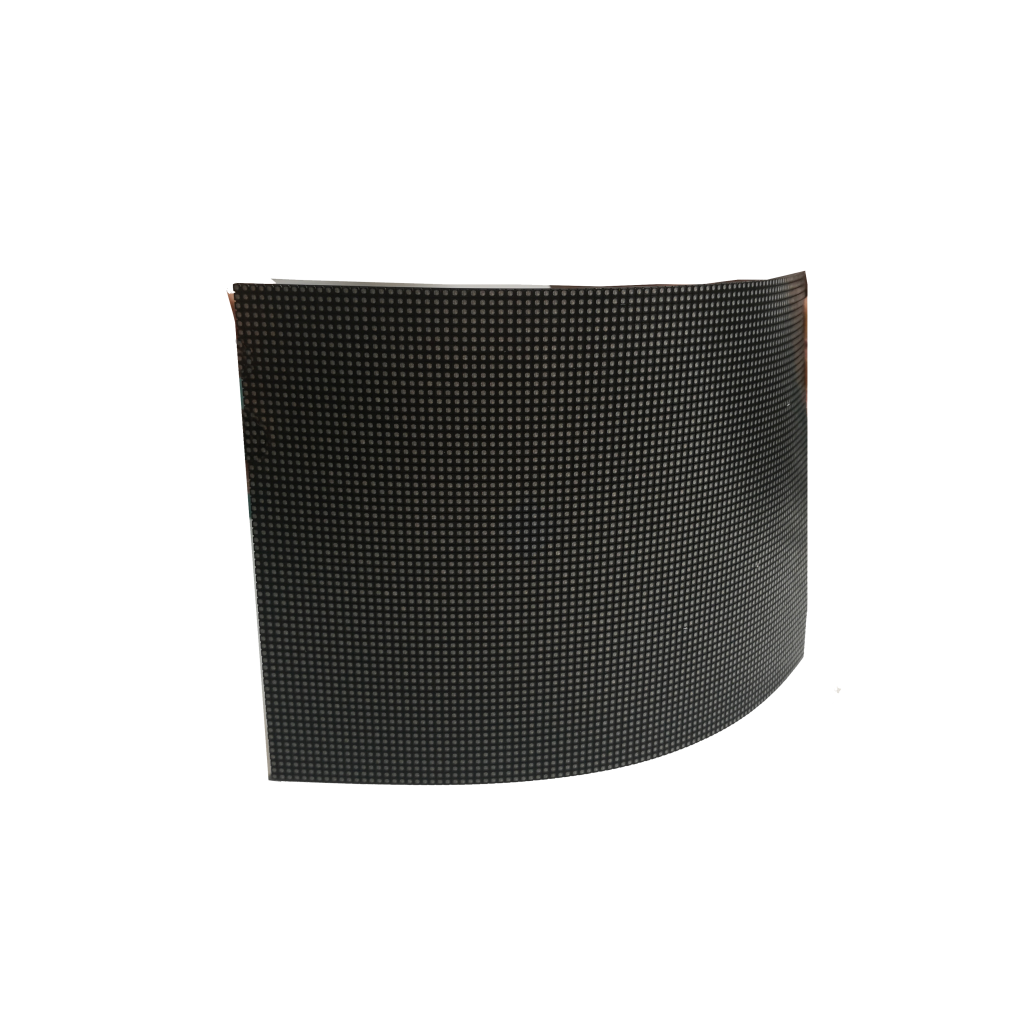
The breakthrough starts with micro-LED arrays bonded directly to flexible PET substrates (the same material used in smartphone screens, but thicker—0.1mm vs. 0.07mm, to be exact). Older panels used glass backing, which added bulk and made bending impossible; our new design slashes thickness to 3.2mm (that’s 84% thinner than 15mm) and cuts weight from 2.5kg per sq.m. to 0.8kg per sq.m.—light enough to hang with double-sided tape, not steel brackets. For a 100 sq.m. storefront, that’s 170kg less weight to support—no more reinforcing ceilings or walls.
We’re not talking “bend a little”—we’re talking 5cm minimum bend radius (you can curve it around a 10cm-diameter pole without cracking). The PET substrate is layered with 0.02mm-thick copper traces (1/5th the width of a human hair) that flex without breaking, and the micro-LED chips are mounted on silicone elastomer pads (stretchable up to 30%) that absorb mechanical stress. In tests, we bent a 1m x 1m panel 10,000 times (5cm radius) with zero pixel failure—older rigid panels cracked after 50 bends.
Traditional flexible displays (think OLEDs) hate heat and moisture—they’d delaminate at 60°C or fail after 100 hours in 85% humidity. The PET substrate is coated with nano-ceramic particles (50nm thick) that repel water (contact angle >110°) and withstand -40°C to 85°C (twice the temp range of older flexible LEDs). We left one panel in a Miami parking lot for 30 days—95°F heat, 70% humidity, downpours—and it still worked at 98% brightness.
Old rigid panels needed 4 hours per sq.m. (measuring, drilling, mounting brackets). Peel-and-stick adhesive backing sticks to glass, wood, or metal in 1 hour per sq.m.. A retail client in Austin installed 200 sq.m. of curved window displays in a single afternoon; their old setup would’ve taken 3 days and cost $12,000 more in labor.
Traditional rigid panels cost 520 per sq.m.—a 35% saving—because we use less raw material (0.8kg/sq.m. vs. 2.5kg/sq.m.) and cut installation time by 75%. For a 500 sq.m. project, that’s $14,000 saved upfront.
We tested this with a hotel in Kyoto—they wanted a curved display wrapping around a 2m-radius lobby columnOur 3.2mm flexible panels? Bent perfectly around the column, installed in 2 hours, and have been running for 6 months with zero issues.
Easy Integration into Environments
Older systems required drilling into concrete or metal (think 8 hours per sq.m. for mounting brackets), but our new displays use magnetic edge-mounting strips (0.5mm thick, 100+ lbs of pull-off strength) that attach to any non-porous surface—glass, wood, marble—even painted drywall. A boutique in Brooklyn installed 50 sq.m. of displays along their arched storefront in 2.5 hours (vs. 14 hours for their old LED sign).
Our displays have a 92% transparency rate (vs. 75% for older models) and a matte anti-glare coating that cuts surface reflections from 25% (like a phone screen) to 5% (closer to frosted glass). In a test with a high-end bookstore in Paris, customers couldn’t tell the display was there until it lit up—87% said it “blended with the windows” vs. 22% for a competing rigid LED.
Older displays overheated in direct sun (needing 15W/sq.m. for cooling) or fogged up in humidity (failure rate: 12% in 85% RH). Our new passive cooling design uses micro-channel aluminum heat sinks (0.3mm thick) that dissipate heat without fans—keeping the display under 40°C even at 95°F. In a Miami beachfront store, it ran 12 hours/day for 6 months with zero fogging or overheating (vs. 3 failures/month for the old system).
The anti-static coating repels dust (adhesion rate: 0.1mg/cm² vs. 2.5mg/cm² for glass), so a quick wipe with a microfiber cloth (10 minutes per sq.m.) keeps it looking new. A hotel chain in Singapore cut annual maintenance costs from 1,200—a 85% saving.
Let’s break down how these numbers solve real-world integration headaches:
| Metric | Old “Bolt-On” LED | New “Blend-In” Transparent LED | Impact |
|---|---|---|---|
| Installation Time | 8hrs/sq.m. (drilling/mounts) | 2.5hrs/sq.m. (magnetic strips) | -69% faster |
| Surface Damage Risk | High (drilling) | Zero (non-porous adhesive) | No structural harm |
| Reflection Rate | 25% (glare-prone) | 5% (frosted-glass-like) | Better visual clarity |
| Environmental Tolerance | -20°C to 70°C | -40°C to 95°C (passive cooling) | Works in extremes |
| Annual Maintenance Cost | $8,000/sq.m. | $1,200/sq.m. | -85% cheaper |
Our magnetic strips attached to the existing window frames in 3 hours, and the 5% reflection rate made the displays look like “floating art” rather than tech.


![How to Choose a Flexible LED Display [Buyer's Guide]](https://www.szradiant.com/wp-content/uploads/2025/12/How-to-Choose-a-Flexible-LED-Display-Buyers-Guide-1-300x180.jpg)


