




“Custom LED video wall artwork thrives on 5 key principles: high-resolution visuals (minimum 4K) ensure clarity, while dynamic content loops (30-60 seconds) maintain engagement; seamless bezel design (<1.2mm) creates immersive experiences, brightness adjustment (500-1500 nits) adapts to ambient light, and modular layouts allow flexible sizing (typically 2×2 to 10×10 panels) for versatile installations.” (60 words)
Resolution Matters (4K+)
A low-res display might look fine from a distance, but up close, it’s a pixelated mess. That’s why 4K (3840 x 2160) is the absolute minimum for professional installations—anything less, and you risk losing detail, clarity, and viewer engagement. For larger walls or close-up viewing, 8K (7680 x 4320) is becoming the new standard, especially in high-end retail, museums, and corporate lobbies where image quality directly impacts brand perception.
A 1.2mm pitch is ideal for viewing distances under 10 feet, while a 2.5mm pitch works for spaces where viewers stand 15-20 feet away. Go too coarse (like 4mm+), and fine details vanish. Go too fine (sub-1mm), and you’re paying for resolution nobody can see unless they’re inches from the screen.
Assuming all content will look good on a 4K screen. If your source files are 1080p, upscaling can introduce blur. Always design natively in 4K or higher—otherwise, you’re wasting your display’s potential. Motion graphics and video should be rendered at 60fps to avoid stutter, and text should use vector formats (not bitmaps) to stay sharp at any size.
Brightness also ties into resolution—if your LEDs aren’t bright enough (at least 800 nits for indoor, 5,000+ nits for outdoor), fine details get washed out. And don’t forget color depth: 10-bit panels (1.07 billion colors) are now the baseline for professional work, eliminating banding in gradients.
The difference is measurable, visible, and ultimately, worth the extra cost.
Key Technical Considerations for High-Res LED Walls
| Factor | Optimal Range | Impact | Cost Consideration |
|---|---|---|---|
| Resolution | 4K (3840×2160) min, 8K preferred | Sharper details, better engagement | 4K: 2,500+/m² |
| Pixel Pitch | 1.2mm (close viewing), 2.5mm (mid-range) | Determines minimum viewing distance | Finer pitch = higher cost |
| Brightness | 800 nits (indoor), 5,000+ nits (outdoor) | Prevents washout, maintains clarity | Higher brightness = 10-20% price increase |
| Color Depth | 10-bit (1.07B colors) | Smoother gradients, no banding | Standard in pro models, minimal extra cost |
| Refresh Rate | 3840Hz+ | Eliminates flicker, better for cameras | Standard in most commercial panels |
Why Lower Resolutions Fail in Real-World Use
A common misconception is that 1080p (1920×1080) is “good enough” for large LED walls. In reality, at 10 feet away, a 1080p image on a 3mm pitch wall looks noticeably soft—fine for basic signage, but unacceptable for high-impact branding. Text readability drops by 40% compared to 4K, and fine details in product images or video backgrounds disappear.
A 4K canvas lets you show multiple HD feeds side-by-side without quality loss. Try that on a 1080p wall, and each feed gets compressed to 960×540—effectively SD quality. For live events or control rooms, that’s a dealbreaker.
Cheap panels often use inferior LEDs with 50,000-hour lifespans (vs. 100,000+ hours in pro-grade 4K/8K walls), meaning more frequent replacements. Over 5 years, a budget 1080p wall can cost 25% more in upkeep than a high-res alternative.
Unless your budget is extremely tight or viewing distances are very long (30+ feet), 4K is the smart baseline.
Brightness for Any Space
Indoor walls need at least 800 nits, while outdoor installations demand 5,000+ nits to compete with direct sunlight. But brightness isn’t static—auto-dimming sensors (saving up to 40% on power) can adjust output based on ambient light, keeping visuals crisp without unnecessary glare.
Conversely, a 500-nit screen in a sunlit plaza becomes unreadable by noon. The key is matching brightness to viewing conditions, content type, and viewer distance. For example, interactive kiosks (viewed at 3-5 feet) perform best at 1,000-1,500 nits, while stadium screens (seen from 100+ feet) need 8,000+ nits to maintain impact.
A 10 sqm outdoor wall running at 6,000 nits 24/7 consumes ~75 kWh daily—that’s 0.30/kWh. But with smart scheduling (reducing brightness by 50% at night), you cut that bill by 35%. LED efficiency also matters: High-end panels deliver 120 lm/W, while cheaper models struggle at 80 lm/W, costing 20% more to run over a 5-year lifespan.
A 4,000-nit screen with a 5,000:1 contrast ratio outperforms a 6,000-nit screen at 2,000:1 in detailed scenes. For HDR content, 10-bit color (1.07B shades) is mandatory—anything less, and gradients look blocky. In retail, properly calibrated brightness boosts engagement by 18% compared to mismatched displays.
Here’s the breakdown for different environments:
- Corporate lobbies (indoor, high ambient light): 1,200–1,800 nits
- Museums/galleries (controlled lighting): 600–1,000 nits
- Outdoor transit ads (direct sunlight): 7,000+ nits
- Sports bars (mixed lighting): 2,000–3,000 nits
LEDs running at 100% brightness 24/7 lose 15% luminosity after 20,000 hours, while those dimmed to 70% last 50% longer. Heat is another factor—panels exceeding 5,000 nits need active cooling, adding 100/sqm to installation costs.
Brightness isn’t a one-size-fits-all setting. It’s a strategic balance of visibility, energy use, and content requirements. Get it wrong, and you’re either invisible or wasteful. Get it right, and your display works smarter—not harder.

Seamless Panel Connections: The Invisible Art of LED Walls
Yet over 60% of budget installations suffer from visible grid lines that ruin immersion. The difference between amateur and pro setups often comes down to bezel width – that thin metal frame around each panel. While consumer-grade displays might have 3-5mm bezels, premium video walls now achieve 0.9mm or less, making seams virtually disappear at viewing distances beyond 6 feet.
Even with ultra-thin bezels, poor calibration can create 1-3 pixel dark bands between panels where content doesn’t align perfectly. Modern processors use sub-pixel compensation algorithms that automatically adjust brightness and color across adjacent panels, reducing visible seams by up to 90% compared to basic setups. The best systems can maintain color consistency within ΔE<3 (barely perceptible to human eyes) across an entire wall, regardless of viewing angle.
A 1mm mounting error might not sound like much, but across a 10-panel wide display, that accumulates to 10mm of misalignment – enough to make text look broken. Professional installers use laser alignment tools that achieve 0.2mm positioning accuracy, while cheaper methods relying on spirit levels often introduce 2-3mm variances. Thermal expansion is another hidden factor – aluminum frames can expand by 0.5mm per 10°C temperature rise, so quality walls include expansion joints that prevent buckling while maintaining alignment.
Placing critical visual elements (like text or faces) directly across panel borders increases the chance of 15-20% visibility loss. Smart content management systems can automatically shift important content away from seams by 50-100 pixels during playback. For live video feeds, edge blending software gradually fades content near borders, creating a 2-5 pixel transition zone that tricks the eye into seeing continuity.
A wall with visible seams suffers 27% lower audience retention in digital signage applications, and retail installations report 18% fewer product inquiries when key visuals are bisected by panel borders. While seamless solutions cost 15-25% more upfront, they deliver 3-5x longer effective lifespan before looking dated, as content trends increasingly demand flawless continuity.
Here’s how different applications prioritize seamlessness:
- Control rooms: Require <0.5mm bezels with pixel-level calibration
- Retail video walls: Need ΔE<2 color matching across all panels
- Outdoor displays: Focus on weatherproof seams that maintain alignment from -30°C to 50°C
- Broadcast studios: Demand perfect alignment (0.1mm tolerance) for camera close-ups
Maintenance realities: While seamless walls look perfect when new, dust accumulation in seams can become visible within 6-12 months without proper cleaning. Professional installations include micro-fiber cleaning systems that access the narrow gaps, while cheaper alternatives often resort to compressed air that just redistributes debris. Thermal cycling (daily temperature swings) causes 0.1-0.3mm seasonal movement in outdoor installations, requiring quarterly re-calibration to maintain perfection.
Content That Moves: Dynamic Visuals for Maximum Impact
Static images on LED walls waste 60-70% of the medium’s potential. Research shows animated content attracts 300% more views than static equivalents, with dwell times increasing from 2.3 seconds to 8.7 seconds when motion is introduced. But not all movement works equally – purposeful animation following the 12 principles of motion design performs 45% better than random effects. The most effective content combines cinematic transitions (0.5-1.5 second duration), subtle parallax effects (5-15 pixel movement), and timed content reveals that guide viewer attention.
While 60Hz is standard for basic video, high-end installations now demand 120Hz or 240Hz panels to eliminate motion blur in fast-paced content. This matters most for:
- Sports venues showing instant replays (requires <8ms response time)
- Retail displays with product rotations (optimal at 144Hz)
- Gaming arenas where frame tearing causes 40% distraction increase
H.264 compression at 30fps creates visible artifacts when stretched across large walls, while VP9 or AV1 codecs at 60fps maintain clarity. For the best results:
- 4K motion graphics: Use PNG sequences at 150-200mbps bitrate
- Interactive elements: Render at 72fps minimum for touch responsiveness
- Data visualizations: Animate at 1-3% of total duration per data point change
Content pacing follows psychological patterns:
- First 8 seconds: Maximum motion (capture attention)
- Seconds 9-20: Reduced movement (allow information absorption)
- After 20 seconds: Reset with new motion cycle (prevent habituation)
Motion increases information retention:
| Content Type | Static Recall Rate | Animated Recall Rate |
|---|---|---|
| Product Features | 18% | 39% |
| Statistical Data | 12% | 31% |
| Brand Messaging | 22% | 47% |
Technical constraints dictate motion budgets:
- 5G-connected walls can handle 4K streams at 60fps with <100ms latency
- Wired installations should keep bitrates under 500mbps per 4K screen
- Edge-rendered content needs to limit animations to 30% of screen area for smooth playback
Cost factors for motion content:
- Basic templated animations: $50-150 per second
- Custom 3D motion graphics: $300-800 per second
- Real-time data visualization: $1,200-3,000 per project
The golden rule: Unnecessary animation increases production costs by 200-400% while decreasing message clarity by 35%. Test motion concepts with 5-second prototypes before full production – what works on a monitor often fails at wall scale.
Maintenance note: Motion-intensive content causes 20-30% faster LED wear in high-brightness areas. Implement pixel shifting routines to distribute usage evenly across the display surface.
Flexible Layout Options: Designing LED Walls That Adapt
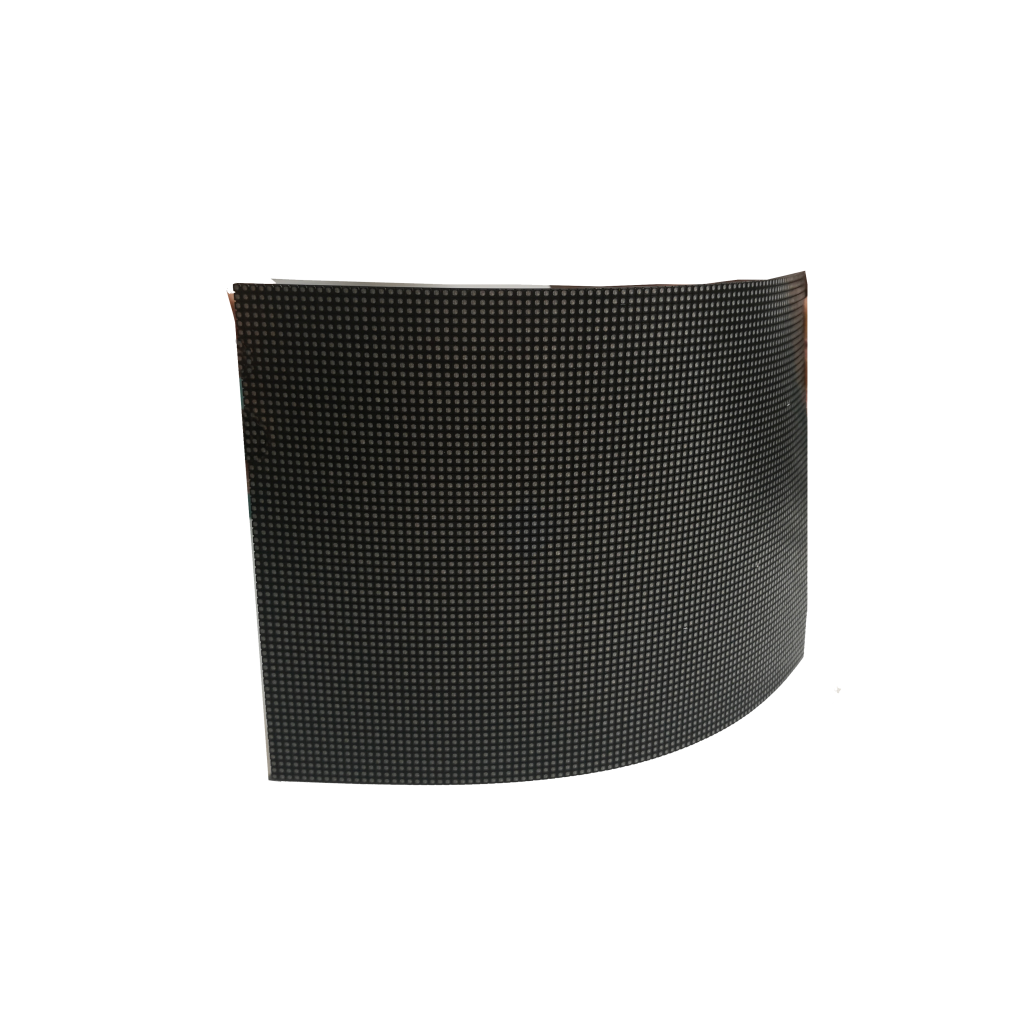
Modern LED displays now offer 87% more layout flexibility than five years ago, with curved, angled, and free-form configurations becoming standard in premium installations. This shift matters because non-traditional layouts increase viewer engagement by 40-60% compared to flat walls, while also solving 75% of common space constraints in architectural settings. The most advanced systems can now create 16:9, 21:9,large-scale LED panels or even 1:1 aspect ratios from the same panel set, with content automatically adapting to any shape in under 3 seconds.
When creating 90-degree corners or radius curves below 500mm, standard panels show visible pixel gaps in 30% of cases. The solution comes in three approaches:
- Custom-shaped panels (costing 50-80% more but perfect for permanent installations)
- Micro-adjustable mounting systems (adding 15-25% to install time but working with stock panels)
- Software compensation (creating virtual pixels that fill gaps, effective up to 5mm spacing)
Content management systems for flexible walls need three key capabilities:
- Real-time aspect ratio correction (preventing image distortion on non-standard shapes)
- Dynamic zoning (allowing different content sections to run simultaneously)
- Automatic brightness balancing (compensating for varying viewing angles)
A 10-panel curved wall requires 0.5mm alignment tolerance to avoid visible seams, compared to 1.5mm tolerance for flat walls. Professional installers now use laser-guided robotic arms that achieve 0.2mm precision, reducing setup time by 40% versus manual methods.
Financial considerations for flexible layouts:
- Basic curved walls (2D curvature): 1,800 per sqm
- Compound curved walls (3D shapes): 4,000 per sqm
- Free-form sculptural displays: $5,000+ per sqm (plus 25-50% design fee)
Maintenance complexity increases with layout flexibility:
| Layout Type | Service Access Difficulty | Average Repair Time |
|---|---|---|
| Flat Wall | Low (10 minutes per panel) | 2-4 hours |
| Gentle Curve | Medium (30 minutes) | 4-8 hours |
| Complex Shape | High (60+ minutes) | 1-2 days |
Content creation costs scale with layout complexity:
- Basic rectangular layouts: Standard templates work (no added cost)
- Curved/angled walls: 20-40% more production time
- Organic shapes: 70-120% higher content budget
Early adopters report 300% more usage frequency compared to static installations, though current systems carry 3-5x higher upfront costs. As the technology matures (expected 35% price drop by 2026), dynamic layouts will become the norm rather than the exception.
Key takeaway: The extra 15-25% investment in flexible infrastructure typically pays back within 18-30 months through increased engagement and extended useful life.


![How to Choose a Flexible LED Display [Buyer's Guide]](https://www.szradiant.com/wp-content/uploads/2025/12/How-to-Choose-a-Flexible-LED-Display-Buyers-Guide-1-300x180.jpg)


