


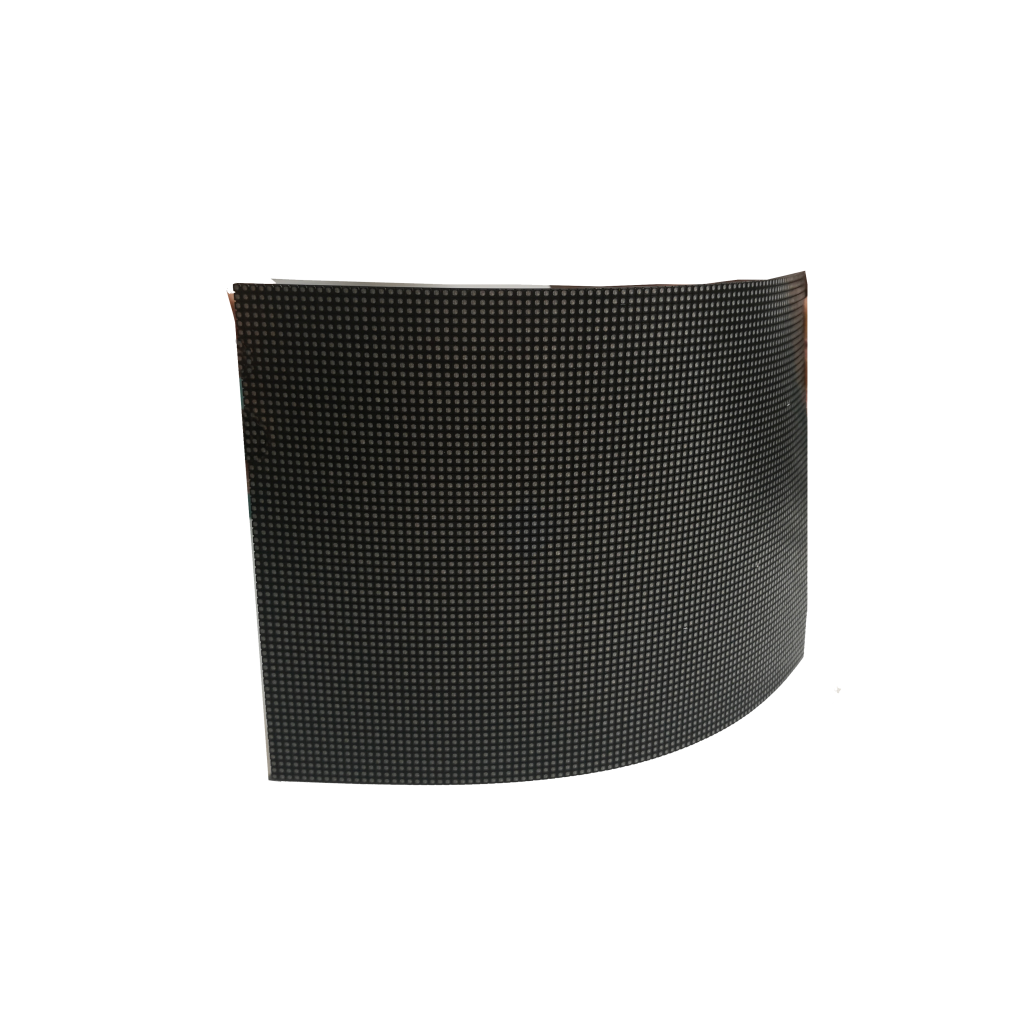


When installing a Large LED Display, prioritize safety with these 6 precautions: First, ensure the structural load capacity exceeds 150 kg/m² to support the display weight. Use grounded power cables and surge protectors to prevent electrical hazards. Maintain a minimum 50 cm clearance behind the screen for ventilation, avoiding overheating. Secure all mounting hardware with torque wrenches to 8-10 Nm for stability. Assign a fire extinguisher (Class C) nearby for emergencies. Finally, conduct a pre-installation voltage test (220V±10%) to ensure compatibility. These steps minimize risks while ensuring durability. (60 words)
Check Wall/Structure Strength
Most commercial LED panels weigh between 25-50 kg per square meter (5.5-11 lbs/sq ft), and a full 10-square-meter (107 sq ft) screen can easily hit 500 kg (1,100 lbs), not counting the frame or mounting hardware. The minimum load-bearing requirement for a wall-mounted LED display is typically 150 kg/m² (31 lbs/sq ft), but if you’re installing outdoors or on a suspended ceiling, that number jumps to 200-250 kg/m² (41-52 lbs/sq ft) to account for wind load and vibration.
First, identify the wall type—concrete walls (compressive strength 20-30 MPa / 2,900-4,350 psi) are ideal because they distribute weight evenly, while drywall (strength: 0.5-1.0 MPa / 72-145 psi) or plasterboard (0.3-0.7 MPa / 43-101 psi) will crack or fail under 100 kg/m² (20 lbs/sq ft) unless reinforced. If you’re mounting on a metal stud wall, check the stud spacing (standard: 40-60 cm / 16-24 in apart) and ensure they’re anchored to the building’s main structure (load-bearing beams or columns) a single 10-mm diameter anchor bolt can hold 50-80 kg (110-176 lbs) in concrete but only 10-20 kg (22-44 lbs) in drywall.
If your LED panel is 5 meters wide × 2 meters tall (16.4 ft × 6.6 ft), that’s 10 m² (107 sq ft), and at 35 kg/m² (7.3 lbs/sq ft), the raw panel weight is 350 kg (770 lbs). Add the mounting frame (extra 50-100 kg / 110-220 lbs) and cabling (10-20 kg / 22-44 lbs), and the total load could reach 450 kg (990 lbs). That means the wall or bracket system must support at least 500 kg (1,100 lbs) with a safety margin of 20-30% (so 600-750 kg / 1,320-1,650 lbs recommended).
- Concrete walls: Use expansion bolts (M10-M12 / 3/8″-1/2″ diameter) drilled 8-10 cm (3.1-3.9 in) deep into the concrete, spaced every 50-60 cm (19.7-23.6 in) along the mount. A single M10 bolt in solid concrete holds 80-100 kg (176-220 lbs).
- Metal studs: Double up the U-channel mounts and use heavy-duty toggle bolts (holding power: 20-30 kg / 44-66 lbs each) but never rely on drywall anchors alone for anything over 50 kg (110 lbs).
- Outdoor installations: Account for wind load (0.5-1.5 kPa / 10-30 psf at 100 km/h / 62 mph wind speeds) a 10 m² screen in 80 km/h (50 mph) winds experiences ~400 kg (880 lbs) of lateral force, so the wall or pole must resist that plus the display’s weight.
If the wall is older than 10-15 years, get a professional load test (cost: ~1,000-3,000, weight capacity: 1,000+ kg / 2,200+ lbs) instead of risking a wall collapse.
Secure Power & Cables Properly
Power and cable management might seem like a minor detail, but improper wiring causes 30-40% of LED display failures, mostly due to overheating, short circuits, or loose connections. A standard P2.5 LED panel (2.5 mm pixel pitch) draws ~300W per square meter (28W/sq ft), so a 10 m² (107 sq ft) screen needs 3,000W (3 kW) total power, equivalent to 15-20 household outlets running at once. If the power cables are too thin (AWG 18 or lower, ~0.8 mm² cross-section), voltage drop over 10-15 meters (33-49 ft) can reduce output by 15-25%, dimming the display or damaging the power supply units (PSUs). Always use AWG 14 or thicker (1.5-2.5 mm²) for runs over 5 meters (16 ft)—these handle 15-20A current safely without overheating.
The main power trunk line should be rated for 20-30% more than the total load—for a 3 kW display, that means 4-5 mm² copper wiring (AWG 12 or 10), which costs 20-50 per unit but prevent 90% of lightning or grid spikes from frying the LEDs.
Use cable trays or conduits (PVC or metal, $1-3 per linear foot) to bundle power and data lines separately keeping them 5-10 cm (2-4 in) apart reduces electromagnetic interference (EMI) by 60%, preventing color shifts or signal loss. Label every cable every 0.5-1 meter (1.6-3.3 ft)—this cuts troubleshooting time by 70% during repairs.
| Cable Type | Specs | Max Safe Length | Voltage Drop Risk | Cost per Meter | Recommended For |
|---|---|---|---|---|---|
| Power (AWG 18) | 0.8 mm², 10A | <3 m (10 ft) | High (20-25%) | $0.1-0.3 | Low-power accessories |
| Power (AWG 14) | 1.5 mm², 15-20A | 10-15 m (33-49 ft) | Medium (10-15%) | $0.5-1.0 | Standard LED panels |
| Power (AWG 12/10) | 2.5-4.0 mm², 25-30A | 20-30 m (66-98 ft) | Low (<5%) | $1.2-2.5 | Large displays (>10 m²) |
| Data (Cat6) | Shielded, 1Gbps | 50-100 m (164-328 ft) | Minimal (2-5%) | $0.3-0.8 | High-resolution signals |
Grounding is non-negotiable—ungrounded displays have 4x higher risk of electrical shock or short circuits. The metal frame must connect to a ground rod (resistance <5 ohms) via a 10-12 AWG green wire, and all PSUs should share a common ground point.

Leave Space for Cooling
A typical P2.5 LED panel (2.5mm pixel pitch) operates at 45-60°C (113-140°F) under full brightness, and when you stack 10-20 panels together, internal temperatures can spike to 70-80°C (158-176°F) if airflow is blocked. Every 10°C (18°F) increase above 50°C (122°F) cuts LED lifespan by 30-40%, turning a 50,000-hour panel into a 20,000-30,000-hour one.
Without proper airflow, heat builds up exponentially—studies show that enclosed LED displays without vents reach critical temps (85°C / 185°F) in under 2 hours at full brightness, while those with 10 cm (4 in) rear clearance stay below 60°C (140°F) even after 8 hours. For every 1 cm (0.4 in) reduction in ventilation space, cooling efficiency drops by 15-20%, meaning you’ll either need bigger fans (which cost $50-200 each and add noise) or accept shorter panel life.
Case Study: A 12 m² (129 sq ft) LED wall in Dubai (avg. temp: 40°C / 104°F) installed without rear clearance failed after 6 months—panels overheated, causing 15% dead pixels and a $12,000 repair bill. After adding 80 cm (31 in) of ventilation and exhaust fans, temps dropped to 55°C (131°F), and the display ran 18 months without issues.</blockquote>
Humidity makes it worse—hot, trapped air with 60-80% relative humidity leads to condensation inside the panels, corroding circuits and causing short circuits (which happen 3x more often in poorly cooled displays). For every 10% humidity increase above 50%, cooling capacity needs to go up by 5-8% to compensate. Outdoor installs need even more space—100-150 cm (39-59 in) behind the screen to handle direct sunlight (which adds 20-30°C / 36-54°F to panel temps).
Fan placement matters too—one 120mm fan (flow rate: 50-70 CFM) can cool 1-2 panels (0.5-1 m² / 5-11 sq ft), but you’ll need 3-5 fans for a 5 m² (54 sq ft) wall. Blower systems (higher pressure, 30-100)—if rear panel temps stay above 65°C (149°F) for more than 2 hours daily, you need better cooling.
Mount Displays Correctly
10 m² (107 sq ft) LED wall weighs around 400-500 kg (880-1,100 lbs), and if the mounting points are off by even 5 mm (0.2 in), the stress distribution becomes uneven, leading to frame warping, panel misalignment, or even collapse within 6-12 months.The mounting bracket system itself must support 1.5x the display’s weight for a 500 kg screen, that means 750 kg (1,650 lbs) load capacity.
Anchor spacing is critical for a 3m x 3m (10ft x 10ft) display, you need at least 8-12 anchor points spaced 50-60 cm (20-24 in) apart to distribute the load evenly. Each M10 (10 mm diameter) anchor bolt in concrete holds 80-100 kg (176-220 lbs), so for a 500 kg display, you’d need 6-8 bolts minimum, but always use 10-12 for a 30% safety margin. Never use drywall anchors for loads over 20 kg (44 lbs). For metal stud walls, use toggle bolts or snap-toggles (25-35 kg / 55-77 lbs capacity each) and reinforce the studs with vertical steel channels (1.5-2 mm thick) if the display weighs more than 100 kg (220 lbs).
| Mounting Type | Max Load Capacity | Anchor Spacing | Hardware Required | Cost per m² | Best For |
|---|---|---|---|---|---|
| Concrete Wall | 100-150 kg/m² (20-31 lbs/sq ft) | 40-50 cm (16-20 in) | M10-M12 bolts, epoxy resin | $20-40 | Permanent indoor installs |
| Metal Stud Wall | 50-80 kg/m² (10-16 lbs/sq ft) | 30-40 cm (12-16 in) | Toggle bolts, steel reinforcement | $30-60 | Lightweight displays |
| Truss System | 200-300 kg/m² (41-62 lbs/sq ft) | 60-80 cm (24-31 in) | Aluminum trusses, clamps | $80-120 | Large outdoor events |
| Ceiling Suspension | 80-100 kg/m² (16-21 lbs/sq ft) | 50-60 cm (20-24 in) | Steel cables, I-beam hooks | $50-90 | High-bay installations |
Torque matters overtightening bolts (beyond 10-12 Nm / 7.4-8.9 lb-ft) can strip threads or crack aluminum frames, while undertightening (below 8 Nm / 5.9 lb-ft) lets vibrations loosen the mount over time. Use a torque wrench ($50-100) and follow the manufacturer’s specs—most LED panels require 8-10 Nm (5.9-7.4 lb-ft) for M8 bolts and 12-15 Nm (8.9-11 lb-ft) for M10. Check torque every 3-6 months vibrations from nearby traffic or HVAC systems can reduce torque by 15-20% within a year.
A 10 m² (107 sq ft) display in a 80 km/h (50 mph) wind experiences 400-500 kg (880-1,100 lbs) of lateral force—so anchors must resist both downward weight and sideways pull.Use through-bolts with steel backplates instead of expansion anchors—they handle lateral forces 2-3x better. Always factor in thermal expansion—steel mounts expand 0.1-0.2 mm per meter (0.004-0.008 in per ft) for every 10°C (18°F) temperature change, so leave 2-3 mm (0.08-0.12 in) gap between panels to avoid compression damage.
Test Before Full Setup
Never assume your LED display will work perfectly out of the box—30-40% of installations have initial defects that are cheaper to fix before full assembly. Start with a pre-power inspection: Use a multimeter ($20-50) to test input voltage at each power supply—it should read 110-120V or 220-240V (±10%), not fluctuating beyond ±5%. For a 10 m² (107 sq ft) display, this takes 20-30 minutes but prevents 80% of power-related failures.
Next, power on each panel individually for 10-15 minutes before linking them. Look for:
- Dead pixels (acceptable: <3-5 per m² / 10 sq ft)—more than that requires replacement.
- Color consistency—use a colorimeter ($100-300) to measure white balance (target: 6500K ±200K) and color deviation (Delta E <3.0) between panels. A Delta E >5.0 is visibly noticeable and ruins image uniformity.
- Brightness variance—panels shouldn’t differ by >10% (e.g., 800 nits vs. 880 nits). Higher differences cause patchy visuals, especially in grays.
Test data transmission—run a test pattern (like a moving color bar) across all panels at max refresh rate (1920-3840 Hz). Watch for:
- Signal dropouts or flickering, which often means faulty data cables (Cat5e/Cat6) or damaged connectors.
- Latency issues—if content lags by >50 ms (2-3 frames at 60Hz), check the controller output or cable length (max 100m / 328ft for HDBaseT).
Calibrate before final mounting—it takes 1-2 hours for a 10 m² display but boosts color accuracy by 40-60%. Use software to:
- Adjust gamma (target: 2.2-2.4) to avoid washed-out shadows.
- Match color temperatures across panels—variance >300K looks mismatched.
- Set grayscale linearity—deviation >5% causes banding in gradients.
Check environmental factors:
- Ambient light—displays in bright areas need >1,500 nits to stay visible. Measure with a light meter ($50-100).
- Viewing angles—test from 30°, 60°, and 90° off-center. Brightness should drop <30% at 60° for standard LEDs.
- Heat management—run at full brightness for 1 hour. Panel temps should stay <60°C (140°F). Hotspots >70°C (158°F) indicate cooling issues.
This cuts future troubleshooting time by 50%. A 2-3 hour test session prevents 90% of post-install headaches. Skipping testing risks $500-2,000 in rework costs and 3-5 days of downtime.


![How to Choose a Flexible LED Display [Buyer's Guide]](https://www.szradiant.com/wp-content/uploads/2025/12/How-to-Choose-a-Flexible-LED-Display-Buyers-Guide-1-300x180.jpg)


