


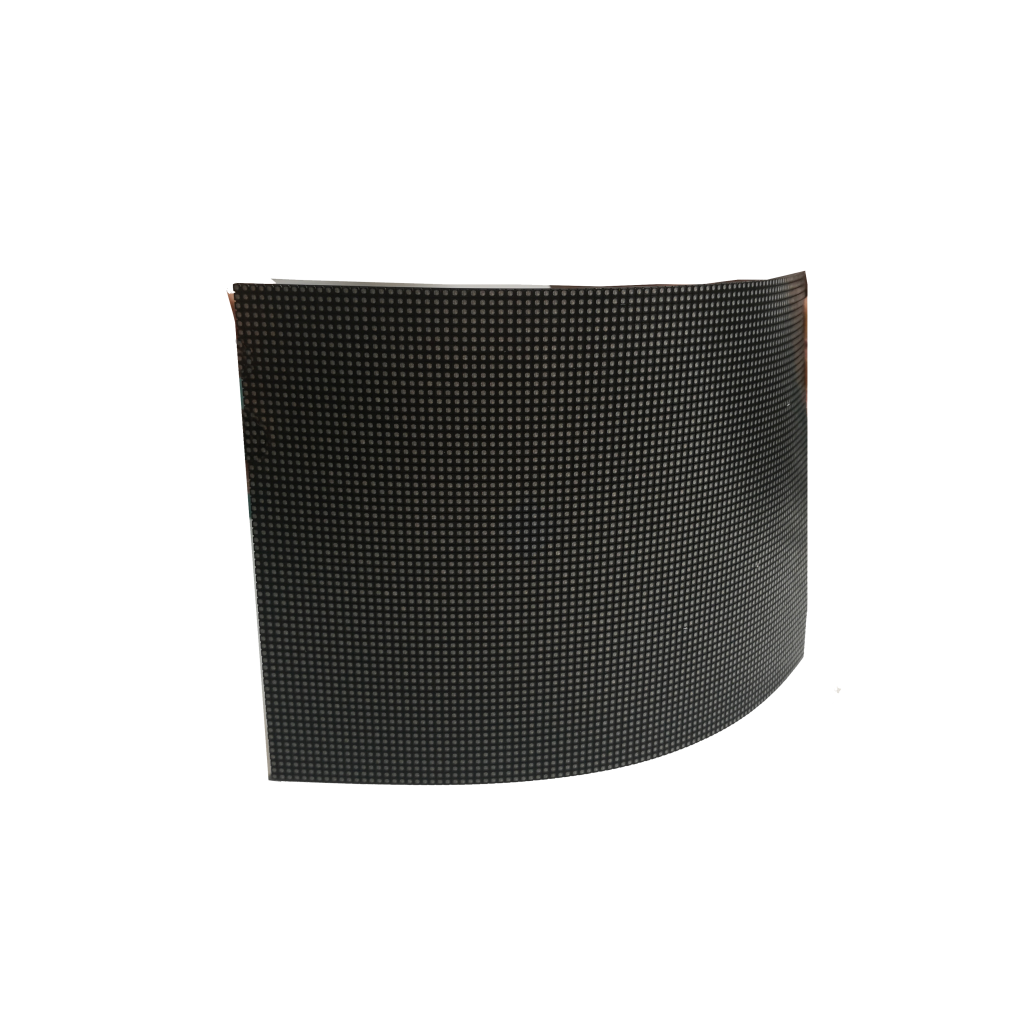


When selecting an indoor LED screen, focus on six key metrics: pixel pitch for clarity (P2.5 for close viewing), brightness (800 nits for well-lit rooms), resolution, refresh rate (3840Hz for smooth video), calibration for color consistency, and a high IP54 rating for dust and moisture protection to ensure durability and a sharp image.
Pixel Pitch: The Most Important Number on the Spec Sheet
If it’s too small, you’re spending a significant amount of your budget on resolution your audience can’t even perceive, often increasing the cost by 20-40% or more for a negligible quality improvement at a distance.
This table shows the direct relationship between pixel pitch, optimal viewing range, and typical application:
| Pixel Pitch (mm) | Minimum Viewing Distance (meters) | Ideal Viewing Distance Range (meters) | Common Use Case |
|---|---|---|---|
| P1.2 – P1.5 | 1.2 – 1.5 | 1.5 – 3 meters | Small meeting rooms, luxury retail, high-end corporate lobbies |
| P1.8 – P2.5 | 1.8 – 2.5 | 3 – 6 meters | Mid-sized conference rooms, command centers, university lecture halls |
| P2.9 – P3.9 | 2.9 – 3.9 | 6 – 10 meters | Large event spaces, hotel ballrooms, train station information displays |
| P4.8+ | 4.8+ | 10+ meters | Very large arena screens, big auditoriums, outdoor signage |
- Calculating the Minimum Viewing Distance: For a P2.5 screen, the minimum comfortable viewing distance is approximately 2.5 feet (0.76 meters). The idealdistance for a clear, integrated image is often 2 to 3 times this minimum value. For a P2.5 screen, that means the best experience is from 1.5 to 4.5 meters away.
- Content Type Matters: If your primary content is high-resolution video and complex graphics, you can get away with a slightly larger pitch (e.g., P3.9) at a 6-meter distance.
- Resolution and Screen Size: A 5 square meter screen with a P2.5 pitch has a significantly higher resolution than a 5 square meter screen with a P3.9 pitch. Always request the exact resolution (e.g., 1920×1080) from your vendor to ensure it meets your content needs, especially if you need to display native 4K (3840×2160) signals.
Brightness for Your Environment: Nits, Glare, and Power Costs
An indoor LED screen that’s too dim (e.g., under 500 nits) in a sunlit lobby will appear washed out and unreadable. Conversely, a screen cranked to 1500 nits in a dim corporate boardroom will be painfully bright. Running a screen at 100% brightness when it only needs to be at 50% load can easily increase your annual electricity costs by hundreds of dollars and potentially reduce the panel’s operational life from a typical 100,000 hours down to 70,000 hours due to constant thermal and electrical stress.
Here’s a practical guide based on real-world environments and their average ambient light levels:
- Dim or Controlled Lighting (200-300 lux): A brightness level between 500 – 800 nits is more than sufficient. It provides excellent color depth and contrast without overpowering the environment. This is the sweet spot for power efficiency and long-term reliability.
- Moderate Ambient Light (400-600 lux): You’ll need a screen capable of 800 – 1,200 nits to comfortably cut through the glare and remain vibrant.
- High Ambient Light (800+ lux): Screens here need to be seriously bright, ranging from 1,200 – 2,000 nits, to compete with direct sunlight. Be aware: panels in this category can consume 30-50% more power than a standard 800-nit screen and may require a more robust cooling system to manage the significant heat output.
This automation ensures perfect visibility 24/7—dimming softly at night and ramping up at noon—while optimizing energy efficiency. This can lead to a 20-40% reduction in power consumption over the course of a year. Always ask for the power consumption specs in Watts per square meter (W/m²) at both 100% and 50% brightness to accurately calculate your operating costs. A typical indoor panel might draw around 350 W/m² at full blast but only 180 W/m² at half brightness, which is a massive difference in cost over its 10-year life.

Color Accuracy and Consistency: The True Test of Quality
For professional applications, you need a Delta E value below 3 to ensure colors appear exactly as intended to the human eye. This level of accuracy requires sophisticated factory calibration using spectrophotometers that measure each LED’s output across RGB channels at multiple brightness levels (typically 20%, 50% and 100%).
LEDs are produced in batches with natural variations in wavelength and brightness – often varying by 2-5nm in color wavelength and 5-10% in luminance between production batches. This precision manufacturing process can add 15-25% to the module cost but prevents visible color patches and brightness variations across the screen.
LEDs degrade at different rates – typically blue diodes degrade 10-15% faster than red ones. Without compensation, this leads to noticeable color shift (often toward yellow/red) after 8,000-10,000 hours of operation. High-end solutions incorporate automatic internal uniformity correction systems that continuously monitor and adjust individual LED outputs, maintaining color accuracy throughout the display’s 70,000-100,000 hour lifespan.
709 (covering ~35% of visible colors), professional models often target DCI-P3 (covering ~45%) or even Rec. 2020 (~57%). However, wider color gamuts require more sophisticated processing and can increase power consumption by 20-30% due to the higher drive currents needed for precise color reproduction.
For critical viewing environments, ensure your display includes 3D Look-Up Tables (3D LUTs) capable of storing 17^3 or 33^3 interpolation points for accurate color transformation.
Refresh Rate and Smooth Playback: Eliminating Motion Blur
While standard content runs at 24-60 fps, a higher refresh rate (3840Hz or more) is crucial for eliminating flicker. A low refresh rate (below 1920Hz) can cause visible scanning lines when recorded on camera and motion blur during rapid panning shots.
The relationship between refresh rate and content type follows these parameters:
| Content Type | Minimum Recommended Refresh Rate | Ideal Refresh Rate | Key Considerations |
|---|---|---|---|
| Static Signage/Images | 960 Hz | 1920 Hz | Low power consumption, reduced cost |
| Video Conferencing | 1920 Hz | 3840 Hz | Smooth motion for moving people |
| Live Sports Broadcast | 3840 Hz | 3840-7680 Hz | Eliminates motion blur in fast action |
| High-Speed Simulation | 7680 Hz | >7680 Hz | Zero latency for real-time rendering |
Screens with High Dynamic Refresh (HDR) technology can dynamically adjust their refresh rate from 960Hz to 7680Hz based on content type, reducing power consumption by up to 40% during static image display while maintaining maximum performance for motion-intensive content. This adaptive approach typically adds 15-25% to the module cost but provides significant energy savings over the display’s 100,000-hour lifespan.
Professional broadcast environments require 3840Hz minimum to avoid black bar rollings effects when filmed at 1/1000s shutter speed. The scanning method also impacts performance: static scan technology divides the screen into 4-8 simultaneous refresh zones. This technical difference affects both motion clarity (with dynamic scan reducing motion blur by 60-70%) and power efficiency (static scan consuming 20-30% less energy during partial screen updates).
Premium controllers process image data at 16-bit depth and maintain a processing buffer that adds less than 8ms of total latency – crucial for live events and interactive applications. This requires data transmission speeds exceeding 10Gbps between controllers and modules, using proprietary protocols that can handle 300% more data throughput than standard HDM1 2.0 connections. The resulting performance ensures every frame from your 60fps source content is displayed with <0.5ms variance between pixels.
Reliability and Protection Rating: Engineering for 24/7 Operation
When you’re investing six figures in an LED display, the IP rating (Ingress Protection) isn’t just a technical acronym – it’s your insurance policy against environmental factors that cause 80% of premature failures. For indoor installations, the absolute minimum requirement is IP54.This rating alone can increase the display’s operational lifespan by 30-40% compared to non-rated displays simply by preventing dust accumulation on critical components.
- IP54: Suitable for climate-controlled offices with stable 20-25°C temperature and 40-60% humidity levels.
- IP65: Handles ±10°C temperature fluctuations and humidity spikes up to 85%.
- IP66: Withstands ±15°C temperature variations and continuous 90% humidity environments.
A typical LED cabinet generates 250-400W/m² of heat during operation. Without proper dissipation, internal temperatures can reach 65-75°C – enough to reduce LED lifespan by 50% and cause color shift within 8,000-10,000 hours. Premium displays incorporate passive cooling systems with 6063 aluminum alloy heat sinks that maintain internal temperatures below 45°C even after 72 hours of continuous operation at maximum brightness. This thermal stability ensures consistent color performance and maintains >95% of original brightness after 30,000 hours of use.
Power supplies with 90-95% efficiency ratings not only reduce energy costs by 15-20% but generate less heat and provide wider voltage tolerance (90-264V AC). Built-in surge protection handles 6kV/3kA spikes while automatic current regulation maintains ±2% output stability despite line voltage fluctuations. These features collectively contribute to achieving 99.95% uptime and reduce maintenance costs by 60% over the display’s 100,000-hour operational lifespan.
Displays constructed with SMT (Surface Mount Technology) placement achieve <0.01% pixel failure rates compared to >0.5% for hand-soldered alternatives. Automated optical inspection checks each of the >100,000 components per square meter with 99.99% accuracy, while 72-hour aging tests at 85°C/85% humidity stress conditions identify potential early failures before shipment. This rigorous process results in displays that maintain <0.0001% annual pixel failure rates and require only 1-2 service visits per year for routine maintenance rather than constant repairs.


![How to Choose a Flexible LED Display [Buyer's Guide]](https://www.szradiant.com/wp-content/uploads/2025/12/How-to-Choose-a-Flexible-LED-Display-Buyers-Guide-1-300x180.jpg)


