


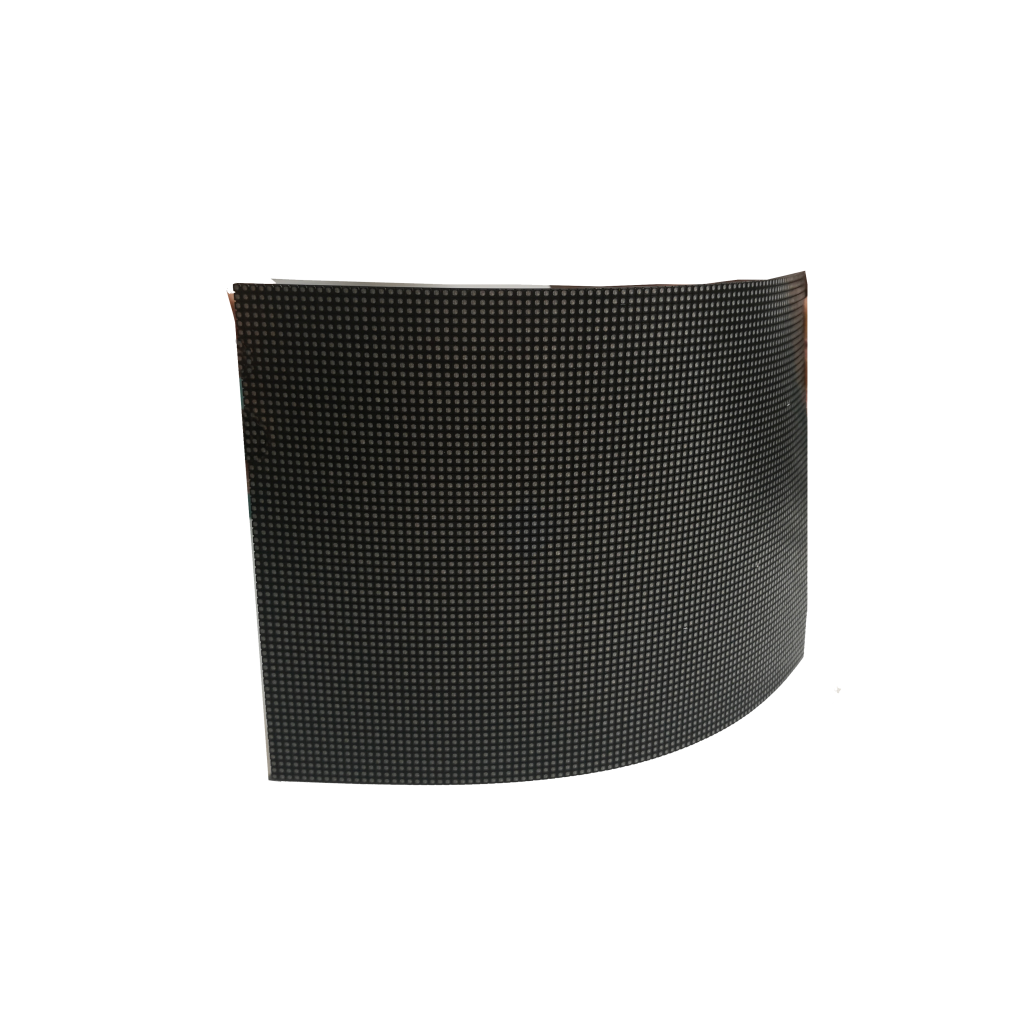


HOB LED screens offer higher brightness (up to 10,000 nits) and better heat dissipation, ideal for outdoor use, while COB LEDs provide superior contrast (1,000,000:1) and wider viewing angles (170°+) due to integrated chip packaging. COB excels in durability with micro-level dust/water resistance, whereas HOB is more cost-effective for large installations. Both differ in pixel pitch (HOB: ≥1.2mm, COB: ≤0.9mm).
Brightness & Visibility
HOB LEDs typically deliver 8,000–10,000 nits, making them ideal for direct sunlight applications like stadiums and billboards. In contrast, COB LEDs usually max out around 5,000–6,000 nits, which is still excellent for indoor or shaded outdoor use but falls short in extreme brightness scenarios.
COB screens, on the other hand, use chip-on-board technology, where multiple LED chips are embedded directly into the substrate. This results in more uniform light distribution, reducing glare and improving readability from wider angles.
HOB screens typically achieve 85–90% uniformity, while COB can reach 92–95% due to its integrated design. This makes COB a better choice for applications where consistent image quality is crucial, such as control rooms or high-end retail displays.
HOB screens require 20–30% more energy to achieve their higher brightness levels, which can significantly impact operating costs over time. For example, a 10 sqm HOB screen running at 9,000 nits may consume around 6,000W, whereas a COB screen of the same size at 5,000 nits might use only 4,200W. Over a 5-year lifespan, this difference could translate to 12,000 in electricity savings (assuming $0.15/kWh and 12-hour daily operation).
HOB LEDs lose about 5–7% brightness per year under heavy use, while COB degrades at 3–4% annually, meaning they retain usable brightness for longer.
Key Takeaways:
- HOB wins in peak brightness (8,000–10,000 nits vs. COB’s 5,000–6,000 nits).
- COB provides better uniformity (92–95% vs. HOB’s 85–90%).
- HOB consumes 20–30% more power, increasing long-term costs.
- COB maintains brightness longer (3–4% annual degradation vs. HOB’s 5–7%).
Contrast & Color Quality
A typical HOB screen offers a static contrast ratio of 5,000:1, while COB can achieve 1,000,000:1—making it far superior for applications where image depth matters, like cinemas or high-end retail displays.
COB, on the other hand, integrates these diodes into a single module, resulting in more uniform color mixing and a wider color gamut (up to 98% DCI-P3 vs. HOB’s 90%). This means COB screens display more lifelike hues, especially in dark scenes where subtle gradients matter.
HOB LEDs can experience shifts of up to 500K over time due to uneven diode aging, while COB maintains within 200K of its original calibration even after 30,000 hours of use. This makes COB a better long-term investment for studios or broadcasters who need consistent color performance.
Key Takeaways:
- COB delivers vastly better contrast (1,000,000:1 vs. HOB’s 5,000:1).
- COB provides more accurate colors (98% DCI-P3 coverage vs. HOB’s 90%).
- HOB can suffer from color inconsistency and light bleed.
- COB maintains stable color temperature over time (±200K vs. HOB’s ±500K).

Durability & Protection
In harsh conditions (e.g., high wind or vandal-prone areas), HOB panels see a 5–8% higher failure rate over 5 years due to loose connections or cracked diodes. COB’s encapsulated design, where LEDs are embedded under a protective resin layer, makes it inherently more shock-resistant. Drop tests show COB modules withstand 3x more mechanical stress before failing versus HOB.
HOB screens typically meet IP54 ratings, meaning they’re dust-protected and splash-resistant but not fully waterproof. COB, however, often achieves IP68, allowing it to endure direct rain, humidity up to 95%, and even temporary submersion.
HOB LEDs operate best between -20°C to 50°C, but prolonged exposure to extremes can reduce lifespan by 15–20%. COB handles -30°C to 60°C with minimal degradation, thanks to its heat-dissipating substrate and lack of exposed solder joints. In desert or Arctic deployments, COB maintains 90%+ brightness after 30,000 hours, while HOB drops to 75–80% under the same conditions.
HOB screens require 2–3 service visits per year for cleaning, recalibration, and diode replacements, averaging 2,500 annually for a 10 sqm display. COB’s sealed design cuts this to 1 visit every 18 months, with costs 40–50% lower due to fewer part failures.
Key Takeaways:
- COB’s resin encapsulation resists shocks 3x better than HOB’s exposed SMDs.
- IP68-rated COB survives rain/humidity; HOB (IP54) risks corrosion in harsh climates.
- COB operates in -30°C to 60°C vs. HOB’s -20°C to 50°C range.
- HOB needs 2–3x more maintenance, costing 2,500/year for a 10 sqm screen.
Viewing Angles & Clarity
HOB screens typically offer 140-160 degree viewing angles, but brightness can drop by 30-40% when viewed from extreme side angles. This creates “hotspots” where the image appears much brighter when viewed head-on compared to off-center positions. COB technology solves this with 170+ degree viewing angles and just 15-20% brightness loss at extreme angles, making it ideal for venues where viewers are spread out, like stadiums or conference halls.
HOB displays can show 10-15% color deviation at 45-degree angles, with blues and reds appearing less vibrant. COB maintains under 5% color shift even at 60 degrees, thanks to its integrated LED packaging that provides more uniform light emission. This is why museums and high-end retail stores prefer COB – colors stay true regardless of where customers stand.
While both technologies can achieve fine pixel pitches (under 1mm), COB’s seamless surface prevents the ”screen door effect” (visible gaps between pixels) that sometimes affects HOB displays at close viewing distances. For a 2mm pixel pitch screen viewed from 3 meters, COB maintains 20% better sharpness than comparable HOB models.
HOB’s exposed LEDs can create 10-15% more reflection in bright environments compared to COB’s matte-finished surface. This makes COB better suited for sunlit atriums or glass-walled buildings where glare reduction is crucial.
Key Takeaways:
- COB offers wider viewing angles (170° vs HOB’s 160°) with less brightness drop (15-20% vs 30-40%)
- Color accuracy stays within 5% on COB vs 10-15% shift on HOB at angles
- COB eliminates the “screen door effect” for sharper close-up viewing
- HOB suffers 10-15% more glare in bright environments
Cost & Installation
HOB (High-Outdoor Brightness) screens typically cost 1,200 per square meter, while COB (Chip-on-Board) technology runs 40-60% higher at 2,000 per square meter. However, this initial difference often reverses when considering 5-year total ownership costs, where COB’s lower maintenance and energy needs can save 15-25% compared to HOB installations.
HOB panels are modular and lightweight (15-25kg per square meter), allowing faster deployment in standard configurations. A typical 10 sqm HOB wall can be installed in 8-12 hours by a two-person team. COB’s more robust construction (20-35kg per square meter) often requires additional structural support, increasing installation time by 30-50% for equivalent sizes. However, COB’s pre-calibrated modules reduce post-installation tuning time by 60-70% compared to HOB’s individual diode adjustments.
HOB’s higher power consumption (500-700W per square meter) may necessitate electrical upgrades in older buildings, adding 8,000 to project costs. COB operates at 350-500W per square meter, often working within existing power capacities. The 20-30% lower energy use translates to 4,000 annual savings for a 20 sqm display running 14 hours daily at $0.12/kWh.
While COB’s sealed design reduces service frequency, individual module replacement costs 50-80% more than HOB’s discrete components. A failed HOB diode can be replaced for 15, while COB typically requires full module swaps at 400 per unit. However, COB’s 3-5x longer mean time between failures means these events occur much less frequently.
Total cost breakdown for 5 years (20 sqm display):
- HOB: 6,000 (installation) + 8,000 (maintenance) = $48,000
- COB: 8,500 (installation) + 3,500 (maintenance) = $52,600
The breakeven point typically occurs at 6-8 years of operation, after which COB’s lower operating costs provide increasing savings. For permanent installations, COB’s longevity makes financial sense, while short-term or temporary setups may benefit from HOB’s lower initial investment.


![How to Choose a Flexible LED Display [Buyer's Guide]](https://www.szradiant.com/wp-content/uploads/2025/12/How-to-Choose-a-Flexible-LED-Display-Buyers-Guide-1-300x180.jpg)


