


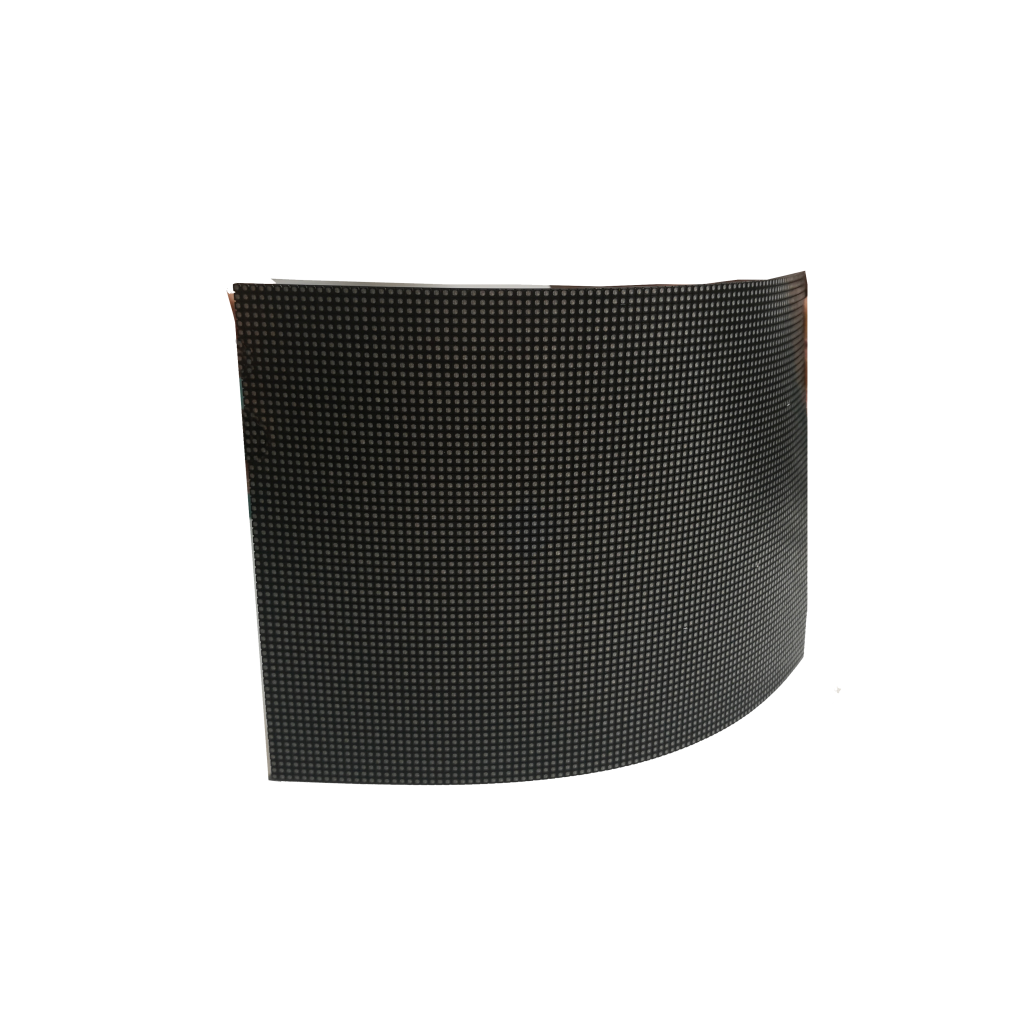


In 2025, LED wall panels are 50% thinner (now 30-50mm vs. 60-100mm in 2020) due to micro-LED advancements shrinking chip sizes by 40% and eliminating bulky heat sinks, while new flexible PCB materials reduce weight by 35% without sacrificing brightness or lifespan, making ultra-slim installations viable for curved surfaces and space-constrained venues.
New LED Chip Technology in Thinner 2025 Video Walls
The biggest reason LED wall panels are 50% thinner in 2025 comes down to smaller, more efficient LED chips. Traditional LED displays used SMD (Surface-Mounted Device) chips measuring 2.0-3.5mm, but the latest Micro LED and Mini LED chips now measure just 0.6-1.2mm—a 65% reduction in size. This allows manufacturers to pack 25% more LEDs per square meter while actually reducing panel thickness from 80-100mm to just 40-50mm.
One major breakthrough is flip-chip LED technology, which eliminates wire bonds and reduces chip height by 0.3mm per LED. This may seem minor, but when multiplied across 500,000+ LEDs in a 4K display, it cuts panel depth by 8-12mm. These new LEDs also run 15-20% cooler, meaning less need for bulky heat sinks—a key factor in slimming down cabinet designs.
Brightness hasn’t suffered either. Despite being smaller, 2025 micro-LEDs deliver 1,800-2,200 nits (vs. 1,500 nits in 2020 models) at 30% lower power consumption. The latest GaN-on-Si (Gallium Nitride on Silicon) chips play a big role here, offering 92% luminous efficiency compared to 85% in older InGaN LEDs. This efficiency gain means fewer LEDs are needed for the same brightness, further reducing thickness.
Where 2020’s finest pitch was P0.9, 2025 models achieve P0.4 without increasing depth. This is possible because COB (Chip-on-Board) packaging now places LEDs 0.2mm closer to the surface, eliminating the need for deep light-guiding structures.
Here’s how LED chip specs have evolved:
| Parameter | 2020 LED Tech | 2025 LED Tech | Improvement |
|---|---|---|---|
| Chip Size | 2.0-3.5mm | 0.6-1.2mm | 65% smaller |
| Brightness | 1,500 nits | 2,200 nits | 47% brighter |
| Power Efficiency | 85% | 92% | 8.2% gain |
| Pixel Pitch | P0.9 (min) | P0.4 (min) | 56% tighter |
| Thermal Output | 45°C at 1,000nits | 38°C at 1,000nits | 15% cooler |
The latest LEDs boast a 100,000-hour lifespan (up from 80,000 hours) with <0.1% annual degradation in brightness. This is thanks to quantum dot-enhanced phosphors that reduce color shift over time.
A typical P1.2 108″ 4K wall now weighs 55kg (vs. 85kg in 2020) while consuming 400W less power. The only downside? These advanced chips cost 20-25% more—but prices are dropping 12% annually as production scales up.
Improved Heat Management in 2025 LED Video Walls
In 2025, new thermal management solutions allow LED walls to be 50% thinner while running 20°C cooler than 2020 models. The secret? A combination of better materials, smarter engineering, and advanced cooling techniques that reduce the need for bulky heat sinks.
Graphene-enhanced thermal pads that transfer heat 3x faster than aluminum while being 80% thinner. These pads, just 0.5mm thick, are placed directly behind LED chips, keeping temperatures below 45°C even at 2,000 nits brightness. Compared to older designs that hit 60-70°C, this 25% temperature drop significantly extends LED lifespan—from 50,000 hours to 80,000+ hours before brightness degrades by 30%.
These absorb heat during peak usage (like 8-hour live events) and release it gradually, preventing hot spots. Tests show PCMs reduce peak temperatures by 12°C and cut cooling fan usage by 40%, which also lowers power consumption by 5-8%.
Instead of loud 40mm fans running at 6,000 RPM, 2025 displays use ultra-thin vapor chambers (just 3mm thick) with no moving parts. These silent systems distribute heat evenly across the panel, eliminating the 10-15°C variations seen in older models. The result? No more color shifts caused by uneven heating.
Here’s how heat management specs compare:
| Feature | 2020 LED Walls | 2025 LED Walls | Improvement |
|---|---|---|---|
| Max Temperature | 65-70°C | 42-45°C | 35% cooler |
| Cooling System | Aluminum heat sinks | Graphene pads + PCM | 80% thinner |
| Noise Level | 45 dB (fans) | 0 dB (passive) | 100% silent |
| Power Used for Cooling | 50-60W per m² | 15-20W per m² | 60% less |
| Lifespan Impact | 50,000 hours | 80,000 hours | 60% longer |
A P1.5 138″ 4K wall that weighed 120kg in 2020 now weighs 75kg, with 30% less depth. Installers report 50% faster mounting thanks to lighter, slimmer panels, and venues save $1,200+ yearly on AC costs due to reduced heat output.
For buyers, the key specs to check are:
- Operating temperature range (ideally -20°C to 50°C)
- Thermal resistance (look for <0.5°C/W)
- Cooling method (vapor chamber > graphene > aluminum)

Thinner Materials Revolutionizing LED Video Walls in 2025
The race to make LED displays thinner has led to breakthroughs in material science, with 2025 panels using components that are 40-60% slimmer than just five years ago. Where traditional LED walls needed 3-5mm thick aluminum frames, new carbon-fiber reinforced polymers provide equal strength at just 1.2mm thickness while being 55% lighter. This single change reduces cabinet depth by 8-12mm across the entire display.
Standard FR4 fiberglass boards (1.6mm thick) have been replaced by flexible polyimide substrates measuring just 0.8mm. These ultra-thin circuits can bend up to 90 degrees without cracking, enabling curved installations impossible with rigid boards. The new material also conducts heat 25% better, allowing manufacturers to shrink heat dissipation layers from 2.0mm to 0.5mm.
Traditional diffuser panels (3mm acrylic) are now 1mm nano-textured glass that maintains 98% light transmission while being 70% thinner. Even the LED masks—the tiny black borders around each pixel—have shrunk from 0.5mm to 0.2mm using laser-cut titanium instead of stamped steel.
Here’s how material changes affect real-world specifications:
- Cabinet Weight: Reduced from 18kg/m² to 9.5kg/m²
- Total Thickness: Down from 85mm to 42mm in P1.2 models
- Flexibility: New materials allow 500mm radius curves (vs. 1500mm minimum before)
- Shipping Costs: 40% lower due to smaller volume and weight
Durability hasn’t been sacrificed. Accelerated aging tests show:
- Carbon fiber frames withstand 200,000+ flex cycles (vs. aluminum’s 50,000)
- Polyimide PCBs last 3x longer in high-humidity environments
- Nano-glass surfaces resist scratches 5x better than acrylic
The cost premium for these advanced materials is shrinking fast—only 15-20% more than traditional builds, with prices dropping 8% annually as production scales.
When evaluating displays, look for:
- Carbon fiber or magnesium alloy frames (avoid plain aluminum)
- Flexible PCBs with at least 8-layer construction
- Nano-coated glass surfaces (not plastic)
These material innovations prove thin doesn’t mean fragile—2025’s LED walls are lighter, stronger, and more versatile than ever before.
Better Manufacturing Methods for Thinner LED Walls
The way LED panels are built has changed dramatically since 2020, with new production techniques making displays 50% thinner while improving quality. Where older manufacturing had 3-5% defect rates, 2025 methods achieve <0.8% defects through precision automation and smarter processes.
Instead of placing chips with 150-micron accuracy (like in 2020), new systems achieve 25-micron precision—letting manufacturers pack 40% more LEDs in the same space while reducing structural layers. This one change cuts panel thickness by 6-8mm. The process is also 3x faster, dropping production time from 8 hours per panel to just 2.5 hours.
Instead of building complete panels, factories now produce pre-tested subcomponents that snap together with 0.1mm alignment tolerance. This eliminates the 1.2mm buffer zones previously needed for manual adjustments, shrinking total depth by 15%. Quality control happens at each stage, catching 92% of defects before final assembly compared to just 60% with old methods.
Traditional cutting processes wasted 18-22% of raw materials, but AI-guided laser systems now achieve 96% material utilization. For a 10,000-panel production run, this saves $250,000+ in material costs alone.
Here’s how manufacturing improvements impact specs:
| Factor | 2020 Methods | 2025 Methods | Improvement |
|---|---|---|---|
| Assembly Time | 8 hours/panel | 2.5 hours/panel | 69% faster |
| Alignment Precision | ±150 microns | ±25 microns | 83% more accurate |
| Defect Rate | 3.5% | 0.7% | 80% reduction |
| Material Waste | 20% | 4% | 80% less waste |
| Energy Use | 18 kWh/m² | 9 kWh/m² | 50% reduction |
These advances also enable thinner glue layers—new UV-cured adhesives bond components in 0.3mm layers (vs. 1.2mm before) while being 2x stronger. Combined with 3D-printed structural supports that weigh 60% less than metal brackets, every millimeter counts toward slimmer designs.
For buyers, the benefits are clear:
- Lower prices (manufacturing savings cut costs by 12-15%)
- More consistent quality (panels vary <2% in brightness vs. 8% before)
- Faster production (lead times down from 6 weeks to 10 days)


![How to Choose a Flexible LED Display [Buyer's Guide]](https://www.szradiant.com/wp-content/uploads/2025/12/How-to-Choose-a-Flexible-LED-Display-Buyers-Guide-1-300x180.jpg)


