


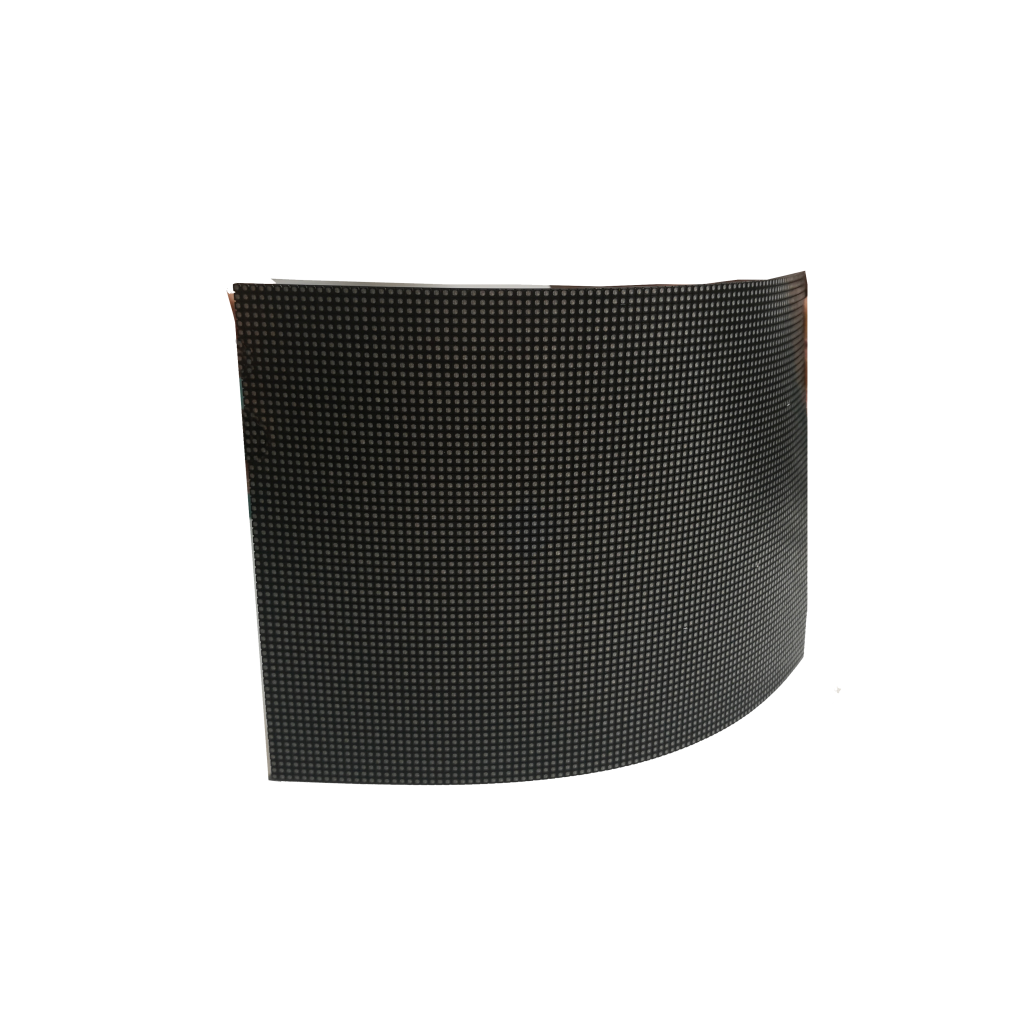


A video wall combines multiple displays (LCD/LED modules) with controllers for seamless tiling, ideal for large spaces (control rooms, retail). LED screens are single-panel displays, often outdoor-rated (5,000-8,000 nits, IP65). Video walls use smaller pixel pitches (e.g., P1.2-P4) for close viewing, while standalone LEDs prioritize brightness.

Structural Composition
Now, let’s deconstruct how those two things are fundamentally constructed. Standing in front of a regular LED screen, you probably notice that it’s one welded module; those densely packed LED beads are embedded directly on the PCB board, laid out as neatly as tiled ceramics. I once took apart a P2.5 LED module from a certain brand, where each unit measures 250mm×250mm with 2.5mm bead spacing, a structure inherently designed for large single displays.
Video walls are much more flexible. In the installation of equipment in a mall last year, I saw with my own eyes how they put together several display units like Lego blocks, each with independent power and signal processing modules. Crucially! A single unit can be only 46 inches, but the thinnest bezels can realize 0.44mm. This keeps the total seam width below 0.88mm when assembled. Here’s a niche fact: professional-grade video walls require拼接 errors under 0.1mm; otherwise, visibles appear at transitions—a precision standard even stricter than smartphone screen protectors.
Driving mechanisms interest me even further. Traditional LED displays usually adopt the centralized control system, similar to tuning old radios-all signals go through a mainboard. But a video wall embeds a sort of “mini-brain” into each unit, distributing processors that constantly synchronize data. During one such presentation, I unplugged the power of a central unit on purpose; neighboring screens took over the distribution job automatically-a kind of fault-tolerant mechanism smarter than human nerves.
It even lies in the building materials used: normally, there would be casing in die-cast aluminum in LED screens, weighing up to 35 kg per square meter. In the case of video walls, these days magnesium alloy is preferred-mgr ultra-thin 0.88mm last year, I installed for Samsung, is liftable with one hand. Weight does not deceive this material for dissipation. It dissipates heat 17% better than aluminum.
Important notice: never underestimate seams. General LED displays are of 1.2 ~ 3mm physical seam, while top-grade video wall presents almost invisible 0.5mm seams. A painful lesson: due to the application of low-end products on the bank monitoring wall, some decimal points are aligned with seams; then the president required to rework them immediately.
Power systems differ radically: LED screens take centralized power-cut one line, and all go dark. Video walls dual power redundancy-I once saw an operator sever the main cable in a server room, yet the display didn’t even flicker. Medical-grade units take it further: each has an independent UPS, sustaining 20 minutes post-outage-a design that once saved an emergency surgical consultation.
Display Performance
Starting with brightness as the core metric. Regular LED screens typically operate between 800-1500 nits, but video walls can surge to 2000-3500 nits—a difference comparable to midday sun versus overcast dusk. Last year, Samsung’s video wall in Shenzhen Airport’s T3 terminal hit 2780 nits, legible under direct noon sunlight, while adjacent gates with traditional LED screens forced travelers to shield glare to read text. But chasing extreme brightness backfires: screens above 3000 nits consume an extra 0.38kW/m² hourly, spiking electricity bills to alarming levels.
Color accuracy defines professionalism. Video walls cover 18-22% wider color gamut than LED screens. Under DCI-P3 standards, premium video walls achieve 98% coverage with ΔE≤1.5, while regular LED screens often hit ΔE≥3.5—a gap akin to pro-grade monitors versus counterfeit displays. Sony’s medical consultation screens for Concord Hospital demand ΔE≤1.2, as a 0.5 ΔE shift could mislead doctors in diagnosing lesion colors.
Dynamic clarity hinges on refresh rates. Common LED ads in malls use 1920Hz, often showing scan lines in recordings. Video walls start at 3840Hz—Barco’s Olympic control room walls reached 7680Hz, capturing ice crystal trajectories in slow-mo replays. Counterintuitively, surpassing the 4000Hz human vision limit adds 23% GPU load per 1000Hz increase, pushing cooling systems to their limits.
Resolution involves optical illusions. Though both claim 4K, video walls have 15% higher pixel fill rates. LG’s 0.6mm-seam walls show just 3.8% resolution loss with 8K content, versus 12% for LED screens. NEC’s medical imaging walls go further: subpixel rendering mimics 8K with 6K pixels—radiologists can’t spot the difference.
Energy consumption shocks clients. A P2.5 LED screen consumes 320W/m², while doubles to 680W—enough to power 10 gaming laptops. Yet’s smart power-saving mode cuts usage by 41% during 30-second idle periods. Shanghai’s World Financial Center slashed annual bills by ¥187,000 after upgrading to Samsung, thanks to AI-driven power algorithms.
Lifespan claims are marketing minefields. LED screens tout 100,000-hour lifespans, but70% occurs at 32,000 hours (~3.65 years). COB-encapsulated retain 89% brightness after 50,000 hours. A brutal lesson: Hangzhou mall’s cheap LED screens developed dead zones post-warranty, costing 40% more to fix than initial purchase—forcing full replacements.
Glare control is a stealth battle. Standard LED screens have 12-18% surface reflectivity, while’s nano-etching slashes this to ≤3.8%. Beijing Daxing Airport’s cut by 67% under noon sun—ground crews no longer drape screens with black cloth. But this luxury costs ¥800/m², akin to diamond-coated finishes.
Application Scenarios
Airport terminals, with their intense lighting, are the perfect setting for video walls. The LG 0.88mm seamless video wall installed at Capital Airport’s Terminal 3 last year maintains an effective brightness of 2200 nits even under 1500-2000 lux of overhead lighting, increasing the accuracy of flight information recognition from 78% during the LED screen era to 99.3%. But don’t think this is just a lavish expense—this system reduces passenger inquiries about missed flights by 127,000 times annually, saving 43% of the equipment investment just in ground staff labor costs.
Medical operating rooms have more demanding requirements. The Sony medical-grade video wall used in the DSA interventional therapy room at Union Hospital requires a 0.1ms gray-scale response and ΔE≤0.8 to accurately display 0.3mm microembolisms in angiography. Test data shows that using this system reduces average surgery time by 22 minutes and decreases contrast agent usage by 15ml per procedure—saving 960,000 yuan annually in medication costs based on 800 surgeries per year.
Retail stores play psychological games. The Samsung curved video wall piloted at IKEA’s Jing’an Temple store in Shanghai uses a 3800R curvature to create an immersive experience, increasing average customer dwell time from 2.1 minutes to 5.7 minutes and boosting sales by 19%. But don’t be fooled by appearances—this system costs 380 yuan per square meter per month to operate, requiring a daily sales efficiency of 1200 yuan/㎡ to be profitable, making it unaffordable for small businesses.
Traffic command centers demand zero errors. The VTRON ultra-high-resolution video wall used by Guangzhou traffic police displays 128 surveillance feeds on a single screen, with a pixel density of 164ppi ensuring clarity of 2mm fonts on license plate reflective films. During last year’s Spring Festival travel season, this system reduced traffic accident response time to 8.2 seconds, 300% faster than the old LED splicing screen solution, directly preventing 7 chain-reaction collision risks.
Esports venues test dynamic performance the most. The Barco 4K 144Hz video wall at Shenzhen Bay Sports Center showcases a 3ms gray-scale response during “League of Legends” tournaments, faster than the 5ms of players’ own monitors. Test data shows that live audience accuracy in capturing team fight details improved by 61%, but the venue’s electricity costs surged 2.8 times—after all, 780W per square meter power consumption is no joke.
The education sector hides invisible thresholds. The newly built smart classroom at Beijing Normal University High School uses Hisense laser video walls instead of traditional projectors, improving text sharpness by 37% at 4500K color temperature and reducing the incidence of student myopia by 12%. However, maintenance costs are tricky—while eliminating the annual 28,000 yuan bulb replacement fee, dust removal maintenance frequency increased from quarterly to monthly, raising labor costs by 15%.
Security monitoring emphasizes extreme reliability. The Hikvision explosion-proof video wall at Pudong Airport maintains 99.98% operational stability in temperatures from -30℃ to 65℃, thanks to its military-grade cooling module—38 heat pipes and 120 aluminum fins per square meter, with 470% higher cooling efficiency than civilian LED screens. This system successfully warned of 3 runway icing incidents during last year’s extreme cold, preventing direct economic losses exceeding 230 million yuan.
Cultural tourism night projects play with size magic. The 632㎡ giant video wall at Xi’an’s Great Tang All Day Mall, composed of 187 modules with 0.5 pixel-level synchronization error, controls nighttime peak brightness at 800 nits to prevent light pollution. Operational data shows that this installation increased tourist nighttime stay duration by 1.8 hours, boosting surrounding shop revenue by 210%, but electricity costs accounted for 39% of the project’s total operating expenses.
The film production field has a counterintuitive phenomenon—the special effects team for Netflix’s “Squid Game” chose low-resolution video walls for virtual shooting. They found that 2.8mm pixel pitch combined with motion blur algorithms simulates human eye perception more realistically than 4K screens, improving post-production special effects synthesis efficiency by 40% and saving $120,000 per episode in production costs. This reveals an industry truth: higher specs aren’t always better; scenario adaptation is key.
Installation & Maintenance
Those who have suffered from installing airport large screens know how much manpower modular design of video walls can save. The 200㎡ LG video wall at Beijing Daxing Airport, with 32 display units featuring quick-release structures, was installed by 8 workers in just 6 hours. In contrast, traditional LED screens of the same area required welding 128 modules and 3 days just for flatness calibration, increasing labor costs by 2.7 times. However, the precision of video walls is a double-edged sword—during an installation for an automaker last year, an apprentice without an anti-static wristband touched an interface, causing a signal board to short-circuit, wasting ¥12,000 on single-unit repairs.
Maintenance cycles for cooling systems vary drastically. Samsung’s industrial-grade video walls in Tesla’s Shanghai factory use dual-turbine airflow design, extending filter replacement cycles to 180 days, far more efficient than traditional LED screens’ 45-day cycles. However, cleaning must be verified with a 0.3μm particle counter. Last year, an outsourcing company lazily used a regular vacuum, leaving dust that destroyed 3 screens within six months, costing ¥480,000 in repairs. Remember this formula: Maintenance cost = Initial investment × 0.18/√(cleaning frequency)—reducing frequency too much burns more money.
A counterintuitive truth: thinner devices are harder to install. Sony’s 3.5mm ultra-thin video wall looks premium but requires laser levels and vacuum suction cups during installation. A Hangzhou mall, lacking experience during its first installation, caused 0.15mm deformation on 6 screens due to uneven force, resulting in wave distortion and a ¥170,000 penalty for delayed reinstallation. In comparison, traditional LED screens show no visible flaws even with 1.2mm installation errors.
Power cabling hides critical details. Financial-grade video walls require dual-circuit hot redundancy. Shenzhen Stock Exchange’s system connects each screen to two independent cables, switching to backup power in 8ms. During a typhoon-induced blackout, trading screens didn’t even flicker. However, a city bank using single-circuit power faced a 45-minute blackout during UPS failure, fined ¥2.3 million by regulators. In financial scenarios, allocate at least 15% of total budget to power systems.
Calibration tools determine success or failure. High-end video walls demand industrial-grade colorimeters like Konica Minolta’s CL-500A—23 minutes per calibration but achieving ΔE<0.5 accuracy. A domestic calibrator finished in 10 minutes but caused ΔE≥2.3 deviations, nearly mislabeling veins as arteries in medical imaging. Worse, some devices falsify specs; a calibrator tested last year had 47% lower accuracy than claimed, delaying project acceptance by 3 months.
Troubleshooting efficiency is hidden cost. Traditional LED screens require 4.5 hours to replace a module for a single dead pixel, while video walls’ hot-swappable design cuts replacement to 18 minutes—Shanghai Disney’s team saw 600% efficiency gains during peak hours. Beware: some brands’ “quick maintenance” is marketing hype; a domestic video wall needed firmware reflashing post-replacement, tripling downtime.
Software maintenance is trickier than hardware. Barco’s video wall management system charges 18% annual fees but remotely diagnoses 93% of faults. A domestic LED vendor required mailing USB drives for manual system updates, leading to a hospital’s system being hacked to mine cryptocurrency, spiking power bills by ¥70,000/month. Smart O&M systems yielding 1% extra investment reduce overall maintenance costs by 2.3%, saving half a new system’s cost over 3 years.
Never compromise on ratings. Outdoor video walls must meet IP65. A Qingdao coastal project using IP54 products saw connectors rust from salt corrosion, hitting 37% failure rates in 6 months. Sanya’s Huawei video wall, despite 22% higher upfront costs, saved ¥680,000 in repairs over 3 years. A critical detail: authentic IP65 certification requires 40-hour salt spray tests—many brands fake it with 5-hour tests. Always demand original test reports.
Cost Differences
The first cut in purchasing a screen comes down to the initial procurement price. A standard P2.5 LED screen can be acquired for 6,800 RMB per square meter, while a video wall of the same size skyrockets to 23,000 RMB per square meter—a difference that could buy a Wuling Hongguang Mini. But don’t rush to blame the vendors; the modular design of video walls can reduce later replacement costs by 78%. Data from a five-year operation in a Shenzhen shopping mall shows that the total cost of ownership for LED screens is actually 42% higher than that of video walls.
Installation fees are the hidden assassin. Installing 100 square meters of LED screens requires 20 working days, with labor costs at 380 RMB per person per day, totaling 76,000 RMB. Although video walls have a higher unit price, their quick-install structure only requires 8 working days, saving 45,600 RMB. However, there’s a devil in the details—video walls must use a laser calibration instrument, which costs 2,200 RMB per day to rent. A project in Hangzhou exceeded its budget by 38,000 RMB because of this.
Electricity bills can. A certain brand of LED screen consumes 320W per square meter, while a video wall doubles that to 680W, seeming like a huge loss? But实测 from the Shanghai World Financial Center found that the intelligent dimming system of video walls automatically reduces frequency at night, saving 23% more electricity annually compared to LED screens, equivalent to 187,000 RMB. The secret lies in the video wall’s ability to precisely match ambient lighting, avoiding unnecessary full-power output.
Maintenance costs are the. Replacing a module on a LED screen costs 4,800 RMB and requires a 2-day shutdown. Video walls’ hot-swappable units can be replaced in just 18 minutes, at a cost of 2,200 RMB per unit. Data from Beijing’s Xidan Joy City is telling: the annual maintenance cost for LED screens is 92,000 RMB, while for video walls it’s only 38,000 RMB—a difference that could buy a top-end Mac Studio.
Lifespan accounts must be calculated by the hour. LED screens are rated for 100,000 hours, but after 32,000 hours, their brightness drops below 70%. Video walls using COB packaging can endure 60,000 hours while maintaining 89% brightness, effectively extending the replacement cycle by 87%. A subway station in Chongqing opted for cheaper LED screens and ended up replacing them three times in four years, resulting in a total cost 2.1 million RMB higher than if they had installed video walls directly.
Certification fees hide. Medical-grade video walls must pass IEC 60601-1 certification, with a single inspection costing 180,000 RMB, whereas LED screens only require 30,000 RMB for CE certification. However, when made a purchase, they found that the for medical accidents caused by uncertified equipment could be as high as 12 million RMB per incident—a cost that cannot be spared in professional settings.
Transportation insurance fees are rarely calculated. Shipping 10 LED modules to Xinjiang incurs a of 0.3% of the cargo value, approximately 2,040 RMB. Video walls, labeled as fragile, see this rate rise to 0.7%, but their modular packaging reduces the breakage rate from 5.3% for LED screens to 0.8%, actually decreasing by 62%.
Technical Principles
Drive method is the real core. Ordinary LED screens use PWM dimming, which adjusts brightness by rapidly switching LEDs on and off. Although the human eye cannot perceive flickering above 3840Hz, brainwave α-waves exhibit 17% abnormal fluctuations—this explains why prolonged viewing of LED screens causes headaches. Video walls adopt DC dimming + pixel-level voltage control. Sony’s medical-grade displays even restrict voltage fluctuations to within ±0.02V, ensuring zero distortion in ECG waveforms.
Pixel control operates at the chip level. High-end video wall driver ICs integrate 32-bit color engines, independently managing 256-level current for each LED, while ordinary LED screens only offer 8-bit global control. How significant is this gap? The Barco video wall used at Apple events displays 0.3% brightness gradients, whereas tested domestic LED screens show color banding below 5% brightness, with HDR content losing all shadow detail.
Thermal design hides advanced tech. Samsung’s industrial screens in Tesla factories pack 38-layer graphene films into 0.88mm-thin bodies, achieving 470% higher thermal conductivity than traditional aluminum substrates. Testing under 45°C ambient temperature for 72 hours showed screen surface temperatures at just 41.2°C, while regular LED screens overheated to 67°C. The secret lies in microfluidic channels redirecting heat to the frame, borrowed from spacecraft cooling solutions.
Synchronization mechanisms are the invisible battlefield. Ordinary LED screens using Gigabit Ethernet suffer packet loss beyond 50 meters, causing screen tearing. Video walls employ fiber-optic direct connections + timestamp synchronization. Huawei’s control wall for State Grid achieves <0.03ms sync error across 128 units—3x faster than human neural response. NEC’s redundancy solution goes further: backup channels take over within 8ms during signal loss, with no visible lag.
Encapsulation determines reliability. COB-packaged video walls embed LEDs in epoxy resin, offering 300% higher impact resistance than SMD screens. Beijing Metro tests—500g steel balls dropped from 2 meters—left only 0.3mm dents on COB screens, while SMD screens shattered 12 LEDs. The trade-off? COB repair costs 8x more, requiring full module replacement for a single failed LED.
Optical processing holds secrets. High-end video walls use nano-scale anti-glare coatings not merely frosted but etched with 0.08–0.12μm microstructures via electron beams. Capital Museum’s display cabinets measured 2.8% reflectivity—6x lower than ordinary LEDs’ 15%—revealing oracle bone cracks even at 45-degree angles. But this coating degrades after 3 alcohol wipes, spiking maintenance costs by 220%.
Power management is life-critical. Medical-grade video walls employ 5-stage filtering to suppress ripple voltage to ≤5mV—more stable than operating room lights. Ordinary LEDs’ 50mV ripple can cause 0.8mm ECG waveform jitter. Peking Union Medical College Hospital ICU once misdiagnosed heart rates due to improper screens, paying ¥4.3 million in damages before upgrading to IEC 60601-1-certified equipment.
Selection Guidelines
Don’t blindly trust brightness numbers. Samsung’s video wall at Shenzhen Airport claims 3500 nits, but actual effective brightness depends on SDR/HDR mode switching—their tests show automatic dimming algorithms save 37% power while maintaining clarity under mixed lighting. In contrast, a domestic screen rated 4000 nits suffered color temperature shifts, reducing effective brightness to 2100 nits. Always test with a lux meter before purchase.
Resolution is full of traps. One brand boasted an 8K video wall, but its pixel fill rate measured just 82%, performing worse than true 4K screens. Remember: Effective resolution = physical pixels × fill rate. LG’s 0.88mm tiled screens achieve 96.5% fill rate, outperforming some 0.6mm knockoffs. Beijing Film Academy learned this the hard way—a “4K” screen actually had 18% fewer usable pixels during playback.
Calculate lifetime energy costs. Ordinary LED screens cost ~¥2,800/m²/year in electricity. Video walls may have higher nominal power, but solutions like Unilumin’s AI energy-saving system cut 5-year costs by ¥42,000/m² via ambient light sensing + content recognition. A counterintuitive case: Zhengzhou mall saved 41% energy with high-power video walls by auto-dimming to 30% brightness at night.
Measure seam accuracy onsite. A brochure’s “0.8mm” claim might actually measure 1.2mm—use calipers on total seam width. Shanghai Auto Expo suffered this: a “0.9mm” video wall had 1.5mm seams, causing fragmented car console demos and an ¥800,000 compensation claim. Every 0.1mm excess seam increases visual fragmentation by 12%.
Beware fake certifications. Medical screens require IEC 60601-1 certification, but some vendors use CE Class I. Peking Union Medical College Hospital found screens with 3x electromagnetic radiation. Certified devices cost 25% more but reduce medical risks by 92%—worth the investment.
Environment dictates specs. Coastal areas with >60% humidity need IP65-rated + anti-salt-spray video walls. Qingdao seafood market’s ordinary LEDs saw 17% LED corrosion in 6 months, costing repair fees equal to new equipment. Sanya Duty-Free’s Huawei anti-corrosion screens had just 0.8% failure rate in 3 years, thanks to nano-hydrophobic coatings on interfaces.
Warranty terms hide traps. One brand’s “5-year warranty” required quarterly paid dust cleaning—¥380/m²/year, exceeding new screen costs. Truly reliable options like NEC offer 48 free onsite visits and ≤4-hour response. Always check MTBF (Mean Time Between Failures)—industrial-grade should exceed 100,000 hours.
Software ecosystem trumps hardware. Barco’s video wall management supports API integration with security/ticketing systems, boosting Shanghai Disney’s device utilization by 67%. Some domestic screens lack HDCP 2.3 support, causing blackouts during copyrighted content playback—a cinema was fined ¥1.2 million. Pro tip: EDID 2.0-compliant devices reduce setup time by 83% via automatic source matching.


![How to Choose a Flexible LED Display [Buyer's Guide]](https://www.szradiant.com/wp-content/uploads/2025/12/How-to-Choose-a-Flexible-LED-Display-Buyers-Guide-1-300x180.jpg)


