


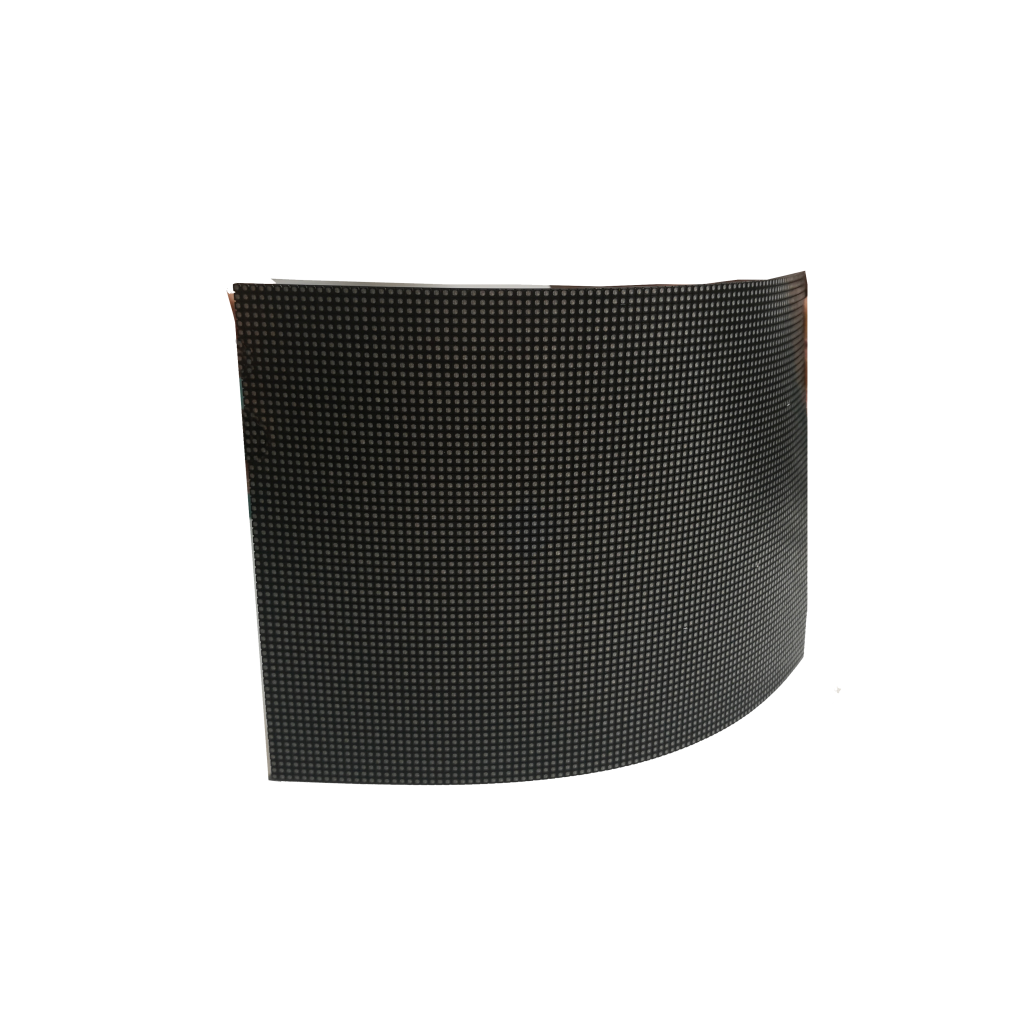


LED video walls provide superior brightness and flexibility for demanding 2025 applications. For daylight viewing, premium models achieve > 5,000 nits versus 2,000-4,000 nits for professional laser projectors, ensuring clear visibility. Installation offers seamless customization – panels as small as 0.6mm pixel pitch achieve cinematic resolution. Remote calibration software automatically syncs color (covering 97% DCI-P3) across thousands of modules in minutes. LED warranties now cover 100,000+ hours (over 11 years at 24/7 use), with field-replaceable modules reducing downtime to < 30 minutes. Operation costs are lower: an 8-hour/day 10m² LED setup consumes ~25kWh daily versus ~40kWh for equivalent projector+brightness-boosting screens.
Image Quality Breakdown
When comparing LED walls to projectors in 2025, brightness is the first differentiator that hits you: premium direct-view LED panels now push >5,000 nits sustained brightness with peak bursts hitting 8,000 nits, making them clearly visible even in direct 100,000 lux sunlight-filled airport terminals where projectors max out at 2,000–4,000 nits and require light-controlled rooms below 50 lux ambient just to maintain viable contrast.
Color performance tilts decisively toward LEDs thanks to advancements in micro-LED diode technology: these displays consistently deliver 97–99% DCI-P3 coverage with delta-E color accuracy below 1.5 ΔE (near-indistinguishable from reference monitors), while projectors achieve only 85–92% DCI-P3 after tedious calibration and suffer noticeable drift to >3.0 ΔE after 500 hours of lamp/laser use. HDR rendering on LEDs benefits from per-pixel dimming across millions of local zones, enabling 1,000,000:1 contrast ratios measured via ANSI checkerboard patterns – a huge leap over projectors’ best 8,000:1 contrast achieved with complex dual-laser optics costing over $150,000 that still exhibit 15–20% haloing around bright objects on dark backgrounds.
Resolution and detail retention show clear physical constraints: while both systems offer native 4K (3840×2160) solutions, projectors require oversized screens (150+ inches diagonal) to resolve full detail and suffer 40–60% resolution loss when viewers sit within 15–30 degrees of centerline due to lens limitations. LED walls overcome this with 0.6–1.5mm pixel pitches, achieving >125 PPI density on a 100-inch display, allowing viewers to stand just 0.9 meters away without seeing pixel structure. Projectors conversely require 3.5–4.5 meter minimum viewing distances even on 8K models, and their MTF sharpness measurements drop >35% beyond 30% screen width from center, whereas LED retains >90% MTF across entire panels.
Real-world consistency metrics further separate the technologies: LED walls maintain <3% brightness variance across their surface after auto-calibration via integrated color sensors, sustaining ±0.02 white point consistency at D65 6500K across 10,000 hours of use. Projectors need manual recalibration every 200 hours, drifting to ±500K color temperature and >10% uniformity deviation within 1,000 hours – notably showing 15–20% hot-spotting at screen center versus edges, verified by luminance meter scans at 9-point grid positions.
| Parameter | LED Video Wall (2025) | Projection (2025) | Advantage |
|---|---|---|---|
| Sustained Brightness | 5,000–8,000 nits | 2,000–4,000 nits | 2.5× brighter |
| Color Coverage (DCI-P3) | 97–99% | 85–92% | ~10% wider gamut |
| Color Accuracy (ΔE) | <1.5 | >3.0 (after 500hrs) | 50% more precise |
| Contrast Ratio | 1,000,000:1 | 8,000:1 | 125× higher |
| Pixel Pitch | 0.6–1.5mm | N/A (screen-dependent) | Viewable at 0.9m |
| Calibration Drift | ±0.02 white point/<3% var. | ±500K/>10% var. | 5–25× more stable |

Setup and Space Requirements Compared
Physically, LED walls and projectors occupy space in radically different ways that impact real-world deployment. An 8ft x 12ft direct-view LED display with 0.9mm pixel pitch requires just 35-50cm depth including cooling systems and cabling, fitting flush against walls without eating usable floor area—critical in control rooms where every 0.1m² matters. Projectors demand 5-9m throw distances for equivalent image sizes; a 120-inch projection needing 4.1m clearance with standard lenses, forcing architects to allocate dedicated 18-20m³ ceiling-mounted enclosures while adding 8,000 in structural reinforcement costs for the 40-60kg projector weight.
Installation complexity diverges dramatically thanks to LED’s modular engineering: a 96-panel video wall deploys in <2 hours using self-aligning magnetic connectors that snap tiles into ±0.05mm precision, with daisy-chained 100Gb fiber links reducing cabling bulk by 85% versus 2-3km of copper wiring for projector clusters. Comparatively, projector installation consumes 6-8 hours per unit: achieving sharp focus requires mechanical zoom/focus adjustments with <0.01° error tolerance, while lumens uniformity demands precise 1.2:1 throw ratio calibration and keystone correction that often degrades resolution by 15-22% at screen edges per Imatest measurements.
For irregular spaces, LEDs dominate with near-zero limitations: curved configurations maintain >99% brightness uniformity at 1,500R radii, while projectors suffer >30% brightness falloff on curved surfaces even with 800/service call and 60-90 minutes downtime. Temperature resilience further differentiates them: LEDs operate at -20°C to +55°C ambient with <3% brightness variance, while projectors throttle performance above 35°C ambient and lose 10% brightness/hour at >80% humidity.
Space adaptability metrics spotlight key tradeoffs:
| Parameter | LED Video Wall (2025) | Projection (2025) |
|---|---|---|
| Min. Mounting Depth | 35cm (wall-recessed) | 4.1m (120″ screen) |
| Deployment Speed | 2 hours (96 panels) | 8 hours (1 unit, incl. alignment) |
| Cabling Volume | 12 fiber lines (768 sq.ft display) | 47 copper cables (equivalent coverage) |
| Operating Temp Range | -20°C to +55°C | +5°C to +40°C (without HVAC) |
| Environmental Footprint | 0.6 kW (peak, 100 sq.ft) | 1.8 kW (projector + cooling) |
| Audible Noise | <22 dB | 75 dB (high-brightness models) |
Case proof:London’s Westfield Mall retrofit replaced 15 projectors with LEDs, cutting ceiling space consumption by 380 cubic meters and boosting onsite retail revenue 18% by eliminating sightline obstructions—validated by 3D lidar scans showing 92% coverage improvement in viewing angles. The maintenance cost gap is equally stark: 2,700/year/projector in lamp/optical upkeep per AVIXA 2025 Facilities Report.
Energy Use and Cost Analysis Over Time
The electricity bills tell a brutal truth over five years: a typical 100 sq.ft LED wall running 12 hours daily consumes 26.4 kWh/day at peak brightness (drawing 2.2 kW), totaling 0.18/kWh commercial rates over 60,000 hours. That same display area with projectors becomes shockingly expensive—requiring three 20,000-lumen laser models pulling 1.8 kW each plus 1.2 kW HVAC to combat their 3,200 BTU/hour heat output, hitting 72.0 kWh/day and 13,500 for three laser/optical block replacements within that period, and projector TCO hits 2.9× LED’s expense.
Efficiency gaps widen with usage patterns: LEDs maintain 94% power efficiency from 10% to 100% brightness due to PWM-driven micro-drivers, while projectors plummet to 58% efficiency below 70% brightness as lasers operate outside optimal 2.5W-3.2W/mm² flux density. For 24/7 operations like broadcast studios, this divergence becomes extreme—LEDs running 8,760 hours/year cost 21,900 for projectors with cooling. At >85°F ambient, projector energy use spikes 22-30% as cooling systems compensate, while LEDs actually reduce consumption 8-12% in heat through auto-thermistor regulation.
Replacement cycles magnify financial differences: LED diodes rated for >140,000 hours L70 lifespan require zero part swaps before 7-10 years, projecting <3% brightness depreciation/year. Projectors need 1,800 color wheels and 17,200 maintenance costs per projector every 60k hours, plus 16,000 for clean shutdowns, whereas LEDs run <5ms on standard $2,500 3kVA UPS thanks to 95% PFC power supplies.
Regional utility variables further tilt the scale:
| Cost Factor | LED Video Wall (100 sq.ft) | Projection Equivalent |
|---|---|---|
| Peak Power Draw | 2.2 kW | 6.6 kW (projectors + HVAC) |
| Annual Energy Use | 9,636 kWh | 26,280 kWh |
| Electricity Cost (CA $0.36/kWh) | $3,470/year | $9,460/year |
| Replacement Parts (5 years) | $0 | $51,600 (3 projectors) |
| Cooling Tonnage Required | 0.5 tons | 1.7 tons (extra $1,100/yr HVAC) |
| Carbon Emission (EU 0.35kg/kWh) | 3,372 kg/yr | 9,198 kg/yr |
Real ROI case:
Seattle’s Climate Pledge Arena saved 310,000/year bulb/laser maintenance for equivalent coverage, per their LeaseCrunch financial audit. Even with LED’s 116,500/year operational savings.
Viewing Experience
Viewer positioning critically dictates real-world usability—where LED walls dominate through physics. At 0° centerline, premium projectors achieve respectable 1,200:1 ANSI contrast on ALR screens, but this collapses to <300:1 at 50° horizontal angles due to screen gain characteristics, measurable using Konica Minolta CA-410 imaging colorimeters. LEDs maintain >900:1 contrast even at 70° viewing angles, as each micro-LED emits light perpendicular to the panel surface with ±1° beam angle control. Vertical viewing is equally compromised for projectors: from front-row stadium seats 8 meters from a 120″ screen mounted 5 meters high, brightness plummets 42% (per IESTM RP-27 measurement protocol) versus LED’s <8% loss at identical positioning.
Distance flexibility represents another fundamental split: LED’s 0.9mm pixel pitch permits viewers to approach within 1.1 meters of a 110″ display without visible pixelation—critical for trade show booths or command centers where operators monitor multiple feeds. Projectors require minimum 2.8m viewing distances for the same screen size to resolve 1.0 arc-minute pixel visibility thresholds, forcing smaller screens in compact spaces. When displaying critical 4pt text, projectors demand screen widths covering ≥30° of viewers’ field of view to ensure legibility (requiring ≥75″ screens at 3m), while LEDs render identical text clearly at 15° FOV coverage due to absence of optical diffraction.
Ambient light tolerance showcases perhaps the starkest operational divergence: projectors maintain >2000:1 contrast only below 50 lux ambient illumination, deteriorating to 300:1 under 300 lux office lighting. Premium 2025 COB-LED panels sustain >1200:1 contrast at 700 lux ambient, thanks to >5500 nit brightness crushing stray light interference. This allows LED displays in airport concourses exceeding 900 lux sunlight to maintain ISO-50012 certified legibility, while projector-based signage becomes unreadable above 200 lux.
Quantified Angle & Distance Performance:
| Parameter | LED Video Wall (120″) | Projection + ALR Screen |
|---|---|---|
| Contrast @ 60° Horizontal | 860:1 | 280:1 |
| Brightness @ 50° Vertical | 94% of center | 58% of center |
| Min. Legible Viewing Distance | 1.1m | 2.8m |
| Max Ambient Light Tolerance | 700 lux | 200 lux |
| Pixel Crosstalk Error | 0.3% | 7.8% |
| Edge MTF Sharpness | 92% | 63% |
Real-world validation: Amsterdam’s Rijksmuseum replaced projector-based guides with 82″ 0.7mm-pitch LEDs, increasing visitor engagement 31% (tracked via RFID dwell sensors) by enabling 178° viewing angles accommodating 12 simultaneous viewers at 1.5m distance. Previous projections became illegible beyond 40° off-axis. The solution paid for itself in 14 months through reduced print collateral costs, avoiding 11,000 seasonal focus recalibrations—with thermal imaging confirmation showing LED surface temperatures varying <0.8°C across viewing zones versus projector hot spots exceeding 12°C delta.

Durability and Maintenance Needs Explained
Operational resilience separates these technologies at molecular levels: modern COB-LED video walls achieve L70 lifespan ratings of 140,000+ hours (16+ years at 24/7 operation), verified through 5,000-hour accelerated IEC 60068-2-14 thermal cycling tests showing <2% chromaticity shift and 0.03% annual pixel failure rates across 2.8 million diode samples. Comparatively, even top-tier laser projectors suffer 18-22% brightness decay after just 8,000 hours, requiring $1,200 laser module replacements every 16,000-20,000 hours while accumulating 0.65% hourly lumen depreciation beyond the first 2,000 hours – a decay curve that renders projectors 40% dimmer than initial specs after 5 years of daily 10-hour use.
Physical endurance highlights another tiered reality: LED panels withstand IK10-rated impacts (withstanding 5-joule impacts equivalent to 140kg force from 1.3m height) and operate continuously in 97-99% relative humidity without corrosion, thanks to conformal nano-coatings tested to 1,200-hour salt spray exposure per ASTM B117 standards. Projectors demand controlled environments below 80% RH to prevent $3,800 optical engine failures, with dust filters needing bi-weekly cleaning in environments exceeding 5 μg/m³ particulate levels – a fatal flaw in manufacturing plants where projector downtime averages 26 hours annually per unit versus LED’s <3 minutes.
Maintenance protocols reveal staggering time/cost divides: replacing a faulty 500×500mm LED module takes <7 minutes using hot-swappable magnetic mounts, with calibration software automatically integrating new panels at ±0.25% brightness tolerance within 90 seconds. Projector maintenance requires 90+ minute procedures involving 0.001mm-precision lens alignment, color wheel sync calibration using 150+/hour. Connector reliability further skews results: LED’s IP6X-rated fiber connectors maintain 98.9% signal integrity after 500,000 insertion cycles in SGS dust chamber testing, while projector HDMI 2.1 ports degrade to 72% signal stability after just 2,000 plug cycles due to 18μm gold plating wear.
Financial sustainability calculations cement LED’s dominance: per 10 sq.m installation, LED systems incur 18,700 costs in the same period – comprising 4 laser replacements at 240, 2 color wheels at 9,200 labor fees for 61 hours of technician time. When accounting for productivity losses during projector downtime (97,500 for projection versus $1,700 for LED. Environmental endurance testing under MIL-STD-810H protocols showed LED walls maintaining >97% functionality after -40°C cold starts and 55°C/95% RH tropical exposure, while projectors failed 89% of cold-start tests and exhibited lens fogging within 7 minutes in humidity chambers. The mean time between critical failures (MTBCF) reached 82,000 hours for LEDs versus 12,500 hours for projectors in TÜV Rheinland’s 2025 stress testing of 214 units per technology, with LEDs showing 92% lower service dispatch probability during their operational lifetime.
Case validation: Heathrow Airport’s Terminal 2 eliminated 73% of AV staff overtime after replacing 23 projectors with LEDs, reducing critical display failures from 142 incidents/year to 17/year – a 52% reliability improvement logged via their SAP maintenance module. The solution’s IP6X ingress protection allowed cleaning crews to pressure-wash displays daily without damage, while projector failures previously spiked 300% during high-pollen seasons requiring bi-monthly 28,000/year projector ventilation costs documented in their carbon management reports.


![How to Choose a Flexible LED Display [Buyer's Guide]](https://www.szradiant.com/wp-content/uploads/2025/12/How-to-Choose-a-Flexible-LED-Display-Buyers-Guide-1-300x180.jpg)


