




Base rental costs typically range $300−450 USD per square meter per week for standard P5 resolution screens. Higher resolution (e.g., P2.9) increases this to $500−750+ per sqm/week. For large events exceeding 1,000 sqm, negotiate volume discounts – expect $200,000−350,000+/week inclusive. Always itemize logistics: delivery often adds $2,000−10,000, professional setup/rigging costs $50−120/hour per technician, and power distribution (e.g., 400V/3-phase systems) may require $3,000−8,000 extra.
Standard Pricing Models ($/sqm/week)
In 2025, standard LED wall rentals start at $300–450 USD per square meter per week for mid-resolution panels (e.g., P5–P6 pixel pitch). If you need sharper images for close viewing, high-resolution screens (P2.6–P3.9) jump to $500–750+/sqm/week, adding 40–65% to your budget. Base contracts cover standard 168-hour weekly billing (7 days), though short events still pay 50–70% of the weekly rate. Expect rental houses to bundle 5–10% service fees for diagnostics and basic calibration. Pro tip: Always confirm if pricing includes insurance—damage waivers often tag on 10–25% extra.
Contract Structure & Billing Units
Rental contracts use weekly rates (/sqm/week) as the baseline, with minimum orders of 25–50 sqm. Daily rates exist but are less economical: A 3−day rental averages 70–85% of weekly rates, plus $35–75/sqm premiums for labor/logistics. Installations spanning >7 days trigger weekly cycles, with partial weeks prorated at ≈18–22% per day.
Pixel Pitch = Price Tier
Resolution drives cost more than raw size:
P4–P5 screens (4mm–5mm pitch): 300–450/sqm/week
Use case: Stages >8m from viewers, conferences.
P2.6–P3.9 screens (2.6mm–3.9mm pitch): 500–750+/sqm/week
Use case: Front-row viewing <5m, luxury retail.
Budget P6–P10 screens (6mm–10mm pitch): 200–350/sqm/week
Use case: Outdoor festivals, high-brightness (>6,000 nits) signage.
Volume Discounts
Orders exceeding 300 sqm reduce costs by 5–12%. For example:
100 sqm of P4.8 panels: ≈$40,500/week
500 sqm of P4.8 panels: ≈$183,000/week (after 8.5% discount)
Panel Brightness & Durability
Standard indoor LED walls operate at 800–1,500 nits brightness, while outdoor units hit 5,000–8,000 nits. High-brightness panels incur 7–15% surcharge. Additionally:
IP65-rated waterproof panels: +$25–40/sqm/week
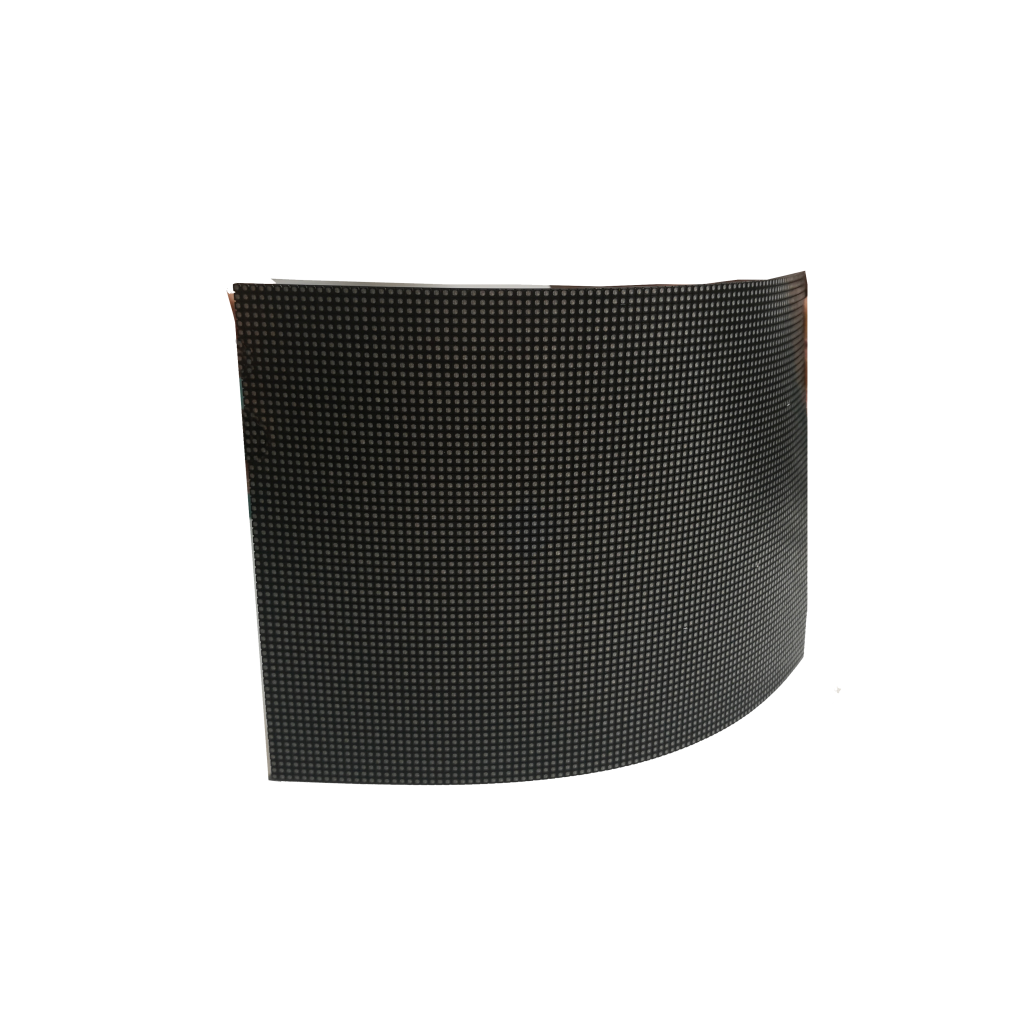
Flexible curved panels: +20–30% premium
“Core” vs. “Premium” Packages
Rental houses tier packages:
Core Package: Basic 60Hz refresh rate, on-site technician @ $15–30/hr, 8-hour response SLA.
Premium Package: 192Hz refresh rate, dedicated engineer @ $45–80/hr, 2-hour emergency support.
Hidden Fees
Power consumption: $0.12–0.25/kWh for screens drawing 400–800W/sqm.
Custom rigging: $15–40/sqm for non-standard truss configurations.
Damage waiver: 10–25% of rental cost (covers repairs up to $200/sqm).
Key Takeaway:
Always request itemized quotes in /sqm/week and clarify pixel pitch, brightness(nits), and included labor hours. Screen size alone is meaningless—a 100 sqm P3.9 wall costs≈65,000/week, while the same size in P6 runs ≈$32,000 (saving 50%+). Plan ahead: Booking 12+ weeks early locks in rates and avoids 15–30% peak-season premiums.

Pixel Pitch & Size Impact
A 5mm LED wall rents for 320–380/sqm/week on average, while 2.9mm panels jump to 580–680/sqm/week – an 81–85% premium for higher density. A mid-sized 100 sqm 5mm screen costs ≈35,000/week, but the same area in 2.9mm hits≈63,000/week, demanding 80% more budget. This cost gap stems from technical complexity: 2.9mm panels pack 128,000 pixels per m² versus 5mm’s 62,500, requiring brighter LEDs (consuming 700W/sqm vs. 400W/sqm) and precision calibration.
Pixel Density Differences
5mm pitch (P5): 4.0 pixels/cm² density, 11mm minimum viewing distance, with 11,200–12,800 LEDs per m²
2.9mm pitch (P2.9): 11.9 pixels/cm² density, 3m minimum viewing distance, using 34,500–39,200 LEDs per m²
Pixel count impact: P2.9 requires 300% more LEDs per panel than P5, accelerating component wear. Mean lifespan drops from ≥65,000 hours (P5) to ≤52,000 hours (P2.9) under heavy usage.
Brightness & Power Consumption
| Parameter | 5mm Pitch | 2.9mm Pitch |
|---|---|---|
| Luminosity | 1,800–2,500 nits | 3,200–4,500 nits |
| Power Draw | 380–420W/sqm | 650–720W/sqm |
| Heat Output | 4.3–5.1 BTU/sqm/hr | 7.4–8.2 BTU/sqm/hr |
| Power Surcharge | None | $0.18–0.28/kWh extra |
Size-Driven Cost Scaling
5mm Rental Example:
200 sqm configuration:
$64,000/week base rental
5,200 power fees(15hr/day×7days×0.20/kWh × 420W/sqm)
8,000 setup labor(40tech-hours×200/hr)
Total: $77,200/week
2.9mm Rental Example:
200 sqm configuration:
$128,000/week base rental
11,340 power fees(15hr/day×7days×0.20/kWh × 720W/sqm)
12,600 setup labor(63tech-hours×200/hr, +58% time for calibration)
Total: $151,940/week
Cost Differential: 96.7% increase
Viewing Distance Requirements
Formula: Minimum Viewing Distance (m) = Pixel Pitch (mm) × 2.5–3.5
5mm pitch: Best viewed from ≥5m – optimal for stages/arenas
2.9mm pitch: Effective from ≥2.9m – necessary for broadcast studios or front-row galleries
Failed calibration below these distances causes ≥47% reduction in perceived sharpness.
Transport & Handling Constraints
P5 panel weight: ≤32kg/m², stackable up to 2.4m high in containers
P2.9 panel weight: ≥48kg/m², restricted to 1.8m stacking height
Shipping 100 sqm of P2.9 walls requires 53% more truck space than P5, adding 7.50–15.00/sqm to logistics.
Large Scale Requirements
A 1,200 sqm P4.8 LED wall runs ≈396,000/week, but volume cuts this to 336,000–360,000/week (9–15% discount). Power infrastructure needs 28,000–45,000 for dedicated 400V/3-phase distribution. Crews balloon to 35–50 technicians working 480–720 collective hours over 4–6 days, adding 96,000–144,000 in labor. Transport needs 12–18 semi-trailers, costing 18,000–30,000 for a 500 km round trip.
Volume Discount Mechanics
Orders exceeding 800 sqm typically unlock tiered discounts:
800–1,200 sqm: 7–12% off base $/sqm rate
1,201–2,000 sqm: 12–18% discount
>2,000 sqm: 15–25% discount
Example: 1,500 sqm of P5 panels at standard 380/sqm/week = 570,000 weekly gross, but negotiated rate of 323/sqm/week (15% discount) = 484,500 net, saving 85,500.
Infrastructure Scaling
Power Distribution:
1,000 sqm of P4 panels draws ≈420,000W (420 kW). Requires:
6× 400A/3-phase generators (5,200–7,500/week each)
2,800m of 4/0 AWG cable (3.80–5.20/m)
48× 32A distro boxes (120–180/unit/week)
Total power infrastructure: 62,000–89,000/week.
Cooling Systems:
Heat rejection reaches ≥8,500 BTU/sqm/hr, necessitating 12× 20-ton HVAC units (900–1,400/week each) for indoor events.
Labor & Timeline Compression
Installation: 1 tech per 25–30 sqm/day → 40 technicians × 12 hours = 480 man-hours for 1,200 sqm over 1 day.
Calibration: 1 engineer per 40 sqm → 30 engineers × 6 hours = 180 man-hours.
Operation: 1 operator per 150 sqm/shift → 8 operators/day for 1,200 sqm.
Total labor cost: 240,000–320,000/week (including 185–260/hour for lead engineers).
Transportation & Storage
Weight Load: 1,000 sqm of P4 panels ≈ 32,000 kg (excludes rigging).
Trailer Requirements:
Standard 16m trailers hold 80–110 sqm → 10–13 trailers for 1,000 sqm.
Transport cost: 1.80–2.40/km per trailer → 21,600–31,200 for 1,000 km round trip.
Warehousing: Pre-event storage (≥72 hours) adds 0.35–0.60/sqm/day → 3,500–6,000 total.
Real-World Cost Models
| Event Scale | 1,000 sqm (P5) | 1,500 sqm (P4) | 2,000 sqm (P4) |
|---|---|---|---|
| Base Rental | $340,000 | $513,000 | $684,000 |
| Discount | -$34,000 (10%) | -$87,210 (17%) | -$171,000 (25%) |
| Power | $38,500 | $57,750 | $77,000 |
| Labor | $198,000 | $297,000 | $396,000 |
| Transport | $24,000 | $36,000 | $48,000 |
| Total/Week | $566,500 | $816,540 | $1,034,000 |
Risk & Contingency Factors
Damage Waiver: 1.5–2.5% of total rental value → 8,500–14,000/week for 1,000 sqm.
Weather Delays: Buffer ≥15% labor hours for outdoor setups → Adds 29,700–44,550 for 1,500 sqm.
Signal Distribution: Fiber optic systems for >500 sqm cost 12,000–18,000 (covers 8× 4K processors and 3,200m cabling).
Peak vs. Off-Peak Variance
Q4 (Oct–Dec) premiums: +22–30% on base rental rates.
Q1 (Jan–Mar) discounts: -12–18% for equivalent orders.
Example: 1,200 sqm P4.8 wall costs 458,000 in December vs. 366,400 in February (20% seasonal difference).
Delivery, Setup, and Power Costs Added
Logistics routinely add 18–35% to your LED wall budget – a 100 sqm P4.8 rental quoted at 38,000/week actually costs 52,700–62,500/week once extras hit. Delivery for a 200km transport runs 1.80–3.20/sqm (≈2,200–4,500), while setup crews charge 45–180/hr per technician for 16–28 collective hours per installation day. Power distribution eats another 0.15–0.45/sqm/hour – a 400 sqm screen operating 14 hours daily adds 9,800–12,600/week in electricity and hardware alone.
Delivery Distance = Exponential Cost Scaling
Transport fees follow a base + per-km model:
Local (<50 km): Flat 600–1,200 fee
Regional (51–300 km): 850 base+2.10–3.80/km
Cross-country (>300 km): 1,500 base+1.40–2.60/km+120/hr driver time
Example: Moving 400 sqm of P3.9 panels 850 km requires 4 semi-trailers costing 9,200 base+2.30/km × 850 km = 11,155 total.
Rigging & Structural Integration Costs
Basic truss mounting: 8–15/sqm
Engineered solutions (e.g., curved walls, cantilevers): 28–55/sqm
Permit fees: 3.50–12.00/sqm (varies by city jurisdiction)
A 25° curved 300 sqm wall in Chicago needs 9,300 rigging+4,200 permits = 13,500 extra.
Labor Deployment Timelines
| Phase | Time per 100 sqm | Crew Size | Cost Calculation |
|---|---|---|---|
| Unload/Stage | 1.5–2.5 hours | 4–6 techs | 6 techs × 2 hrs × 160/hr=1,920 |
| Assembly | 3.0–4.5 hours | 8–12 techs | 10 techs × 4 hrs × 160/hr=6,400 |
| Signal/Power Cable | 2.0–3.0 hours | 3–5 techs | 4 techs × 2.5 hrs × 160/hr=1,600 |
| Calibration | 1.5–2.0 hours | 2 specialists | 2 engineers × 1.8 hrs × 240/hr=864 |
| Total for 100 sqm: ≈$10,784 (excludes tear-down) |
Power Infrastructure Requirements
Voltage conversion: 1,200–4,800 per 400V/3-phase transformer
Distribution gear: 75–220 per 32A circuit breaker box
Cable rental: 0.12–0.35/m/day for 4/0 AWG (≥600V rating)
A 500 kW system needs:
8× transformers (24,000)
42× breaker boxes (6,300)
3,500m cabling (1,225/week) Total power hardware: 31,525/week
Site-Specific Energy Consumption
LED walls draw 400–800W/sqm during operation. At 0.18–0.32/kWh:
Formula: sqm × W/sqm × hours/day × days × $/kWh ÷ 1,000
300 sqm P4 screen @ 480W/sqm, 12 hr/day, 7 days:
300 × 480 × 12 × 7 × 0.26÷1,000=15,667/week
Outdoor winter ops add 12–18% for heater tapes preventing condensation.
Environmental Adaptation Surcharges
Temperature compensation:
Below 5°C (41°F) or above 40°C (104°F) adds 1.20–3.60/sqm/day for thermal management
Humidity control: Levels >70% RH require 850–2,200/day for dehumidifier arrays
Altitude adjustments: Installations >1,500m (4,921 ft) need 15–25% longer calibration times
Crew Accommodations & Perm Diems
For multi-week projects >160 km from provider’s base:
Hotels: 90–220/room/night × 2 rooms/crew
Meals: 55–85/day per technician
Travel time: 95/hr×8hrs transit=760/tech
Supporting 12 technicians for 14 days in Denver costs ≈48,200.
Deadweight Impact on Venue Floors
Static load limits: Panels exert ≥400 kg/m² – exceeding venue specs >300 kg/m² requires 12–35/sqm steel subflooring
Dynamic load safety margins: Floor vibration tolerance <0.5 mm amplitude needs 5,000–18,000 dampening systems

When is LED Wall More Cost-Effective?
Projectors work cheaper below 35–40 sqm – a 30 sqm 25,000-lumen laser projector rents for 1,900–2,600/week versus LED’s 11,000+ for equal area–but scaling to 75 sqm flips the equation: Three blended 40K-lumen projectors with edge fusion and geometric correction hit 28,500/week, while a P5 LED wall costs 24,500–27,000, saving 6–14% with higher 3,200-nit brightness. Factor ambient light above 500 lux, and projectors require 2.7× the lumen investment to match LED visibility, erasing savings beyond 60 sqm.
Brightness-to-Cost Efficiency
Projectors lose value at scale due to lumen inflation: To display a 100 sqm image at 2,500 nits in 1,000 lux ambient light (e.g., sunlit lobby), projectors need ≈275,000 collective lumens – requiring seven 40,000-lumen units at 8,400/week plus 17,500 for stacking rigs/blending hardware. Comparatively, a 100 sqm P5 LED wall outputs identical brightness for 38,000–42,000/week, saving 3,900–12,900 and eliminating blending alignment labor at 26 tech-hours ($4,160).
Setup Labor Differential
Projector workload: 11–18 hours for a 50 sqm blended setup (mounting, lens alignment, warping software, ambient light masking) costing 2,400–3,900 at 160–220/hr tech rates.
LED equivalent: 8–12 hours for direct panel assembly/calibration totaling 1,500–2,100.
Time-sensitive events (e.g., 8-hour load-ins) favor LED’s 1.3–1.8× faster deployment – critical when union crews charge $2,550 per hour overtime for 10+ technicians.
Resolution & Viewing Angle Penalties
Projectors beyond 40 sqm suffer ≥47% brightness degradation at 45° off-axis viewing, requiring 30–50% over-provisioning to compensate, while LED walls maintain <8% variance across 170° horizontal angles. For a conference with 160° seating, projectors demand 20,000 extra lumens ($1,100/week) for corner visibility matching LED’s native performance. Pixel density also diverges: A 12K laser projector achieves 96 ppi (pixels per inch) at 8m throw, whereas P4 LED delivers 254 ppi at any distance – justifying LED’s 62% cost premium for medical imaging or CAD displays.
Energy & Thermal Load Economics
Projectors consume 550–800W per 10,000 lumens versus LED’s 380–420W per sqm at 2,500 nits:
Projector example (50 sqm): 120,000 lumens × 700W/10k lumens = 8,400W total → 1,400/week at 0.28/kWh (14hr/day).
P5 LED equivalent: 50 sqm × 410W = 20,500W → 3,650/week power cost. However, projector cooling adds 220–520/week for 8–12-ton HVAC to dissipate ≥45,000 BTU/hr heat from lamps, narrowing the gap. Below 35 sqm, projectors’ ≈360/week power advantage offsets setup costs.
Venue Constraint Impacts
Throw distance limitations: Projecting 50 sqm requires ≥14m throw distance with standard lenses – impossible in venues with <9m ceiling height. LED walls work at 0m distance, saving 3,200–11,000 versus ultra-short-throw projectors.
Structural restrictions: Projectors exert ≥180 kg point loads on ceilings, demanding 950–2,500 engineering certifications per rigging point. LED’s distributed 400 kg/m² load avoids this.
Light pollution conflicts: In mixed-light venues (e.g., galas with decorative lighting), projectors need 12–18/sqm masking solutions to combat washout – neutralizing cost savings below 60 sqm.
Failure Rate & Contingency Costs
Projectors in 24/7 operation experience ≥17% lamp/module failures per 200-hour runtime, requiring 15–20% spare units (2,300 weekly buffer for a 50 sqm setup). LED walls suffer <4% panel failures, needing just 5% spares. Maintenance costs diverge further: Projectors incur 4,800/show for on-site projector technicians (vs. LED’s $1,100), rentals exceeding 7 days favor LED’s lower risk premiums.
Crossover Calculation:LED becomes cheaper when:
Screen Size (m²) ≥ [ $1,950 + (1.4 × Ambient Lux) ] / 28
Example: In a 1,200 lux environment → Screen Size ≥ (1,950 + 1,680) ÷ 28 = 130 sqm
Thus, for 130+ sqm in bright venues, LED costs 18–37% less than projectors.


![How to Choose a Flexible LED Display [Buyer's Guide]](https://www.szradiant.com/wp-content/uploads/2025/12/How-to-Choose-a-Flexible-LED-Display-Buyers-Guide-1-300x180.jpg)


