


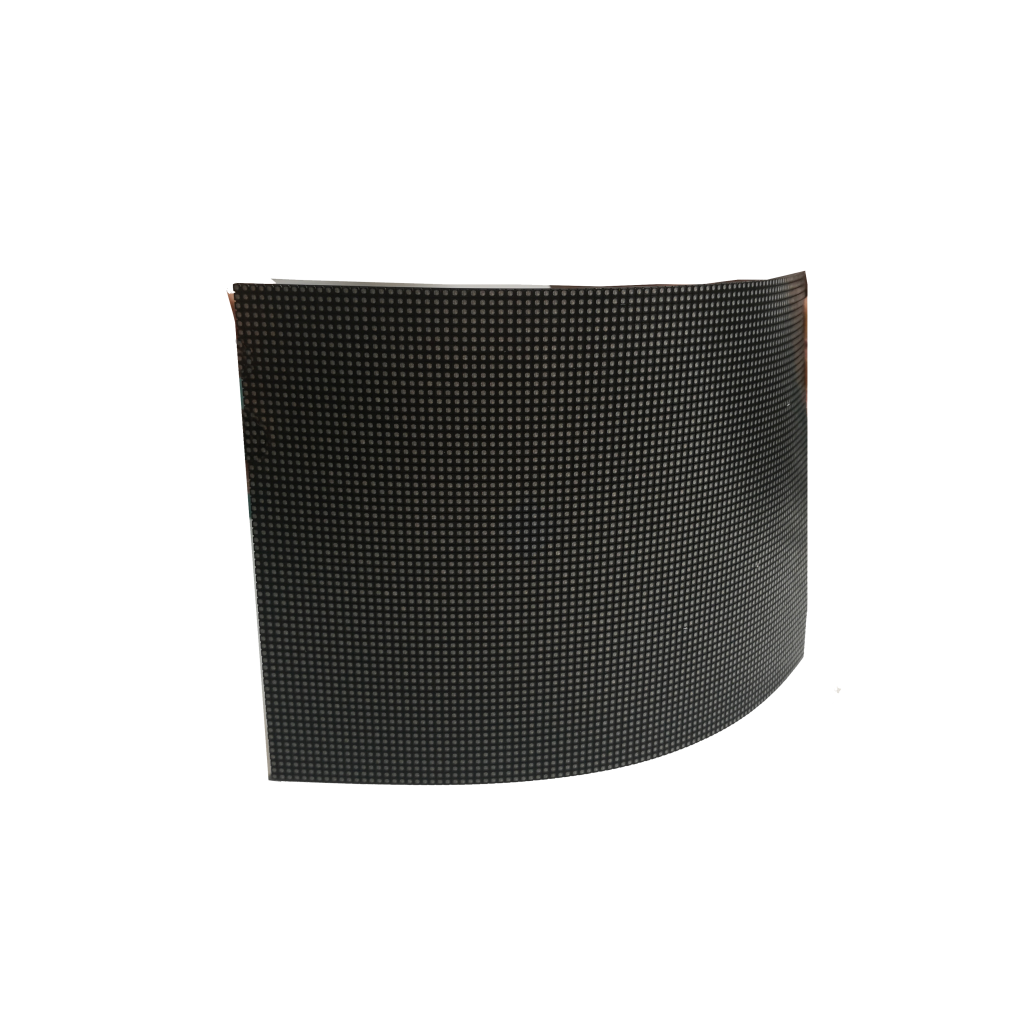


When choosing flex LED display panels, consider 5 key factors: resolution (minimum P2.5 for clarity), brightness (1500-2500 nits for indoor/outdoor use), flexibility (bend radius under 10mm for curved installations), durability (IP65 rating for weather resistance), and power efficiency (under 300W/m² to save costs). Prioritize 16-bit color depth for vivid visuals and check warranty (3+ years) for re
Resolution and Clarity: What Really Matters in Flex LED Displays
A P2.5 display (2.5mm spacing) is the minimum for clear viewing within 3 meters, while P1.8 or lower is needed for close-up displays (under 1.5m). Cheaper P3-P4 panels may look fine from 5m away, but text and fine details blur up close. For example, a P2.5 screen at 1920×1080 resolution fits roughly 768×432 pixels per square meter, while a P1.8 screen packs 1,440×810 pixels in the same space—nearly double the sharpness.
A P1.2 ultra-fine panel costs 30-50% more than P2.5 but only makes sense for luxury retail or control rooms where viewers stand under 1 meter away. For most events or outdoor ads, P2.5-P3 strikes the best balance, costing 1,200 per square meter versus $1,500+ for P1.8.
Standard 60Hz works for static ads, but 120Hz+ is needed for fast-moving content (sports, gaming) to avoid motion blur. Some budget panels cut corners with 30Hz, causing visible flicker under cameras. Gray scale (10-bit vs. 16-bit) affects color smoothness—16-bit panels show 65,536 shades per color, eliminating banding in gradients.
Pixel Density vs. Viewing Distance (Real-World Guide)
| Pixel Pitch (P) | Min. Viewing Distance | Best Use Case | Cost per m² |
|---|---|---|---|
| P1.2-P1.5 | 0.5-1m | Museums, high-end retail | $1,800+ |
| P1.8-P2.0 | 1-2m | Corporate lobbies, control rooms | 1,600 |
| P2.5-P3.0 | 2-5m | Events, outdoor ads | 1,200 |
| P4.0+ | 5m+ | Stadiums, highways | 800 |
A P2.5 panel draws ~250W/m², while a P1.8 can hit 350W/m² due to more LEDs. If running 10 hours daily, the power difference adds 400/year in electricity costs per screen.
Cheap panels lose 1-3 pixels per 10,000 within 2 years, while industrial-grade options stay under 0.5% failure over 50,000 hours. Always check warranty terms—3-5 years is standard for professional displays.
In short: Match pixel pitch to viewing distance, prioritize 16-bit color and 120Hz for motion, and factor in long-term power and maintenance costs. A P2.5-P3 panel fits 90% of applications without overspending.
Brightness for Visibility: Cutting Through the Glare
Brightness, measured in nits (cd/m²), determines whether your content stays visible in direct sunlight or gets washed out indoors. For reference, a typical smartphone screen hits 500-1,000 nits, but LED displays need far more punch. Indoor screens (shopping malls, conferences) require 800-1,500 nits, while outdoor displays (billboards, stadiums) demand 2,500-5,000+ nits to compete with daylight.
Cheaper panels often cut costs by capping brightness at 1,200 nits, which might work in a dimly lit lobby but fails completely in a sunlit outdoor installation. High-end rental-grade flex LEDs push 4,000-5,000 nits, but they also consume 30-40% more power—a P3 outdoor panel at 5,000 nits can draw 400W/m², compared to 250W/m² for a standard 2,500-nit version. If you’re running a 50m² billboard 12 hours a day, that extra brightness could add $1,500+ per year in electricity costs.
Displays with ambient light sensors can dynamically shift between 800 nits (indoor) and 3,000 nits (outdoor), saving energy without sacrificing visibility. However, budget models often lack this or have sluggish 100-200ms response times, causing noticeable delays when clouds pass or lights dim.
A 160° wide-angle panel looks bright from almost any direction but loses 20-30% peak brightness at extreme angles. Narrower 120° displays maintain intensity head-on but darken noticeably when viewed from the side—a trade-off for high-traffic areas where crowds view from multiple angles.
Low-quality LEDs lose 10-15% brightness per 20,000 hours, while premium models degrade at 5-8% over the same period. If running 14 hours daily, a cheap 2,500-nit screen could drop below 1,700 nits in 3 years, forcing early replacement. Always check manufacturer specs for 50,000-hour brightness retention (most guarantee ≥70%).
Panels exceeding 3,000 nits often need active cooling (fans, heat sinks) to prevent color shift and pixel burnout in hot climates. A poorly ventilated 5,000-nit display in 35°C weather can see a 15-20% lifespan reduction compared to the same panel in a 25°C controlled environment.
Bottom line: For most users, 2,500-3,500 nits covers outdoor needs without excessive energy drain, while 1,000-1,500 nits suffices indoors. Don’t overpay for 5,000+ nits unless you’re battling desert sun or stadium lights.

Flexibility and Installation: Bending Without Breaking
Most consumer-grade flex LEDs claim a 10mm bend radius, but real-world testing shows 15-20mm is safer for repeated installations. Push below 10mm, and you risk micro-cracks in the PCB or LED detachment, especially in cold environments (below 5°C makes materials brittle).
A standard P2.5 flex LED weighs 8-12kg/m² and is 3-5mm thick, allowing mounting on glass facades or lightweight frames. Thinner 2mm “ultra-flex” models (14-16kg/m²) exist but cost 20-30% more and often sacrifice durability—their MTBF (mean time between failures) drops from 50,000 hours to 30,000 when bent frequently. For rental companies reusing panels 100+ times/year, this trade-off rarely makes sense.
Magnetic mounting (common for trade shows and pop-up events) lets one person install 10m² in under 30 minutes, but the aluminum backing + magnets add 80/m² to the project. For permanent curved installations, custom aluminum frames are sturdier but require 3-4x more labor hours and precise CAD modeling (budget 200/m² for design and fabrication).
Flex LED Types by Application
| Panel Type | Bend Radius | Best For | Lifespan (Bent Use) | Cost Premium |
|---|---|---|---|---|
| Standard Flex | 15-20mm | Occasional curves (conferences) | 50,000 hrs | 0% |
| High-Flex | 8-12mm | Frequent reconfigurations (rentals) | 35,000 hrs | 15-25% |
| Ultra-Flex | 5-8mm | Fixed complex shapes (art installations) | 20,000 hrs | 30-50% |
A panel rated for -30°C to 60°C can handle Toronto winters or Dubai summers, but bending it below 10°C increases the risk of delamination (layers separating). Some manufacturers use silicone encapsulation instead of standard PVC, improving cold flexibility but adding 50/m².
A 180° cylindrical wrap requires 5-10% image correction via software to avoid stretched visuals at the edges. Not all controllers handle this well—cheaper systems introduce 2-3 frames of lag during correction, noticeable in fast-motion video. Professional curved display processors (e.g., NovaStar’s MX40) solve this but cost $2,000+ per unit.
A 500x500mm flex panel with tool-free connectors can be replaced in under 5 minutes, while larger 1000x1000mm units might require disassembling entire sections. Always check IP ratings—IP43 suffices for indoor dust protection, but outdoor curved screens need IP65 to prevent water ingress at seam points.
Durability and Power Use: Running Longer, Costing Less
Cheaper IP54 panels fail within 6-12 months in rainy climates, with corrosion appearing at connector points. For harsh environments (coastal areas, deserts), IP67 (temporary immersion) or IP68 (prolonged water resistance) is worth the 20-40% price premium, extending lifespan from 3 to 5+ years.
A typical P2.5 flex LED consumes 200-300W/m² at 50% brightness, but poorly designed drivers can spike this to 400W/m² under full load. Over 10 hours of daily operation, that inefficiency adds 800/year in extra electricity per 10m². Look for energy-saving modes—modern panels with dynamic power adjustment cut consumption by 15-25% during darker content (e.g., night-time operation) without visible dimming.
Displays rated for 85-305V AC handle brownouts in India or surges in Brazil, while cheaper 100-240V units suffer power supply failures after 6-12 months in unstable grids. Industrial-grade 5V/12V DC options (common in transportation or marine use) avoid AC issues entirely but require custom wiring.
A panel with front-serviceable modules lets you replace a single 250x250mm tile for 120, while sealed designs force full 1m² section replacements at 600. Rental companies report 40-60% lower repair costs with modular systems after 3,000+ operating hours.
A 3-year warranty that covers labor + parts is far better than a 5-year offering that only replaces DOA (dead on arrival) units. Some manufacturers prorate coverage—e.g., Year 1: 100%, Year 3: 50%—forcing you to pay 300/m² for later repairs.


![How to Choose a Flexible LED Display [Buyer's Guide]](https://www.szradiant.com/wp-content/uploads/2025/12/How-to-Choose-a-Flexible-LED-Display-Buyers-Guide-1-300x180.jpg)


