


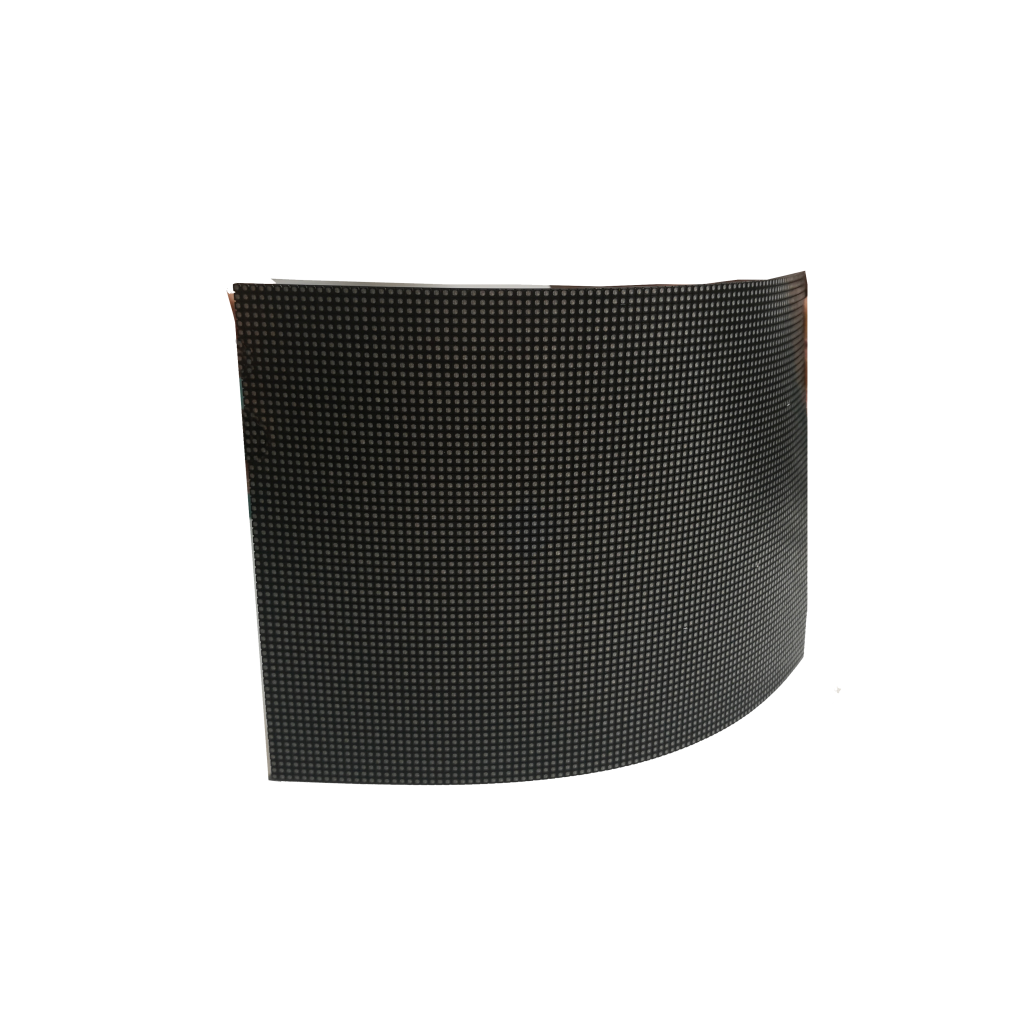


HD LED Poster Clarity Guide: 6 Key Resolution Factors include pixel pitch (P2.5-P10 for optimal viewing at 2m-10m distances), resolution (1920×1080 to 3840×2160 for sharpness), brightness (1500-5000 nits for daylight visibility), contrast ratio (3000:1 or higher for deeper blacks), viewing angle (140°-160° for wider visibility), and content quality (4K-ready for crisp details). Balancing these ensures vibrant, clear visuals in any environment.
Pixel Pitch & Viewing Distance: The Key to Sharp LED Displays
A P2.5 display (2.5mm between pixels) looks crisp at 2 meters, while a P10 (10mm pitch) works best for 10+ meters. If viewers stand too close to a coarse-pitch screen (e.g., P10 at 3m), they’ll see individual pixels instead of a smooth image. Conversely, a fine-pitch display (e.g., P2.5 at 15m) wastes resolution since the human eye can’t discern the extra detail.
The optimal viewing distance formula is:
Viewing Distance (m) = Pixel Pitch (mm) × 1000 / 3438 (based on 20/20 vision).
For example:
- P3.9 → 11.3m ideal distance
- P6 → 17.5m
- P10 → 29m
A P2.5 panel costs 1,200 per sqm, while P6 drops to 500 per sqm. For indoor use (shopping malls, lobbies), P2.5–P4 is ideal. Outdoor billboards often use P6–P10 since viewers are farther away.
Brightness also matters—fine-pitch LEDs (P1.2–P2.5) run at 800–1,500 nits for indoor use, while outdoor displays need 5,000+ nits to combat sunlight. A P4 screen at 3,000 nits works well for semi-outdoor spaces like stadiums.
Resolution scales with pixel density:
- P2.5 → 160,000 pixels per sqm
- P4 → 62,500 pixels per sqm
- P10 → 10,000 pixels per sqm
If your content has fine text or high-detail graphics, go for ≤P4. For large-format ads where viewers stay 10m+ away, P6–P10 saves budget without sacrificing clarity.
Maintenance costs rise with finer pitches—dust and dead pixels are more noticeable on P2.5 than P10. Expect 3–5% annual pixel failure on budget displays, while premium models (Samsung, LG) stay below 1%.
For longevity, LED posters last 50,000–100,000 hours (6–11 years at 24/7 use). Higher pixel density = faster brightness decay—a P2.5 display loses 15% brightness after 30,000 hours, while P10 loses only 8% in the same period.
Final tip: Match pixel pitch to your typical viewer distance. A P4 screen is the sweet spot for most retail and event setups, balancing sharpness (62.5K pixels/sqm) and affordability (700 per sqm).
Resolution & Image Sharpness: Why Pixel Count Isn’t Everything
When people think about LED display clarity, they often focus solely on resolution (like 1920×1080 or 3840×2160). But sharpness depends on three factors: pixel density (PPI), viewing distance, and content quality. A 4K screen (3840×2160) looks stunning at 3 meters but loses impact beyond 10 meters because the human eye can’t resolve details smaller than 1 arc-minute (about 1/60th of a degree). For example, a P3.9 pitch screen (3.9mm between pixels) needs a minimum 11m viewing distance to appear seamless, while a P1.8 display (1.8mm pitch) stays crisp at just 5m.
A 4K video played on a 1080p LED wall won’t magically look sharper—the screen’s native resolution caps quality. Upscaling 1080p to 4K can introduce 15–20% blur due to interpolation artifacts. For text-heavy content (like airport flight info), minimum 50px font size is readable at 10m on a P6 screen, but drops to 30px on a P3 panel.
The Real-World Tradeoffs of Resolution
A 2mm pixel pitch screen packs 250,000 pixels per sqm, delivering 62.5% more detail than a 4mm pitch (62,500 pixels/sqm). But this comes at a cost:
- Power consumption jumps 40–60% (from 400W/sqm to 700W/sqm) due to more LEDs.
- Heat output rises by 35%, requiring active cooling (fans or AC) for 50,000+ hour lifespans.
- Price per sqm doubles—from 1,200 (P2.5) for indoor panels.
For outdoor billboards, P6–P10 (10,000–27,000 pixels/sqm) is the sweet spot. Beyond 10m, the Kell factor (human vision’s resolution limit) makes finer pitches irrelevant. A P8 screen at 5,000 nits costs 500/sqm and lasts 8–10 years with <5% pixel decay, while a P4 outdoor panel at the same brightness hits $900/sqm with 12% higher failure rates from environmental stress.
A 10K resolution file (10,240×4,320) wastes resources on a P10 screen (1.2px/mm density), but a 4K file (3840×2160) on a P2.5 display (4px/mm) looks pixel-perfect. For fast-moving ads (sports, concerts), 120Hz refresh rates reduce motion blur by 70% compared to 60Hz.
Brightness vs. Sharpness: The Hidden Balance
A 4K LED wall at 800 nits indoors looks sharper than a 1080p screen at 3,000 nits, but only if ambient light is controlled. In direct sunlight (100,000 lux), a P10 screen at 8,000 nits outperforms a P4 at 3,000 nits because contrast (≥3000:1) matters more than pure resolution.
Pixel density vs. viewing distance guidelines:
| Pixel Pitch (mm) | Ideal Distance (m) | Use Case |
|---|---|---|
| P1.2–P1.8 | 3–5m | Control rooms, luxury retail |
| P2.5–P4 | 5–15m | Shopping malls, corporate lobbies |
| P6–P10 | 15–30m | Stadiums, highway billboards |
Pro tip: For mixed-use spaces (e.g., a hotel lobby with viewers at 5m and 20m), P4 balances cost and clarity. A 5mm pitch screen saves 40% on budget but forces 30% larger fonts for readability.
Future-Proofing Your Investment
MicroLED tech (pitches below P1.0) is pushing boundaries, with 0.7mm panels hitting 2.5M pixels/sqm—but at $3,000+/sqm, it’s only viable for premium installations. For most businesses, P2.5–P4 screens last 6–8 years before obsolescence, with 5–7% annual brightness decay.
Key takeaway: A P6 screen with optimized 4K content often beats a P2.5 running poorly scaled 1080p. Test your content at actual viewing distances before finalizing specs.

Brightness for Clear Visibility: Cutting Through the Glare
A 1,500-nit display looks vivid indoors but disappears in 100,000-lux sunlight, where 5,000+ nits is the baseline. Human eyes perceive brightness logarithmically: doubling from 500 to 1,000 nits feels only 30% brighter, not 100%. That’s why stadium screens need 8,000–12,000 nits to combat glare, while conference rooms thrive at 300–800 nits.
Ambient light dictates requirements:
- •Retail stores (500–1,500 lux): 800–1,500 nits
- •Airport terminals (3,000+ lux): 3,000–5,000 nits
- •Highway billboards (direct sun): 6,000–10,000 nits
Every 1,000-nit increase adds 15–20% to power costs and reduces LED lifespan by 8–12%. A 5,000-nit outdoor panel consumes 700W/sqm versus 300W/sqm for a 1,500-nit indoor screen.
The Brightness-Performance Tradeoff
Peak brightness matters less than sustained brightness. Cheap displays claim 5,000 nits but throttle to 3,000 nits after 15 minutes due to overheating. Premium models (like Samsung’s IHB tech) maintain 95% brightness for 8+ hours using phase-change cooling at 400/sqm extra cost.
Contrast ratio amplifies perceived brightness. A 3,000-nit screen with 3000:1 contrast looks sharper than a 5,000-nit screen at 1000:1 in shadows. HDR content demands ≥5000:1 for true blacks—achievable only with local dimming, which adds 25% to panel costs.
Energy efficiency nosedives past 4,000 nits. A P4 outdoor screen at 5,000 nits draws 2.3x more power than the same panel at 2,500 nits, with 50% higher cooling costs. ROI tanks if brightness exceeds your environment: a 10,000-nit billboard in a partly shaded area wastes $12,000/year in unnecessary electricity.
Brightness uniformity separates pro from consumer gear. Cheap displays vary 30% across panels, while broadcast-grade walls keep ≤5% deviation via 3D calibration (adds $150/sqm).
Future Trends: Brighter & Smarter
MicroLED pushes 20,000+ nits for cinema HDR, but at $3,000/sqm, it’s niche. Self-emissive pixels eliminate backlight bleed, boosting contrast to 1,000,000:1.
Adaptive brightness saves cash:
- •Light sensors adjust 30–100% output, cutting power 35%
- •AI dimming (e.g., Sony’s Bravia Core) matches content dynamics
Pro tip: For mixed lighting (e.g., glass facades), transparent LED films at 5,000 nits offer 70% transparency while staying visible. They cost 1,800/sqm but reduce AC loads by 22% versus traditional billboards.
Final word: A well-calibrated 1,500-nit screen often outperforms a poorly tuned 5,000-nit wall. Test your content under real-world conditions before spec’ing.


![How to Choose a Flexible LED Display [Buyer's Guide]](https://www.szradiant.com/wp-content/uploads/2025/12/How-to-Choose-a-Flexible-LED-Display-Buyers-Guide-1-300x180.jpg)


