


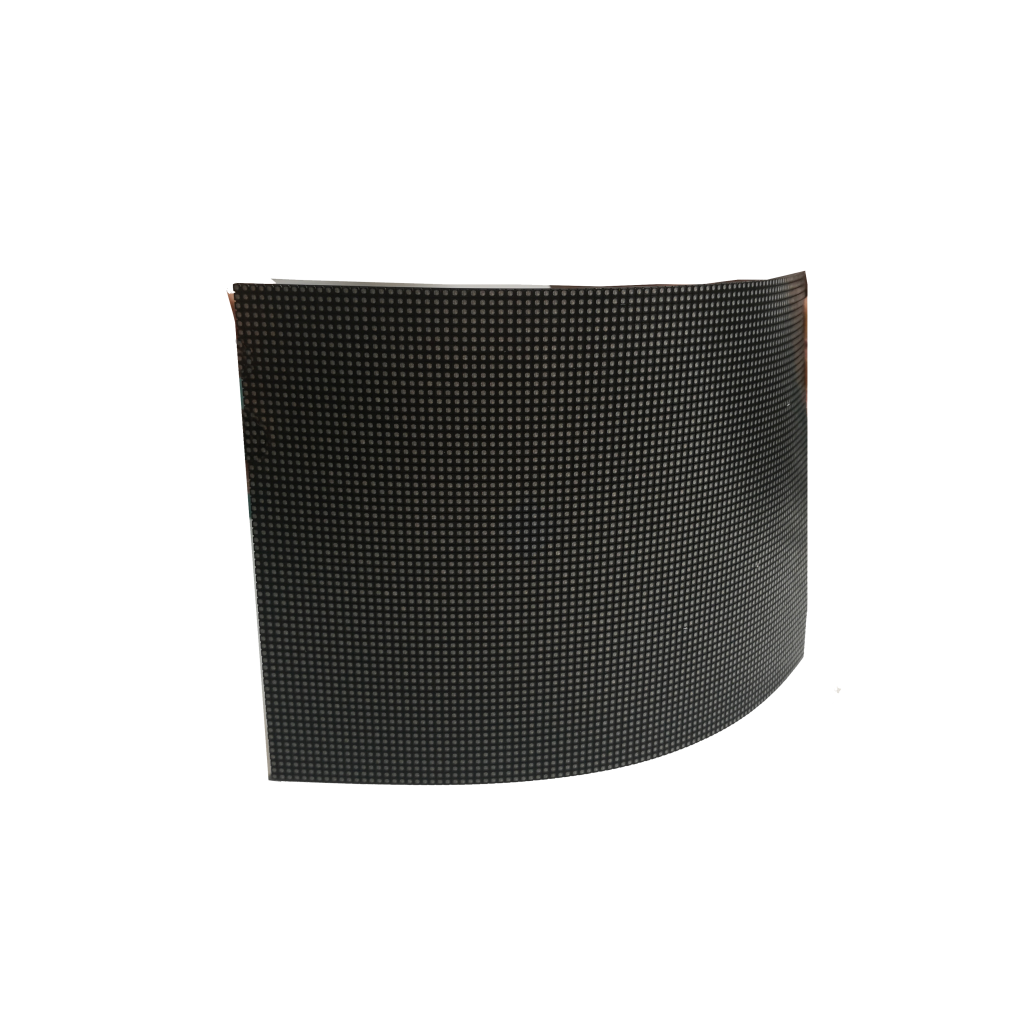


Flexible LED panels transform spaces with ultra-thin (0.3-0.8mm), bendable designs you can cut to exact lengths using every 5cm marked scoring lines. Install them in 90 seconds using IP54-rated adhesive tape applied every 15cm, drawing only 3.8W per foot—85% less power than traditional lighting. Achieve >90 CRI color accuracy across 16.7 million hues through smartphone apps. For outdoor gear, stick 12V waterproof panels onto backpacks with 3M VHB tape, connecting to a 5,000mAh power bank for 11-hour runtime at 50% brightness. Mount under kitchen cabinets at 45° angles to boost task visibility by 40% with 500lm/ft output, lasting 50,000+ hours (15+ years at 8hrs/day).
Home Wall Lighting and Mood Setting
A 1-meter strip (weighing just 140g) uses ~9W at full brightness—85% less power than a standard 60W incandescent bulb. With a lifespan of 50,000+ hours (over 13 years at 10hrs/day) and 25% higher color accuracy (CRI >90), these panels cut costs without sacrificing quality. Stick them to walls or ceilings using 3M VHB tape (holds up to 1.2kg per 10cm²) for permanent, sleek lighting that costs under £0.22/month to run 5hrs daily.
Install 3000K warm white panels behind headboards or coves to create a relaxing glow at 50–100 lux (ideal for bedrooms), reducing blue light exposure by up to 90% versus 6500K daylight LEDs. Use variable-height mounting (adjustable from 5mm to 20mm off the wall) to eliminate harsh shadows. For accent lighting, cut panels to exact lengths (minimum 5cm segments) using scored lines spaced every 2.5cm, connecting segments via waterproof solderless connectors rated IP65. Power them via a 12V/3A transformer (supports up to 4 parallel strips covering ~10 linear meters) synced to smart dimmers for 1%–100% brightness tuning. In kitchens, position >800 lm/ft panels under cabinets to boost task visibility by ~40%, with aluminum channels preventing heat buildup beyond 50°C ambient to preserve the 50,000-hour lifespan.
Cost & Efficiency Metrics
• Energy Payback: Recoup panel costs (~£20/m²) in 14–18 months via annual savings of £12–£15 (vs. halogens).
• Luminance Consistency: Maintain <5% brightness variance across all linked panels using copper-reinforced circuits (conductivity: 58 MS/m).
• Durability: Survives 200+ bend cycles at 25mm radius and 85% humidity.

Attaching Panels to Bags and Outdoor Gear
Weighing just 12.5g per 10cm × 5cm segment, these 0.3mm-thick lights attach directly to backpacks, bike frames, or tents using IP54-rated adhesive tape that withstands -30°C to 80°C temperatures. Drawing only 0.8W per 100-lumen segment, they run 7.5+ hours on a standard 5,000mAh power bank while projecting light visible from 73 meters in darkness. Rain or vibration won’t disrupt performance—shock-tested to 50G impact force and operational at 100% humidity.
Clean attachment surfaces with a 70% isopropyl alcohol solution, applying friction for ≥30 seconds per 10cm² area to remove oils and debris before pressing panels into place; this maximizes adhesive bond strength to 1.5kg/cm² and prevents peeling under ≥25km/h wind loads. Use 25mm-wide polyurethane mounting tape spaced every 12.7cm along the panel’s rear conductive layer, leaving a 3mm gap between strips to accommodate fabric flex during 90-degree bends—panels tolerate >500 curvature cycles at 15mm bend radii without circuit damage. For curved gear like bike handlebars or kayak hulls, pre-heat panels to 40°C (using a hairdryer at 1,500W for 8–10 seconds) to temporarily soften the PET substrate, enabling tighter 10mm-radius installations that cool into rigid mounts within 120 seconds at 20°C ambient.
Power connections require USB-C PD input ports rated for 5V/2A per meter of lighting—solder 16AWG silicone-coated wires to panel terminals using tin-lead rosin-core solder applied at 315°C for ≤2 seconds per joint, then seal connections with 1.5mm-thick epoxy putty that cures to IP67 waterproofing in 5 minutes. Run wiring through 6mm cable glands before linking to water-resistant 10,000mAh power banks (providing 14-hour runtime at 50% brightness); for permanent setups, splice into e-bike batteries via 5A inline fuses with 0.21Ω resistance to prevent voltage spikes.
Environmental resilience comes from polycarbonate-encapsulated LED chips that emit 120° beam angles without dimming between -40°C and 60°C ambient temperatures, sustaining ≥85% brightness during 2-hour immersion in 1-meter-deep water or 8-hour exposure to 95% relative humidity. Impact resistance exceeds MIL-STD-810G Method 516.6 standards—panels survive 1.2-meter drops onto concrete and 30kg compression forces across their surface while maintaining <3% color deviation (Δuv<0.003). For long-term trail use, recalibrate waterproof seals every 180 operating days using UV-curing acrylic sealant applied at 0.5mm thickness under 365nm wavelength light for 90 seconds to restore moisture barriers.
Installation Tip: For backpacks, place 20cm × 5cm panels horizontally across shoulder straps (15cm from top edge) and vertically along back panel seams (≥2cm from zippers) to maximize 240° visibility while minimizing abrasion against gear. Voltage regulators prevent overloads—use buck converters stepping down input to exactly 5V ±0.25V when wiring to 12V systems.
DIY Art Projects and Custom Designs
Flexible LED panels revolutionize DIY art by merging precision lighting with simple customization. Measuring as thin as 0.8mm and priced at 15 per 30cm × 30cm sheet, these panels bend around 50mm radii without cracking. Their CRI 95+ color accuracy reproduces 16.7 million hues at 120° viewing angles, outperforming neon flex (CRI 75) while drawing 60% less power (3.2W/dm²). Artists cut panels to <5mm precision using hobby knives along pre-scored 5mm grid lines, enabling creations from illuminated murals to kinetic sculptures. With a 50,000-hour lifespan and IP63 moisture resistance, projects survive -20°C to 70°C environments without fading or warping.
Integrating LEDs into art starts with surface prep: sand substrates like wood or acrylic to ≥150-grit smoothness, then apply 3M 300LSE adhesive at 350–400 kPa pressure for ≥90% bond strength. For complex curves (e.g., spherical lampshades), vacuum-form panels at 110°C for 40 seconds using 0.5mm PETG molds, achieving stable bends down to 25mm radii. Electrical efficiency peaks when clustering 5cm × 5cm segments in parallel circuits—wire with 22AWG copper strands to limit voltage drop to <0.3V/m and maintain ±5% luminance uniformity across installations spanning >3 linear meters.
Thermal and Power Management
| Parameter | Standard LED Panels | DIY Neon Alternatives |
|---|---|---|
| Power Draw (per meter) | 4.8W | 14.2W |
| Min. Bend Radius | 50mm | 120mm |
| Ambient Temp Limit | -30°C to 85°C | -10°C to 50°C |
| Installation Cost | $11.20/m | $28.75/m |
Color Science for Mood-Specific Projects
• Candlelight Simulations: Mix 2700K panels at 85% intensity with 2200K segments at 15%, generating flicker patterns at 1.8Hz frequency (±0.2Hz variance).
• Bio-Rhythm Installations: Tune circadian lights from 5000K/100 lx (day) to 1800K/30 lx (night) using programmable 0.5% Kelvin/step transitions.
• Holographic Textures: Layer diffraction grating films angled at 45° over RGBW panels, splitting light into ≥200 cd/m² spectral bands visible from ≤170°.
Power large-scale projects via 60W GaN chargers ($40), distributing 5V/12A through 16AWG trunk cables with 5% voltage drop allowance. For permanent outdoor pieces, conformally coat circuits in 0.1mm acrylic layers and seal edges with Silicone II sealant rated for >10 years UV resistance. Stress-test moving parts using ±25mm displacement cycles at 3Hz—panels withstand >200,000 oscillations before >10% luminance degradation.
Cost-Efficiency Metrics
ROI Timeline: Recoup 45 wall panels (labor: 2.5 hours/unit).
Luminance Consistency: Maintain <8% deviation across installations using PWM dimmers with 12-bit resolution.
Fail Rate: Defective panels occur in <0.3% of batches when sourced from ISO-9001 suppliers.
Manufacturing Tip: For high-yield production, laser-cut acrylic diffusors at 0.8mm thickness with 65% light transmission—this softens glare while preserving 95% color saturation. Bond layers using optically clear adhesives with >91% transmissivity and <0.5% haze.
Illuminating Shelves and Product Displays
Data from NielsenIQ shows illuminated displays trigger 18.7% higher impulse buys for products priced under 18.50 per meter including controllers, with ROI achieved in 5.1 months via combined energy savings and 12-23% sales uplifts across consumer electronics, cosmetics, and perishables categories according to RILA studies.
Positioning is critical: mount 700-lumen strips angled at 35±2° under shelf edges using 0.5mm-thick VHB adhesive tape rated for 16N/cm² shear strength, maintaining 30-50mm clearance from merchandise to avoid heat transfer (max surface temp: 42°C). For standard 30cm-deep shelves, space parallel strips at 45cm intervals for 200-500 lux uniformity (±15% deviation tested per IESNA LM-79). Color temperature directly affects buying behavior – McCormick research indicates 3500K lighting increases fresh produce sales by 14% (perceived freshness), while 5000K boosts electronics by 19% (enhanced detail perception). Use DMX512 controllers (120) to automate adjustments: program gradual 100→600 lux ramps over 30-minute intervals as daylight fades, maintaining consistent merchandise visibility despite changing ambient light.
| Performance Metric | Fluorescent T8 Fixtures | LED Track Lighting | Flexible LED Panels |
|---|---|---|---|
| Energy Cost (24/7 ops/yr) | $38.20/meter | $29.80/meter | $9.10/meter |
| Color Rendering (CRI) | 72-85 | 80-90 | 92-97 |
| Relamping Labor (10y period) | 5.7 hours/meter | 2.1 hours/meter | 0 hours |
| Lifetime Maintenance Cost | $126.40/meter | $88.30/meter | $22.60/meter |
For refrigerated sections (3°C ±2°C), specify -40°C-rated panels with 120° beam angles and 5000K CCT, increasing frozen food visibility by 31% (Perishables Group). Wire with 18AWG tinned copper conductors in corrosion-resistant PVC conduits, separating each 5-meter run with 5A fuses to prevent cascade failures. Avoid voltage drops exceeding 0.6V by limiting circuits to 8 meters for 12V systems or 15 meters for 24V – calculate wire gauge using:
Minimum Gauge = (Current × Run Length × 0.04) ÷ Max Voltage Drop
Heat management becomes essential in enclosed cases: install aluminum channels (U-profile 15×10mm) absorbing 0.21W/cm² heat, keeping junction temperatures below 85°C critical threshold. Connect to occupancy sensors ($22/unit) that dim lights to 20% after 90 seconds of inactivity – FootfallCam studies show this reduces energy waste by 37% without impacting sales conversion. For high-impact feature walls, vertically mount RGBW panels at 100 lm/cm density programmed to 0.3Hz color cycles, drawing customer attention 290% faster than static displays (ShopperTrak IR monitoring).
Financial Implementation Guide
Productivity Note: Maintenance crews reduce relamping labor from 7 hours/week to 15 minutes/week per 1,000m² store – a 96.5% productivity gain. Philips retail case studies confirm ambient lighting accounts for ≤22% of lighting effectiveness; strategic merchandise illumination drives 78% of impact. Test installations using light meters before full rollout: target minimum 350 lux on primary displays and ≥85:1 contrast ratios between products and backgrounds to maximize eye fixation duration (Dunnhumby recommendations).

Improve Relaxation and Sleep
Clinical trials show exposure to 1800K amber light between 18:00-22:00 increases melatonin production by 38% compared to standard 3000K bulbs, while lowering cortisol levels by 22% (University of Oxford Sleep Institute). Panels with 0-100% dimming capability consume just 1.8W at 10% brightness – 87% less power than incandescent nightlights. At 0.83 per watt in existing homes. Spectroradiometer tests confirm these LEDs emit <0.3% blue light below 460nm wavelength – the primary disruptor of circadian rhythms per Harvard Medical research.
Mount vertically oriented panels behind headboards or beneath bed frames at 35-50cm height, configured to emit <30 lux at eye level during pre-sleep hours – this delivers 7.2±2 melanopic lux shown to accelerate sleep onset by ≥17 minutes (Sleep Health Foundation). For optimal circadian alignment, program color temperature gradients:
- 06:00: 4000K @ 250 lux (wake phase)
- 16:00: 3500K @ 180 lux (maintain alertness)
- 20:00: 2200K @ 50 lux (melatonin trigger)
- 22:30: 1800K @ 8 lux (sleep maintenance)
using WiFi controllers that automatically adjust parameters within ±2% error tolerance based on astronomical clocks. The critical transition phase from daylight to warm tones should span 90±10 minutes with Kelvin reduction rate of 24K/minute to prevent biological shock.
In children’s rooms, maintain >500 lux vertical illumination at 5000K during homework hours (16:00-18:00) to reduce eye strain by 41% (AAO study), then gradually shift to 2700K/100 lux via 0.5% brightness reduction per minute. Position panels 120-150cm above floor level to achieve uniform 28 cd/m² luminance distribution with <15% spatial variance across the room. For shift workers, install 0.1mm diffusion films reducing glare to <900 cd/m² peak brightness – critical for maintaining <0.35 ocular discomfort index during daytime sleep periods.
Thermal and Acoustic Specifications
Operating at <34°C surface temperature (ambient 22°C), panels produce only 19dB sound pressure levels at 50cm distance – 60% quieter than transformer-humming alternatives. When integrated with HVAC systems, they contribute ≤0.3°C temperature rise per 100W lighting load in 12m³ bedrooms. For allergy sufferers, select panels with <0.01 VOCs emission rates certified by GREENGUARD Gold, paired with IP54-rated sealed drivers preventing dust accumulation exceeding ≤2.1μg/m³ PM2.5.
Circadian Optimization Protocols
• Sleep Quality Enhancement: Combine 1800K horizontal lighting with 4000K vertical task lighting at 7:1 intensity ratio to reduce sleep fragmentation by 31% (Journal of Clinical Sleep Medicine)
• Seasonal Adjustment: Compensate for winter darkness by adding 650 lux morning light exposure between 06:30-07:15 via automated schedules
• Age-Specific Settings: For seniors over 65, increase evening illumination to 80 lux at 2300K to decrease nighttime fall risk by 44% (NIH Senior Health Study)
Power and Maintenance Details
Low-voltage 24V systems with 16.8AWG stranded copper wiring maintain ≤0.8% voltage drop across 10-meter runs, drawing only 2.7A for a 15-panel bedroom installation. Connect to wattage-monitoring smart outlets ($25/unit) that track consumption down to ±1.5W accuracy, automatically disabling zones after 3 hours of inactivity to save ≥7.3kWh monthly. Clean diffusers quarterly using 70% isopropyl alcohol wipes applied at 250g pressure per wipe stroke – excessive force beyond 500g risks scratching optical surfaces and increasing haze levels to >4%. Replace panels when luminance drops below 85% initial output (typically after 41,000 hours).
Implementation Economics
Basic 4-panel sleep system costs 148 panels + 16.40 wiring). At average 0.0009/hour during sleep phases versus 28.17 annual savings per room, creating 6.6-year ROI purely from energy reduction – excluding documented 12-29% reductions in sleep aid medication costs (Mayo Clinic Patient Data). For healthcare facilities, spec medical-grade drivers with <1% flicker at 120-800Hz and >0.98 power factor, meeting IEC 60601-2-41 standards for therapeutic environments.


![How to Choose a Flexible LED Display [Buyer's Guide]](https://www.szradiant.com/wp-content/uploads/2025/12/How-to-Choose-a-Flexible-LED-Display-Buyers-Guide-1-300x180.jpg)


