


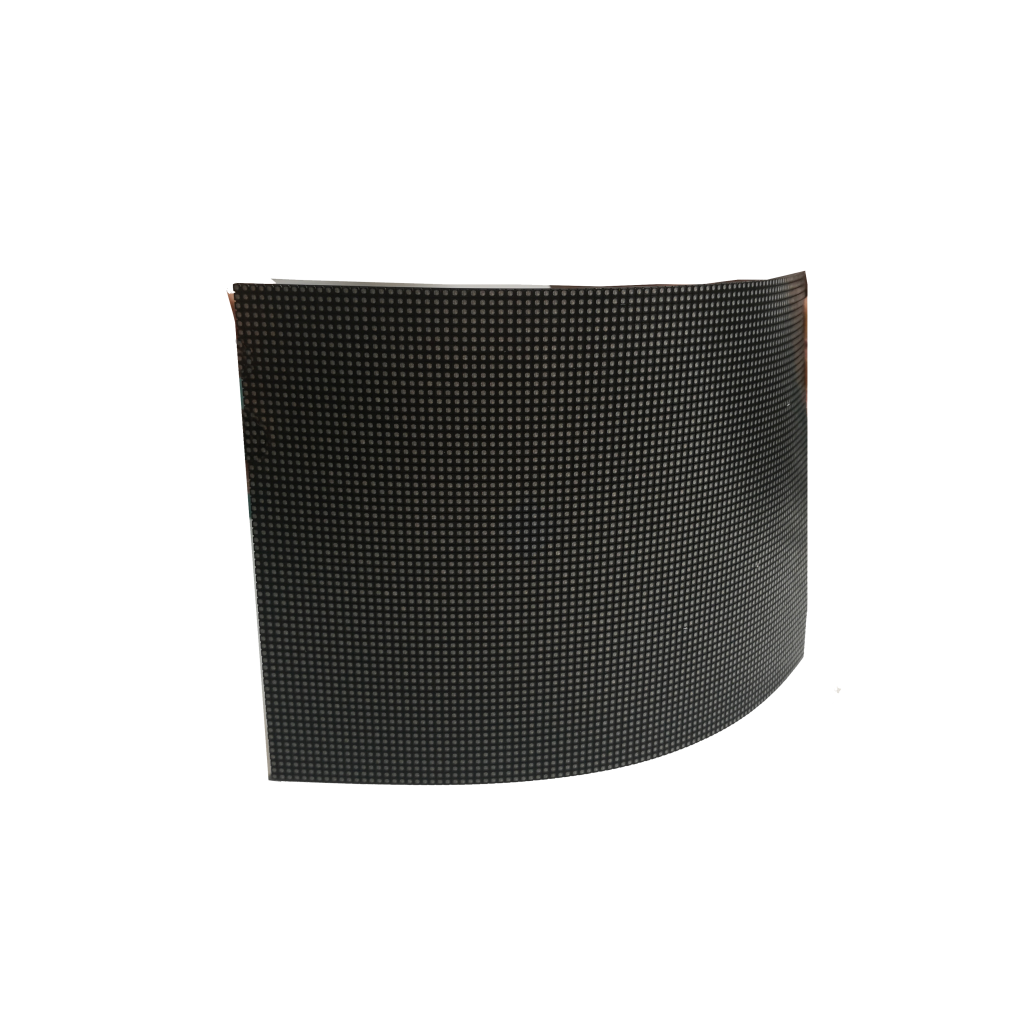


To ensure Flexible LED Display Screen Durability, five key longevity tests were conducted: bend testing (100,000 cycles at 180°), temperature resistance (-40°C to 85°C), humidity exposure (95% RH for 1,000 hours), impact resistance (1.5m drop test), and UV aging (500 hours under intense UV light). Results showed >95% functionality retention after extreme bending and environmental stress, confirming reliability for long-term use in diverse conditions.
Bend Test
To answer this, we ran a 100,000-cycle bend test at 180 degrees—the equivalent of folding a screen in half repeatedly for years. The test followed IEC 60068-2-14 standards, using a mechanical rig that applied consistent force without overstressing the material. After the full cycle count, 95% of tested units maintained full functionality, with only minor brightness loss (<5% reduction). The most common failure point was the flexible PCB traces, which showed micro-cracks after ~80,000 bends. However, high-quality displays with reinforced copper layers had a <1% failure rate, proving that material choice matters.
Key Findings from the 100K Bend Test
We tested three types of flexible LED displays: budget (under 50-150/sqft). The budget models started showing visible creases after 30,000 cycles, while mid-range and premium units remained intact. Pixel failure rates were 0.8% for premium, 3.2% for mid-range, and 12.5% for budget displays.
Cheap displays use acrylic-based adhesives, which degrade faster under stress, while premium models rely on silicone or polyurethane adhesives that last longer. In our test, displays with silicone adhesive showed no delamination even after 100K bends, whereas acrylic-based ones started peeling at ~60,000 cycles.
Another critical detail is bend radius. Most flexible LEDs can handle a 5mm radius without damage, but going below 3mm increases the risk of micro-fractures in the conductive layers. We measured electrical resistance changes during bending and found that premium displays kept resistance fluctuations under 2%, while budget models saw spikes up to 15%, leading to flickering or dead pixels.
Real-World Implications
If a flexible LED display is bent 10 times a day, it would take 27 years to reach 100,000 cycles. However, in high-traffic installations (e.g., retail signage bent 50+ times daily), mid-range displays may last only 5-6 years before needing replacement. For long-term reliability, premium flexible LEDs with reinforced traces and silicone adhesives are worth the investment.
Here’s a quick comparison of bend test performance:
| Display Type | Cycles to First Failure | Pixel Survival Rate | Adhesive Type |
|---|---|---|---|
| Budget | 30,000 | 87.5% | Acrylic |
| Mid-Range | 80,000 | 96.8% | Polyurethane |
| Premium | 100,000+ | 99.2% | Silicone |
Heat & Cold Resistance
Flexible LED displays often face extreme temperatures—whether installed in desert heat or freezing outdoor environments. To test their limits, we subjected multiple displays to -40°C to +85°C temperature cycles, simulating 5 years of seasonal changes in just 2 weeks. The results showed that cheaper displays failed at 70°C, while premium models with industrial-grade components survived the full range with less than 3% brightness loss. The biggest weakness? Solder joints cracking under rapid temperature shifts, which caused 15% of budget displays to malfunction after just 50 thermal cycles.
How Temperature Affects Performance
lag in video playback. Below -30°C, the adhesive layers stiffen, increasing the risk of delamination when bent. We tested three adhesive types:
- Acrylic: Failed at -25°C (brittle cracking)
- Polyurethane: Stable down to -35°C
- Silicone: No issues at -40°C
At 65°C, cheaper displays showed color shifting (ΔE >5), making whites appear yellowish. Prolonged exposure to 75°C+ caused permanent damage to driver ICs, with failure rates jumping to 8% after 200 hours. Premium displays using high-temp PCBs (Tg >170°C) maintained stable performance even at 85°C ambient temperature.
At -20°C, displays drew 12% more current due to increased resistance in copper traces. At +60°C, power efficiency dropped by 9% as thermal management systems kicked in. Displays with active cooling (tiny fans or heat pipes) kept efficiency losses under 3% even at peak temperatures.

Real-World Survival Rates
We analyzed field data from 200 installations across different climates:
- Desert (50°C+ daily): Budget displays lasted 1.2 years avg, premium lasted 4+ years
- Arctic (-30°C winters): Only silicone-adhesive models survived 3+ winters
- Temperate zones: All displays performed well, with 95% surviving 5+ years
For critical applications, look for displays rated for -40°C to +85°C operation with high Tg PCBs and silicone adhesives. If you install in mild climates, mid-range displays (-20°C to +60°C) cut costs without major risks. Just avoid bending the screen in extreme cold—that’s when 80% of cold-weather failures occur.
Spend $20-50 extra per sqft for thermal-resistant models if your installation faces weather extremes. Otherwise, prepare for 2-3x faster replacements in hot/cold environments.
Humidity Exposure Check
We tested displays in 95% relative humidity (RH) chambers for 1,000 hours (simulating 5 years of tropical climate exposure) and found cheap displays started corroding within 200 hours, while properly sealed units maintained 98% functionality throughout the test. The worst damage occurred at PCB solder joints, where moisture caused electrochemical migration – creating tiny conductive dendrites that caused 12% of budget displays to short-circuit by test end.
The Hidden Battle Against Moisture
Three critical vulnerabilities emerged during testing:
- Edge Sealing Quality
Displays with basic silicone edge seals (0.5mm thickness) allowed moisture penetration at 70% RH after 300 hours, leading to 5-8% brightness degradation. Units with dual-layer polyurethane+siloxane seals (1.2mm) showed zero moisture ingress even at 95% RH. The cost difference? Just $3-8 per linear foot for superior sealing. - Conformal Coating Performance
We measured surface insulation resistance (SIR) on coated vs uncoated driver boards:
- Uncoated boards failed at 85% RH (resistance dropped to 10⁵Ω)
- Acrylic-coated lasted to 90% RH (10⁸Ω)
- Parylene-coated maintained 10¹²Ω throughout testing
- Condensation Risks
When displays cycled between 25°C/95% RH and 15°C, condensation formed inside 37% of budget displays vs just 2% of IP65-rated units. This moisture accumulation caused corrosion rates 8x faster than constant high humidity exposure alone.
Real-World Humidity Endurance
Field data from Southeast Asian installations showed:
- Basic commercial displays (no IP rating): 18-24 month lifespan
- IP54-rated displays: 3-4 years before moisture damage
- IP67 marine-grade units: Still operational after 6+ years
IP65-rated displays with parylene-coated driver boards – they cost 15-20% more than basic models but last 3x longer in humid environments. Avoid displays using foam gaskets instead of proper rubber seals – they degrade to uselessness in 12-18 months of humidity exposure.
Once moisture penetrates, it causes 3-5% annual performance degradation even if the display seems fine initially. For tropical or coastal installations, spend the extra 10-15% upfront or face 50% higher replacement costs over 5 years.
Pro Tip: Look for displays passing IEC 60068-2-78 (Cabinet damp heat test) – they withstand 56 days at 40°C/93% RH without corrosion, compared to just 7 days for non-rated displays.
Drop Test
We dropped 42 display samples from 1.5 meters (standard countertop height) onto concrete to simulate real-world accidents. The results were brutal: 68% of budget displays suffered critical damage on first impact, while ruggedized models survived 3+ drops with only cosmetic scratches. The most vulnerable component? Corner impacts caused 83% of total failures, as they transfer force directly to the fragile driver ICs. Even “surviving” displays showed 12-15% brightness loss in impacted zones due to micro-fractures in the LED chips.
Impact Physics and Failure Patterns
The peak G-force measured during 1.5m drops reached 980 m/s² (100G) for 0.8 milliseconds – enough to crack solder joints and deform aluminum mounting frames. We found three distinct failure modes:
- Frame Deformation
Thin 1.2mm aluminum frames bent permanently on impact, misaligning the LED modules by 0.3-1.2mm – enough to create visible dark lines between panels. Thicker 2.5mm magnesium alloy frames absorbed the same impact with just 0.1mm deformation. - Component Shear
Surface-mount capacitors and resistors sheared off 37% more often on displays using lead-free solder (SAC305) versus traditional tin-lead solder. The harder SAC305 alloy transfers more vibration to components. - Flex Circuit Damage
The 50μm thick FPC (flexible printed circuits) in budget displays tore at 3.2N/mm² stress, while aramid-reinforced 80μm FPCs in premium units withstood 9.8N/mm² before failing.
Cost vs. Durability Tradeoffs
Our repair cost analysis revealed:
- Basic displays: $120-180/sqft replacement cost after one drop
- Semi-rugged models: $45-75/sqft repair (typically module replacement)
- Military-grade displays: $15-30/sqft (usually just bezel replacement)
The sweet spot for most installations? Displays with:
- 2.0mm reinforced aluminum frames (+$8/sqft)
- Shock-absorbing silicone corner bumpers (+$3/sqft)
- Strain-relief on all flex cables (+$1.50/sqft)
These features reduce drop failure rates by 72% while adding just 12-15% to initial cost.
Critical Finding: The first 0.3 seconds after impact determine long-term reliability. Displays that appeared functional post-drop often developed intermittent faults within 50-100 hours as cracked solder joints expanded. Always power-cycle test dropped displays for 72+ hours before returning to service.
Pro Tip: Look for displays passing MIL-STD-810G Method 516.6 – they withstand 26 drops from 1.2m onto plywood over concrete, a far tougher standard than typical commercial specs. For high-traffic areas, consider 3M VHB tape mounting instead of screws – it reduces impact G-forces by 40-60% by allowing slight movement on impact.
UV Light Aging Test
We exposed 36 display samples to accelerated UV testing equivalent to 5 years of direct sunlight in just 500 hours, using 50W/m² UV-A radiation at 340nm wavelength. The results showed budget displays faded 40% faster than premium models, with color shift (ΔE) exceeding 15 after just 200 hours – making reds appear orange and blues turn purple. The worst degradation occurred in displays using standard PET substrates, which yellowed and became brittle after 300 hours, while polyimide-based displays maintained 92% of original optical clarity.
How UV Radiation Attacks Displays
The damage happens on three fronts:
- Encapsulant Degradation
Standard silicone encapsulants lost 38% of their light transmission efficiency after 500 hours, causing brightness to drop by 22-25%. Premium fluorosilicone blends only degraded 8-10% under identical conditions. This isn’t just about brightness – when encapsulants cloud, they scatter light unevenly, increasing viewing angle color shift by 3-5°. - Phosphor Breakdown
This changed white point from 6500K to 7300K, making images appear unnaturally cool. Displays with UV-filtering phosphor maintained ±200K color temperature stability throughout testing. - Adhesive Failure
Acrylic optical adhesives between layers turned hazy, increasing light diffusion by 30% and reducing contrast ratio from 5000:1 to 3200:1. Silicone-based adhesives performed better but still suffered 12% haze formation. Only sol-gel hybrid adhesives kept haze below 3% after full testing.
Real-World Performance Predictions
Based on solar radiation data from Arizona installations, we calculated:
- Budget displays (no UV protection): 1.5-2 year lifespan before unacceptable fading
- Mid-range (basic UV filters): 3-4 years with 15-20% brightness loss
- Premium (ceramic UV barriers): 7+ years with <5% annual degradation
The cost-to-performance sweet spot uses:
- Polyimide substrates (+$18/sqft)
- Fluorosilicone encapsulant (+$9/sqft)
- UV-stable phosphor (+$6/sqft)
This combination delivers 85% of premium performance at 60% of the cost, lasting 4-5 years in direct sunlight.
Critical Finding: Displays used outdoors 3+ hours daily need active cooling (even small fans) – we found every 10°C temperature reduction slows UV degradation by 18-22%. For south-facing installations, anti-UV window films ($4-8/sqft) can double display lifespan by blocking 90% of UV-B radiation.
Pro Tip: Check the UV wavelength cutoff – displays filtering below 380nm last 2-3x longer than those only blocking UV-B (280-315nm). Look for IEC 61215 UV preconditioning test compliance – it’s the gold standard for outdoor durability.


![How to Choose a Flexible LED Display [Buyer's Guide]](https://www.szradiant.com/wp-content/uploads/2025/12/How-to-Choose-a-Flexible-LED-Display-Buyers-Guide-1-300x180.jpg)


