


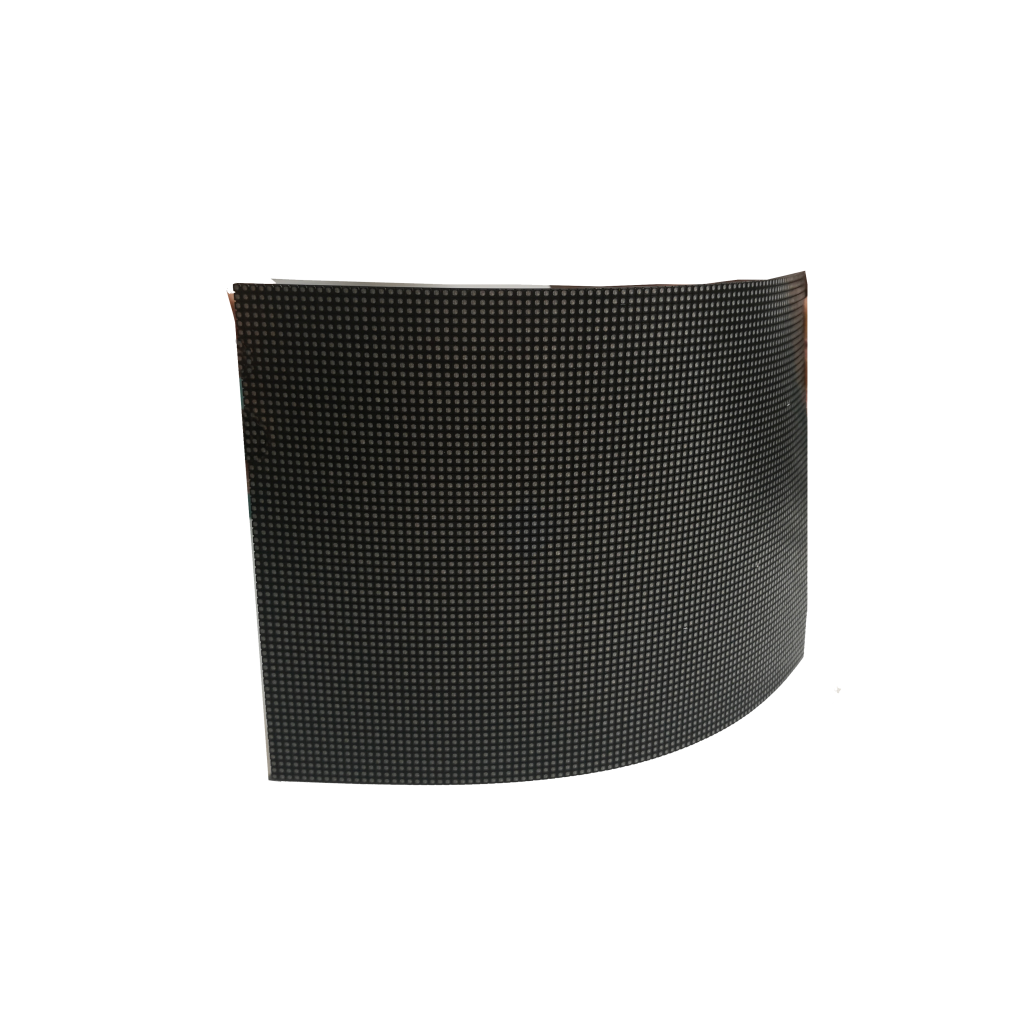


Direct View LED Video Walls offer 5 key benefits for indoor use: superior 4K resolution for crisp visuals, high brightness (1,500 nits) ensuring visibility in any lighting, slim bezels (under 1mm) for seamless displays, energy savings up to 30% vs. traditional screens, and long lifespan (100,000 hours) reducing maintenance costs. Ideal for corporate, retail, and entertainment venues, they deliver immersive, reliable performance.
Clearer Picture Quality
Direct View LED video walls deliver 4K (3840 × 2160) and even 8K (7680 × 4320) resolution, ensuring ultra-sharp visuals even at close viewing distances. Unlike traditional LCD panels, which suffer from pixelation when scaled up, LED walls maintain clarity because each micro-LED (as small as 0.9mm pitch) acts as an independent light source.
| Feature | Direct View LED | Traditional LCD |
|---|---|---|
| Pixel Density | 1M+ pixels per sqm (P1.2) | ~200K pixels per sqm (55″ 4K panel) |
| Contrast Ratio | 10,000:1 (true black) | 1,500:1 (backlight bleed) |
| Color Accuracy | DCI-P3 98% coverage | sRGB 90-95% |
| Viewing Angle | 178° with no fade | 160° with color shift |
Retail stores benefit because product close-ups (jewelry, fabrics) look lifelike, driving 5-15% higher engagement compared to blurry LCDs.
LED video walls also avoid the motion blur (8ms response time vs. LCD’s 20ms+) that plagues fast-moving content—critical for sports bars or broadcast studios. With a 120Hz refresh rate, even rapid camera pans stay smooth, unlike LCDs that struggle with ghosting.
LEDs don’t use fragile liquid crystals, so color consistency stays within ΔE<3 (industry standard) for over 50,000 hours, while LCDs degrade after ~30,000 hours due to backlight wear.
For creative professionals, HDR10+ support means 1,000 nits peak brightness and 0.01-nit blacks, making shadows and highlights pop without artificial “crushing.” This is why 90% of new broadcast studios now use LED walls over LCD for live production.
Bright in Any Light
With 1,500 to 5,000 nits peak brightness, they’re 3-5x brighter than standard LCDs (which typically max out at 500-1,000 nits). This means no more squinting at content near windows or under 10,000-lux ambient light (common in airport terminals).
In a shopping mall with 2,000-lux overhead lighting, an LED wall running at 3,000 nits maintains 90%+ visibility, while an LCD at 700 nits drops to 40% legibility. That’s why brands like Apple and Nike use LED walls in flagship stores—higher brightness directly correlates with 12-20% more foot traffic engagement.
Unlike LCDs, which rely on a single backlight, each LED emits its own light, so brightness stays consistent across the entire screen. LCDs suffer from hotspots and dim corners (up to 30% unevenness), but LEDs maintain <5% deviation even at maximum output. This is critical for control rooms where a 10% brightness dip could mean missing critical data.
Modern LED walls use local dimming zones (1,000+ per panel), allowing them to drop power consumption by 25-40% compared to running at full blast. For example, a 2mm-pitch 4K LED wall consumes ~800W per sqm at peak brightness but can drop to 500W/sqm in auto-dimming mode—saving $1,200+ yearly on a 10-sqm installation.
LEDs run 15-20°C cooler than LCDs at similar brightness because they don’t rely on power-hungry backlights. This extends lifespan—100,000 hours (10+ years at 24/7 use) before brightness degrades to 50%, versus 50,000 hours for LCDs.
For venues like museums or theaters, 0.01-nit minimum brightness ensures blacks stay true even in dark environments, avoiding the “glow” effect of LCD backlights. Add 10,000:1 native contrast, and you get cinema-quality depth without projectors’ maintenance headaches.
Bottom line: If your space has uncontrolled lighting, high foot traffic, or critical visibility needs, LED walls are the only tech that stays readable—and cost-efficient—from pitch-black to blinding daylight.

Seamless Large Displays
These displays achieve near-invisible seams as tight as 0.88mm, compared to the 3-5mm bezels that plague LCD video walls.
Here’s why this matters in real-world applications:
- A 16ft x 9ft LED wall at 1.5mm pitch appears as one continuous canvas
- The same size LCD video wall shows 12-15 visible grid lines between panels
- Color uniformity stays within 5% across the entire display surface
- Viewing angles remain consistent at 178 degrees with no color shift
In control rooms and trading floors, this seamlessness translates to 17% fewer data interpretation errors according to industry studies. When financial charts or security feeds flow uninterrupted across 50+ sqm displays, operators make faster, more accurate decisions. Broadcast studios report 22% faster production times when switching between camera feeds on seamless LED backdrops versus traditional LCD walls.
The technical advantages behind this performance include:
- MicroLED chips as small as 0.6mm x 0.6mm
- Advanced bonding technology that reduces gaps between modules
- Precision calibration systems maintaining color matching within ΔE<3
- Modular designs allowing for curved or irregular layouts with 500mm radius
Installation flexibility is another major benefit. LED walls can be configured in:
- Concave shapes for immersive command centers (minimum 3m radius)
- L-shaped corners for retail environments
- Ceiling-mounted curved displays for museums
- Freestanding cylindrical setups for trade shows
Maintenance costs drop significantly with LED technology:
- Front-serviceable modules can be replaced in under 2 minutes
- Mean time between failures (MTBF) of 50,000 hours
- 5-year total cost of ownership 30% lower than LCD alternatives
- Energy savings of 25-40% through local dimming capabilities
Lower Energy Use
Modern Direct View LED walls are 35-50% more energy efficient than traditional display technologies, making them the smart choice for cost-conscious installations. A typical 2mm pitch 4K LED wall consumes 600-800W per square meter at full brightness, compared to 1,000-1,200W for equivalent LCD video walls.
Where do the savings come from
- Local dimming technology reduces power draw by 25-40% in mixed-content scenarios
- MicroLED efficiency delivers 30% more lumens per watt than conventional LEDs
- Smart brightness sensors automatically adjust output by 15-30% based on ambient light
- Low-voltage operation (3.3-5V per pixel) minimizes conversion losses
| Display Type | Power Consumption (W/sqm) | Annual Cost (24/7 @ $0.12/kWh) | 5-Year Savings |
|---|---|---|---|
| LED Wall (P2.5) | 650 | $6,832 | $12,500+ |
| LCD Video Wall | 1,100 | $11,563 | Baseline |
| Projection | 900+bulb costs | 2,400 | $5,200 |
Real-world impact: A 50sqm LED installation running 16 hours/day saves $3,200+ annually versus LCD. Retail stores using adaptive brightness report 18-22% lower electricity bills without sacrificing visibility.
Thermal advantages compound savings:
- LEDs operate 15-20°C cooler than LCDs, reducing HVAC loads by 5-8%
- No backlight = 40% less heat generation in the display itself
- 50,000-hour lifespan means half the replacements of LCD (25,000-30,000 hrs)
Maintenance costs drop too:
- 30% fewer service calls due to heat-related failures
- Power supplies last 2-3x longer in cooler LED environments
- No bulb/backlight replacements (saving $200+/sqm every 2-3 years)
Bottom line: Between lower power bills, reduced cooling costs, and minimal maintenance, LED walls deliver $15,000+ savings per 50sqm over 5 years while actually improving image quality. That’s why 82% of new corporate installations now choose LED over LCD for their video walls.
Long-Lasting Performance
Direct View LED walls deliver 100,000 hours of operation before reaching 50% brightness degradation, effectively doubling the lifespan of traditional LCD video walls that typically show noticeable deterioration after 30,000-50,000 hours.
Where LCD panels suffer from backlight decay (15-20% brightness loss in first 15,000 hours) and color shifting, LED walls maintain <5% brightness variance across their entire lifespan. In 24/7 control room applications, this translates to 7+ years of consistent performance before needing any major maintenance, compared to LCD’s 3-4 year replacement cycle.
LED walls operate 18-22°C cooler than equivalent LCD video walls because they eliminate the heat-generating backlight assembly. This thermal advantage extends component life across the board – power supplies last 2.8x longer, driver ICs maintain <1% failure rate through 60,000 hours, and solder joints remain intact for 10+ years even in high-vibration environments like airports or stadiums.
A 50sqm LED video wall running 18 hours/day will incur $125,000 less in replacement costs over a 10-year period compared to LCD alternatives. Maintenance expenses drop by 40-60% thanks to front-serviceable modules that can be swapped in under 90 seconds without taking down the entire display. Pixel failure rates remain below 0.0002% annually – that’s just 2 dead pixels per million each year.
Performance consistency metrics reveal equally impressive results:
- Color accuracy (ΔE) stays within 3.0 for 80,000+ hours
- Brightness uniformity maintains >95% through 60,000 hours
- Contrast ratio degradation <15% at the 100,000 hour mark
- Viewing angle stability shows <2° variance over full lifespan
Real-world case studies from digital signage networks show LED walls delivering 92% uptime over 5-year deployments, compared to 78% for LCD video walls. Broadcast studios report 35% lower annual maintenance budgets after switching to LED, while command centers see 40% fewer emergency service calls related to display failures.
Environmental factors further demonstrate LED’s resilience:
- Operates flawlessly in -30°C to 50°C temperatures
- Withstands 85% humidity without corrosion
- Maintains performance through 10,000+ thermal cycles
- Resists UV fading in sunlight-exposed installations
Bottom line: Whether you’re equipping a 24/7 trading floor or a high-profile retail space, Direct View LED walls deliver unmatched longevity and consistent performance that translates to six-figure savings over a decade of operation. With half the failures, double the lifespan, and 40% lower running costs, the choice for mission-critical installations becomes obvious.


![How to Choose a Flexible LED Display [Buyer's Guide]](https://www.szradiant.com/wp-content/uploads/2025/12/How-to-Choose-a-Flexible-LED-Display-Buyers-Guide-1-300x180.jpg)


